Nixu continues developing cloud security for Finnish government’s Valtori

The Finnish Government ICT Centre Valtori started its Cloud program in 2019 to enable around 100 Finnish public sector organizations to securely utilize cloud environments' capabilities. Therefore, Valtori needed to ensure that their cloud security is on par with the legal requirements and national information security criteria PiTuKri. Nixu helped in realizing this goal by delivering a governance model and Cloud Security Posture Management (CSPM) framework for Valtori’s cloud services. Nixu will continue to develop Valtori’s Cloud Security also in the future, as the contract has now been extended until 2025. a4e06517bace3b0c 800x800ar 36086

The challenge for central government actors in using cloud platforms has been the information security aspect of cloud-based services. The security concerns meant that for a long time, the rule of thumb was to save only public information in the cloud. However, the tides turned in 2019 when the Finnish Ministry of Finance published new guidelines for public sector organizations on how to use cloud services. By the end of 2020, the same ministry already considered the cloud an equal or even a preferred alternative to traditional data centers. 

Valtori provides sector-independent ICT services for the central government as well as information and data communications technology services that meet the requirements of high preparedness and security. Valtori serves a client base that comprises around 100 government agencies and departments with tens of thousands of service users. Therefore, Valtori has a large responsibility for providing secure ICT services to its clients. 

Need for a secure governance model for cloud environments

One of the services that Valtori offers to governmental organizations is a governance model for cloud environments. A critical aspect of this service is ensuring that its information security corresponds with legal requirements and the Criteria for Assessing the Information Security of Cloud Services (PiTuKri). PiTuKri is published by the Finnish Transport and Communications Agency's National Cyber Security Center, NCSC. Implementing its criteria improves security in situations where authorities process classified information in the cloud. Consequently, it affects Valtori and all of its clients. 

To offer a secure governance model, Valtori needed to find a service provider that could master the technical execution, that is, define the relevant security controls for measuring security posture, which would also match the PiTuKri criteria. Due to Nixu’s proven Cloud Security expertise and prior experience with similar projects, Valtori chose Nixu as the service provider at the beginning of 2020. In addition, Nixu delivered documented instructions for implementing Cloud Security Posture Management (CSPM) for Amazon AWS and Microsoft Azure cloud environments and guidelines for further development. 

Nixu also produced data protection guidelines for Valtori’s cloud platforms by the PiTuKri criteria. “Valtori had a vision of Privacy by design (Data protection by design and default), meaning that privacy is considered in the project right from the beginning. This is ideal for a privacy specialist, and working with Valtori’s multidisciplinary team to implement this has been smooth and rewarding,” commends Nixu’s Privacy Specialist Tuisku Sarrala.

Successful pioneer work results in real-time visibility and continuous compliance

After two years of collaboration with Nixu, Valtori can now offer its public sector clients an information security service that enables the users to have real-time visibility on the status of their cloud security controls. The controls follow the defined framework and ensure that the cloud platforms continuously comply with the PiTuKri criteria. Around 75% of Valtori’s clients currently use cloud services, and the service package is installed into all AWS and Azure accounts. This makes life easier – and more secure – for the end-users.

“Our ability to offer validated security controls to our clients advances the use of cloud within the public sector because it encourages cautious decision-makers to trust cloud services and start building cloud environments within their organizations. They can focus on their core work and rely on the fact that if their cloud security controls are not up to date, this security component will notify them to make the needed fixes. Our clients can have peace of mind from a compliance point of view,” states Juha Nieminen, Development Manager at Valtori.

The partnership has been constructive and, with all the tackled challenges, also educational for both sides. “Working with Valtori has been smooth from day one. They had a well-thought vision which we started to work towards together in a very collaborative manner. You can see clearly how much emphasis is put on cybersecurity at Valtori, which makes the work meaningful for everyone involved”, praises Sakari Pihlhjerta, Business Unit Lead for Cloud Security at Nixu.

“I appreciate fluency, flexibility, and strong expertise because those elements ensure that the work gets done. Nixu’s team has delivered us that special know-how we have longed for, and I don’t think there are many other companies in Finland we could have executed this project with”, Nieminen concludes. “We were pioneers who, through iteration, worked to accomplish something that had never been done before. The information security solution we’ve created with Nixu has been one of the biggest wins within our Cloud program.”

Leiden astronomers calculate genesis of Oort cloud in chronological order

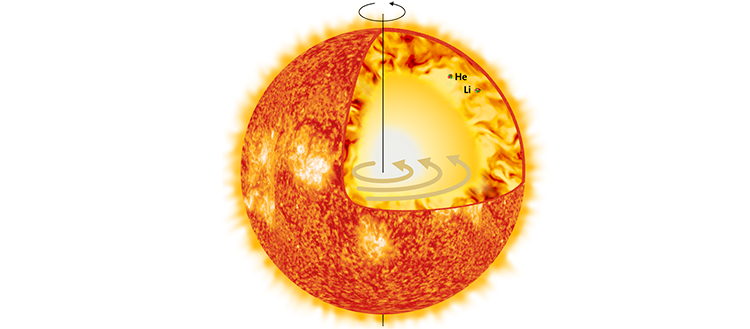
A team of Leiden astronomers has managed to calculate the first 100 million years of the history of the Oort cloud in its entirety. Until now, only parts of the history had been studied separately. The cloud, with roughly 100 billion comet-like objects, forms an enormous shell at the edge of our solar system. The astronomers will soon publish their comprehensive simulation and its consequences in the journal Astronomy & Astrophysics.

The Oort cloud was discovered in 1950 by the Dutch astronomer Jan Hendrik Oort to explain why there continue to be new comets with elongated orbits in our solar system. The cloud, which starts at more than 3000 times the distance between the Earth and the Sun, should not be confused with the Kuiper belt. This is the rim of rock, grains, and ice in which the dwarf planet Pluto is located and which orbits relatively close to the Sun at about 30 to 50 times the Earth-Sun distance. Webp

Losse gebeurtenissen verbonden

How exactly the Oort Cloud must have formed has remained a mystery until now. This is because a series of events take place which a computer can hardly reproduce in its entirety. Some processes lasted only a few years and took place at relatively short distances, comparable to the distance between the Earth and the Sun. Other processes lasted billions of years and took place over light-years, comparable to distances between stars. Astronomer and simulation expert Simon Portegies Zwart (Leiden University in the Netherlands) explains: ‘If you want to calculate the whole sequence in a computer, you will irrevocably run aground. That's why, until now, only separate events were simulated.’

The Leiden researchers started from separate events, as in previous studies, but the new is that they were able to connect the events with each other. For example, they used the end result of the first calculation as the starting point for the next calculation. In this way, they were able to map out the entire genesis of the Oort cloud.

Comets from inside and outside the solar system

The Oort cloud, the Leiden simulations confirm, is a remnant of the protoplanetary disk of gas and debris from which the Solar system emerged some 4.6 billion years ago. The comet-like objects in the Oort cloud come from roughly two places in the Universe. The first part of the objects comes from close by, from the Solar system. This debris and asteroids have been thrown out by the giant planets. However, some of the debris did not succeed in doing so and is still in the asteroid belt between Mars and Jupiter. A second population of objects, the Leiden astronomers concluded, comes from other stars. When the Sun was just born, there were about a thousand other stars in the vicinity. The Oort cloud may have captured comets that originally belonged to those other stars.

In addition, the Leiden astronomers could immediately debunk a number of events. They, for example, argue that the Oort cloud was formed relatively late. That is, after the Sun had been ejected from the group of stars in which it was born. With their simulations, the astronomers also reject the hypothesis put forward in 2005 that the Oort cloud was a consequence of the migration of the giant planets in the Solar system. This hypothesis, which turns out to be debunked, would have to explain the excess of old craters on the moon.

Complex but not unique

‘With our new calculations, we show that the Oort cloud arose from a kind of cosmic conspiracy,’ says Portegies Zwart, ‘in which nearby stars, planets, and the Milky Way all play their part. Each of the individual processes alone would not be able to explain the Oort cloud. You really need the interplay and the right choreography of all the processes together. And that, by the way, can be explained quite naturally from Sun's birth environment. So although the Oort cloud is complicatedly formed, it is probably not unique.’

During the calculations, the researchers regularly wondered how such a complicated process could actually emerge. Portegies Zwart: ‘Despair often got the better of us. Only when the calculations were completed, did all the pieces of the puzzle suddenly fall into place and it all looked quite natural and self-evident. That is, I think, one of the most beautiful aspects of being a scientist. You suddenly realize how distorted our thinking concerning this problem was until it actually turned out to be rather natural.’

Columbia Engineering team builds first hacker-resistant cloud software system

As the first system to guarantee the security of virtual machines in the cloud, SeKVM could transform how cloud services are designed, developed, deployed, and trusted

Whenever you buy something on Amazon, your customer data is automatically updated and stored on thousands of virtual machines in the cloud. For businesses like Amazon, ensuring the safety and security of the data of its millions of customers is essential. This is true for large and small organizations alike. But up to now, there has been no way to guarantee that a software system is secure from bugs, hackers, and vulnerabilities.

Columbia Engineering researchers may have solved this security issue. They have developed SeKVM, the first system that guarantees--through mathematical proof--the security of virtual machines in the cloud. In a new paper to be presented on May 26, 2021, at the 42nd IEEE Symposium on Security & Privacy, the researchers hope to lay the foundation for future innovations in system software verification, leading to a new generation of cyber-resilient system software.

SeKVM is the first formally verified system for cloud computing. Formal verification is a critical step as it is the process of proving that software is mathematically correct, that the program's code works as it should, and there are no hidden security bugs to worry about. Microverification of cloud hypervisors  CREDIT Jason Nieh and Ronghui Gu/Columbia Engineering

"This is the first time that a real-world multiprocessor software system is mathematically correct and secure," said Jason Nieh, professor of computer science and co-director of the Software Systems Laboratory. "This means that users' data are correctly managed by software running in the cloud and are safe from security bugs and hackers."

The construction of correct and secure system software has been one of the grand challenges of computing. |Nieh has worked on different aspects of software systems since joining Columbia Engineering in 1999. When Ronghui Gu, the Tang Family Assistant Professor of Computer Science and an expert in formal verification, joined the computer science department in 2018, he and Nieh decided to collaborate on exploring formal verification of software systems.

Their research has garnered major interest: both researchers won an Amazon Research Award, multiple grants from the National Science Foundation, and a multi-million dollar Defense Advanced Research Projects Agency (DARPA) contract to further develop the SeKVM project. In addition, Nieh was awarded a Guggenheim Fellowship for this work.

Over the past dozen years, there has been a good deal of attention paid to formal verification, including work on verifying multiprocessor operating systems. "But all of that research has been conducted on small toy-like systems that nobody uses in real life," said Gu. "Verifying a multiprocessor commodity system, a system in wide use like Linux has been thought to be more or less impossible." 

The exponential growth of cloud computing has enabled companies and users to move their data and computation off-site into virtual machines running on hosts in the cloud. Cloud computing providers, like Amazon, deploy hypervisors to support these virtual machines.

A hypervisor is the key piece of software that makes cloud computing possible. The security of the virtual machine's data hinges on the correctness and trustworthiness of the hypervisor. Despite their importance, hypervisors are complicated -- they can include an entire Linux operating system. Just a single weak link in the code -- one that is virtually impossible to detect via traditional testing -- can make a system vulnerable to hackers. Even if a hypervisor is written 99% correctly, a hacker can still sneak into that particular 1% set-up and take control of the system.

Nieh and Gu's work is the first to verify a commodity system, specifically the widely-used KVM hypervisor, which is used to run virtual machines by cloud providers such as Amazon. They proved that SeKVM, which is KVM with some small changes, is secure and guarantees that virtual computers are isolated from one another.

"We've shown that our system can protect and secure private data and computing uploaded to the cloud with mathematical guarantees," said Xupeng Li, Gu's Ph.D. student and co-lead author of the paper. "This has never been done before."

SeKVM was verified using MicroV, a new framework for verifying the security properties of large systems. It is based on the hypothesis that small changes to the system can make it significantly easier to verify, a new technique the researchers call MICROverification. This novel layering technique retrofits an existing system and extracts the components that enforce security into a small core that is verified and guarantees the entire system's security.

The changes needed to retrofit a large system are quite modest--the researchers demonstrated that if the small core of the larger system is intact, then the system is secure and no private data will be leaked. This is how they were able to verify a large system such as KVM, which was previously thought to be impossible.

"Think of a house--a crack in the drywall doesn't mean that the integrity of the house is at risk," Nieh explained. "It's still structurally sound and the key structural system is good."

Shih-Wei Li, Nieh's Ph.D. student and co-lead author of the study, added, "SeKVM will serve as a safeguard in various domains, from banking systems and Internet of Things devices to autonomous vehicles and cryptocurrencies."

SeKVM could change how cloud services should be designed, developed, deployed, and trusted as the first verified commodity hypervisor. In a world where cybersecurity is a growing concern, this resiliency is highly in demand. Major cloud companies are already exploring how they can leverage SeKVM to meet this demand.