Introduction
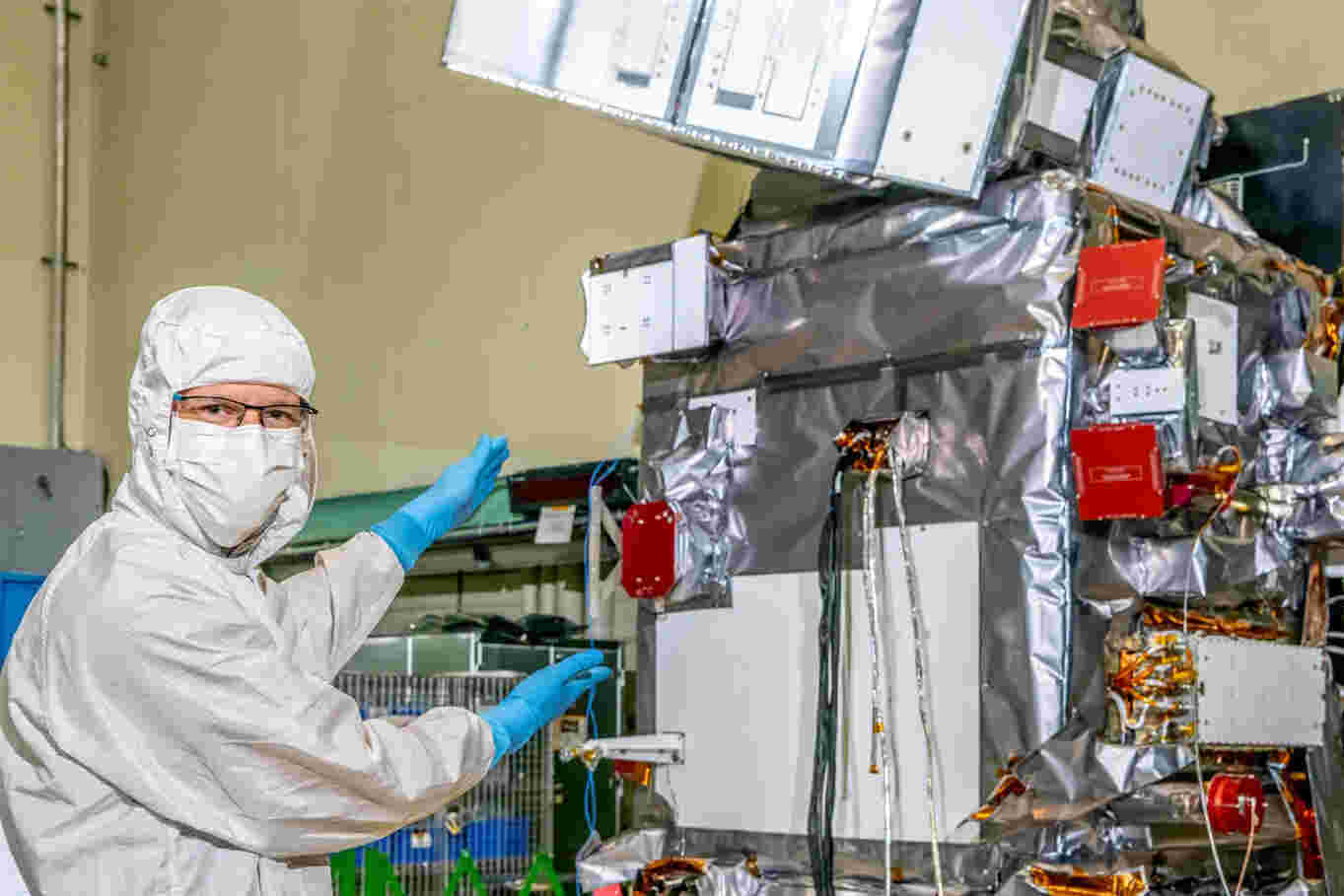
In the realm of climate research and weather prediction, one of the biggest uncertainties lies in the relationship between clouds, aerosols, and radiation. To tackle this challenge and gain valuable insights into these complex interactions, the European Space Agency (ESA) is preparing to launch the Earth Cloud Aerosol and Radiation Explorer (EarthCARE) mission. This groundbreaking mission aims to shed light on key scientific questions and provide novel observations to enhance our understanding of Earth's atmosphere. By employing state-of-the-art instruments, EarthCARE will revolutionize our knowledge of clouds, aerosols, and radiation and improve supercomputer models of the climate and weather. In this article, we delve into the four cutting-edge instruments onboard EarthCARE and explore how they contribute to unraveling the intricate processes that govern our climate system.

Atmospheric Lidar: Illuminating the Vertical Profile
One of the key instruments onboard EarthCARE is the atmospheric lidar, an advanced system that utilizes light detection and ranging (lidar) technology to measure the vertical profile of aerosols and clouds in Earth's atmosphere. By emitting light pulses and analyzing the reflected signals, this unique lidar provides precise information about the distribution and properties of aerosols and clouds. It reveals crucial details such as their altitude, thickness, optical properties, and aerosol type. These observations are essential for improving supercomputer models of the climate and understanding the role of aerosols and clouds in Earth's energy balance.
The atmospheric lidar's ability to accurately measure the vertical profiles of aerosols and clouds along the EarthCARE track grants researchers invaluable insights into the behavior of these atmospheric phenomena. Armed with this data, scientists can enhance our understanding of how aerosols and clouds impact climate and weather patterns.
Cloud Profiling Radar: Peering into the Internal Structure
Another instrumental component of EarthCARE is the cloud profiling radar, provided by the Japanese Space Agency (JAXA). Operating in the millimeter-wavelength range, this radar enables EarthCARE to observe the internal structure of clouds. By penetrating through clouds and light precipitation, it provides detailed information about their vertical structure, velocity, particle size distribution, and water content. This radar is crucial for studying cloud processes, including their formation and dissipation, and contributes valuable data for improving weather and climate models.
With the cloud profiling radar's ability to peer into the intricate internal structure of clouds, scientists can gain a deeper understanding of cloud dynamics. This knowledge aids in refining climate and supercomputer models of weather and enables more accurate predictions of Earth's climate system.
Multispectral Imager: Capturing a Wide Field of View
While the lidar and radar instruments focus on profiling the atmosphere along a narrow track, EarthCARE's multispectral imager provides a broader perspective by capturing high-resolution images in multiple spectral bands. This wide field of view allows scientists to differentiate between various types of clouds, aerosols, and Earth's surface. By analyzing the images captured by the multispectral imager, researchers can obtain additional information about the optical properties, composition, and distribution of clouds and aerosols. This data, when combined with the lidar and radar observations, facilitates the generation of three-dimensional cloud and aerosol fields.
The multispectral imager's ability to capture a wide variety of spectral bands empowers scientists to gain a holistic understanding of clouds, aerosols, and their interactions with radiation. This comprehensive view enhances our knowledge of Earth's climate system and aids in refining climate models.
Broadband Radiometer: Quantifying Earth's Energy Balance
The fourth instrument onboard EarthCARE is the broadband radiometer. This instrument plays a crucial role in the mission by measuring the radiative fluxes at the top of Earth's atmosphere. As the satellite orbits the Earth, the radiometer views the atmosphere from three directions, accurately quantifying the amount of reflected solar radiation and the outgoing thermal radiation emitted by Earth. By comparing this radiation data with observations from the other instruments, scientists can improve our understanding of the complex interactions between aerosols, clouds, and radiation.
The broadband radiometer's measurements of Earth's energy balance are vital for comprehending the intricate processes that drive our climate system. This data enriches climate models and contributes to a more accurate assessment of the radiative impact of aerosols and clouds on Earth's climate.
The Power of Four Instruments
The combination of these four powerful instruments forms a unique suite of tools that provide unprecedented observations of Earth's atmosphere. Each instrument contributes a crucial piece of the puzzle, collectively advancing our knowledge of climate processes and unraveling the interplay between clouds, aerosols, and radiation. By utilizing these instruments, EarthCARE aims to address critical scientific questions and improve our understanding of Earth's climate system.
EarthCARE: The Largest and Most Complex Earth Explorer Mission
EarthCARE stands as the largest and most complex Earth Explorer mission developed within ESA's Earth Observation FutureEO program. Its significance lies in its contribution to the development of high-resolution, global climate models, particularly in understanding cloud convection and its role in Earth's radiation budget. This mission represents a collaboration between ESA and JAXA, the Japanese Space Agency, showcasing the importance of international cooperation in scientific endeavors.
As the launch of EarthCARE approaches excitement grows within the scientific community. The mission's central role in providing long-term, climate-relevant datasets, in synergy with past and future missions, is undeniable. The data generated by EarthCARE's instruments will unlock new insights into climate processes and shed light on the intricate interactions between clouds, aerosols, and radiation in Earth's atmosphere.
Conclusion
The EarthCARE mission heralds a new era in our understanding of clouds, aerosols, and radiation. By employing cutting-edge instruments such as the atmospheric lidar, cloud profiling radar, multispectral imager, and broadband radiometer, EarthCARE will revolutionize our knowledge of Earth's atmosphere and its impact on climate and weather. As we eagerly await the launch of this groundbreaking mission, the anticipation within the scientific community grows, knowing that EarthCARE will provide invaluable data to improve climate models and enhance our understanding of our planet's complex climate system.