Yale-Boehringer Ingelheim announce Biomedical Data Science Fellowship Program

Yale University, in partnership with Boehringer Ingelheim, today announced the launch of a Biomedical Data Science Fellowship program designed to attract and support some of the brightest and most innovative minds in data science from around the world.

Post-doctoral researchers awarded a three-year fellowship will have access to Yale's robust computational resources, biomedical data repositories, and faculty expertise. In addition, they will benefit from access to Boehringer Ingelheim's corporate labs, scientists and executives. Applicants are invited to submit research proposals for consideration by June 15. If approved for a fellowship, they will be jointly mentored throughout the research process by industry experts and scientists from Boehringer Ingelheim -- one of the world's leading pharmaceutical companies -- as well as Yale's world-class researchers and scholars. Fellowship training begins Sept. 1.

"This collaboration with Boehringer Ingelheim creates a world-class data science fellowship program that will drive the development of novel methods and tools to analyze and interpret the many large and complex biomedical datasets that have been created in recent years," said Yale School of Public Health Professor of Biostatistics, Genetics, Statistics, and Data Science Hongyu Zhao, Ph.D., principal investigator for the project.

The program will be based at the Yale Center for Biomedical Data Science (CBDS) in New Haven, Connecticut. The center is an essential part of a growing data science hub at Yale University, which has identified integrated data science as one of its primary investment areas over the next decade. CBDS is located within Yale School of Medicine and currently supports more than 100 faculty members and researchers representing such disciplines as bioinformatics, modeling, statistics, computer science, artificial intelligence, mathematics, biology, precision medicine, and public health.

"In partnering with a top-tier academic and research institution like Yale, we aim to recruit and train a new generation of highly skilled data scientists to help us accelerate the development of novel treatments and therapies for human disease and improve health outcomes for our patients," said Jan Nygaard Jensen, Ph.D., Global Head of Computational Biology and Digital Sciences at Boehringer Ingelheim.

The partnership reflects a mutual vision between Boehringer Ingelheim and Yale University. It is part of a comprehensive strategic program at Boehringer Ingelheim which will harness the power of data science to transform drug discovery and development. The aim is to catalyze the next breakthrough therapies that change lives by accelerating timelines, improving scientific and clinical success, and further elevating patient centricity.

"Boehringer Ingelheim is pleased to build upon our successful relationships with Yale to foster the next generation of scientists and harness the power of data science to bring our vision of making new and better medicines for patients in need," said Clive R. Wood, Ph.D., Senior Corporate Senior Vice President, Global Head, Discovery Research, Boehringer Ingelheim. "We believe our shared ambition and outlook will build a world-class data science community to attract outstanding researchers and work to achieve breakthroughs that patients need."

Initially, the program will award as many as three competitive fellowships per year, up to a total of nine over the first five years. In addition to receiving research funding and mentorship, program fellows will be invited to participate in campus and corporate visits, networking events, and annual symposia.

A joint selection committee comprising representatives of Yale and Boehringer Ingelheim will set annual data-driven research themes for the program. These themes may include such topics as genomic analysis, biomarkers, data-driven therapeutic research, medical image informatics, precision medicine, and translational medicine. The selection committee will consider proposed research projects' alignment with prioritized themes in judging submissions and post-doctoral applicants.

Yale's data science ecosystem is supported by a host of cutting-edge research institutions working collaboratively. In addition to CBDS, they include Yale's Systems Biology Institute, Center for Mendelian Genomics, Center for RNA Science and Medicine, and Center for Medical Informatics. Yale's biobanks and technology core include the Yale BioBank GENERATIONS, VA Million Veteran Program, Center for Research Computing, Center for Genomic Health, and Center for Genomic Analysis, which houses the ninth-largest genomic library in the world.

Xinxin (Katie) Zhu, MD, Ph.D., executive director of the Yale Center for Biomedical Data Science, said the fellowship program offers an exciting opportunity for the development of innovative data-driven approaches for different medical conditions that can be translated from the lab to the patient's bedside. It is an especially opportune time, she said.

"The vast amount of biomedical data being generated today has created a tremendous need for highly skilled data scientists who can use this information to advance care," said Zhu.

Specialists in biomedical data science and health informatics can identify statistical associations and patterns of disease. They also can develop complex machine learning models and simulations of molecular, cellular, and organismic systems to increase the probability of clinical success through precision medicine and other methods.

"This helps clinicians and pharmaceutical companies such as Boehringer Ingelheim identify potential new pathways for treatment and eradication of disease," Zhu said.

To apply for a Yale-Boehringer Ingelheim Biomedical Data Science Fellowship, please go to https://medicine.yale.edu/cbds/bdsfellowship.
Harvard Med develops AI that reveals current drugs help to combat Alzheimer's disease

The analysis points to new treatment targets for the disease.

New treatments for Alzheimer's disease are desperately needed, but numerous clinical trials of investigational drugs have failed to generate promising options. Now a team at Massachusetts General Hospital (MGH) and Harvard Medical School (HMS) has developed an artificial intelligence-based method to screen currently available medications as possible treatments for Alzheimer's disease. The method could represent a rapid and inexpensive way to repurpose existing therapies into new treatments for this progressive, debilitating neurodegenerative condition. Importantly, it could also help reveal new, unexplored targets for therapy by pointing to mechanisms of drug action.

"Repurposing FDA-approved drugs for Alzheimer's disease is an attractive idea that can help accelerate the arrival of effective treatment--but unfortunately, even for previously approved drugs, clinical trials require substantial resources, making it impossible to evaluate every drug in patients with Alzheimer's disease," explains Artem Sokolov, Ph.D., director of Informatics and Modeling at the Laboratory of Systems Pharmacology at HMS. "We, therefore, built a framework for prioritizing drugs, helping clinical studies to focus on the most promising ones."

In an article published in an academic journal, Sokolov and his colleagues describe their framework, called DRIAD (Drug Repurposing In Alzheimer's Disease), which relies on machine learning--a branch of artificial intelligence in which systems are "trained" on vast amounts of data, "learn" to identify telltale patterns and augment researchers' and clinicians' decision-making.

DRIAD works by measuring what happens to human brain neural cells when treated with a drug. The method then determines whether the changes induced by a drug correlate with molecular markers of disease severity.

The approach also allowed the researchers to identify drugs that had protective as well as damaging effects on brain cells.

"We also approximate the directionality of such correlations, helping to identify and filter out neurotoxic drugs that accelerate neuronal death instead of preventing it," says co-first author Steve Rodriguez, Ph.D., an investigator in the Department of Neurology at MGH and an instructor at HMS.

DRIAD also allows researchers to examine which proteins are targeted by the most promising drugs and if there are common trends among the targets, an approach designed by Clemens Hug, Ph.D., a research associate in the Laboratory of Systems Pharmacology and a co-first author.

The team applied the screening method to 80 FDA-approved and clinically tested drugs for a wide range of conditions. The analysis yielded a ranked list of candidates, with several anti-inflammatory drugs used to treat rheumatoid arthritis and blood cancers emerging as top contenders. These drugs belong to a class of medications known as Janus kinase inhibitors. The drugs work by blocking the action of inflammation-fueling Janus kinase proteins, suspected to play a role in Alzheimer's disease and known for their role in autoimmune conditions. The team's analyses also pointed to other potential treatment targets for further investigation.

"We are excited to share these results with the academic and pharmaceutical research communities. Our hope is that further validation by other researchers will refine the prioritization of these drugs for clinical investigation," says Mark Albers, MD, Ph.D., the Frank Wilkins Jr. and Family Endowed Scholar and associate director of the Massachusetts Center for Alzheimer Therapeutic Science at MGH and a faculty member of the Laboratory of Systems Pharmacology at HMS. One of these drugs, baricitinib, will be investigated by Albers in a clinical trial for patients with subjective cognitive complaints, mild cognitive impairment, and Alzheimer's disease that will be launching soon at MGH in Boston and at Holy Cross Health in Fort Lauderdale, Florida. "In addition, independent validation of the nominated drug targets could provide new insights into the mechanisms behind Alzheimer's disease and lead to novel therapies," says Albers.

Munich deploys sensor network to create a spatially resolved emission map of the city

MUCCnet: Precision technology allows quantification of urban greenhouse gas emissions

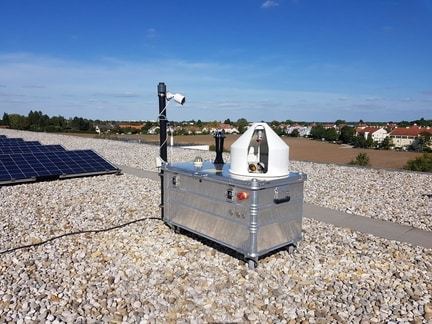
The sensor network MUCCnet (Munich Urban Carbon Column network) consists of five high-precision optical instruments that analyze the sun's light spectra. They measure the concentration of the gases carbon dioxide (CO2), methane (CH4), and carbon monoxide (CO). Since each gas has its own unique spectral "fingerprint", concentrations of these gases can be determined in the columns of air between the instruments and the sun.

"By measuring a vertical column of the atmosphere, local disturbances, such as the disproportionate influence of neighboring stacks, can be removed. Therefore, this type of greenhouse gas balancing is considered particularly robust and accurate," says Prof. Jia Chen. Measuring device of the MUCCnet sensor network set up by Prof. Jia Chen, Chair of Environmental Sensing and Modeling, at the TUM Department of Electrical and Computer Engineering of the Technical University of Munich (TUM) on the roof of a building in Taufkirchen.  CREDIT F. Dietrich / TUM

Measurements at five locations in and around Munich

One of MUCCnet's measurement devices is located on the main campus of TUM and measures inner-city concentrations. Four other devices are located at the Munich city borders in all four cardinal directions (north: Oberschleissheim, east: Feldkirchen, south: Taufkirchen, and west: Graefelfing).

Chen explains the principle in simple terms: "We set up one sensor upwind from the city and the second downwind. So any increase in gases between the first sensor and the second must have been generated from inside the city." To cover as many wind directions as possible, there is a sensor in each cardinal direction. With the input of the sensor data and meteorological parameters, high-performance supercomputers can create a spatially resolved emission map of the city. Prof. Jia Chen, Chair of Environmental Sensing and Modeling at the TUM Department of Electrical and Computer Engineering of the Technical University of Munich (TUM) at a measuring device of the MUCCnet sensor network on the roof of a building at the main campus of the TUM in Munich.  CREDIT A. Heddergott / TUM

Using measured data to improve the calculated emission figures

Under the Paris Climate Agreement, atmospheric measurements are not required to meet emissions targets. "Instead, the emissions numbers we hear in the news are based on calculations," explains Prof. Chen.

Among other things, this makes it impossible to detect so far unknown sources - such as leaks in gas pipelines. Therefore, Prof. Jia Chen's team and project leader Florian Dietrich created MUCCnet to measure emissions with high precision, which can reduce inaccuracies in calculations.

Corona lockdown as a natural experiment for the measurement data series

The current Corona crisis provides a useful natural experiment for researchers because as a result of the two German lockdowns in spring 2020 as well as winter 2020/21 and severe air traffic curtailment, there have been changes in urban greenhouse gas emissions, which can be used to validate measurements as well as atmospheric transport models.

Unfortunately, the lifetime of CO2 is very long (several hundred years) and measurement results show that even such a drastic global event as this pandemic has not stopped the annual increase of CO2 concentration in the atmosphere.

Measurement data can be accessed online

Since the start of 2021, the researchers have operated a website (http://atmosphere.ei.tum.de) which not only makes measurement data available to everyone but also explains the devices used and the principles employed to gain the data. Interested parties can find absolute values of greenhouse gas concentrations on the portal and can, for example, draw comparisons between stations at different locations. 

"Since climate change is a global problem, the Munich network should only be the first step," says Prof. Chen. In the future, Chen's team plans to use measurements from existing greenhouse gas satellites to expand the methods and models developed in Munich worldwide and thus make a decisive contribution to understanding and solving the climate problem. 

RELATED JOURNAL ARTICLE http://dx.doi.org/10.5194/amt-14-1111-2021