

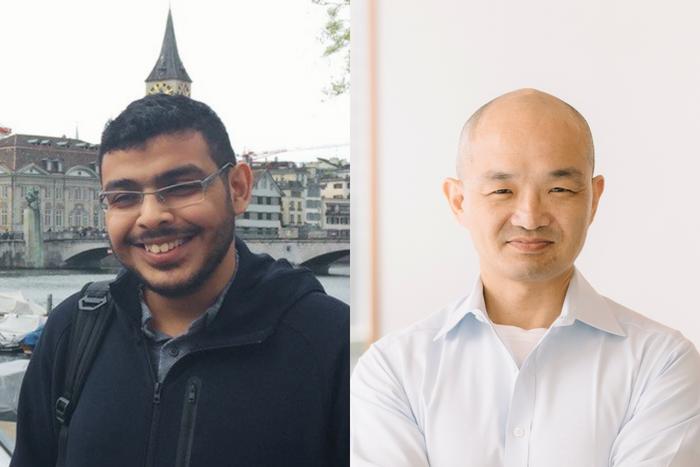
PhD Graduate Osama Abdin and Professor Philip M. Kim.

University of Toronto researchers create a deep-learning model that outperforms Google AI in predicting peptide structures

Researchers at the University of Toronto have developed a new deep-learning model called PepFlow. This model has shown better predictive capabilities than the well-known Google Deepmind AI system, AlphaFold2, in determining the structural configurations of peptides. The study is signifying a significant advancement in computational biology with potential implications for drug development.

Peptides are short amino acid chains that perform important biological functions similar to proteins. Modeling their diverse folding patterns has been challenging due to their dynamic nature. However, PepFlow combines machine learning and physics to articulate the complete range of potential peptide conformations within minutes. This marks a major shift in molecular genetics and pharmaceutical research.

The first author of the study, Osama Abdin, emphasized the significance of this new approach, stating that PepFlow leverages deep learning to capture precise peptide conformations quickly, which could inform drug development.

Understanding the intricate 3D structures of peptides is crucial because of their role in regulating biological processes and interacting with other molecules in the human body. The principal investigator, Philip M. Kim, highlighted the crucial role of peptides in therapeutics, noting their potential impact on conditions such as diabetes and obesity.

PepFlow's technology enriches the understanding of peptide structures and offers a new approach to predicting a variety of conformations for a given peptide, surpassing AlphaFold2. By integrating advanced physics-based machine learning models, PepFlow can model unconventional formations, including macrocyclic structures, which are promising for drug development.

The study authors envision future iterations of PepFlow, recognizing the potential for enhancements such as explicit data for solvent atoms and incorporating constraints on atom distance in ring-like structures. They also emphasized the flexibility and scalability of PepFlow, underscoring its potential for further advancements in therapeutic developments reliant on peptide binding to regulate biological processes.

This remarkable achievement by the University of Toronto showcases the transformative impact of merging deep-learning and physics-based modeling in elucidating the complex behaviors of biological molecules, thereby paving the way for a new era in computational biology and drug development.
MIT scientists model challenging chemical synthesis

In a groundbreaking study, researchers from the Massachusetts Institute of Technology (MIT) have revealed a pioneering approach to driving chemical reactions. This approach could pave the way for the development of compounds with unique pharmaceutical properties.

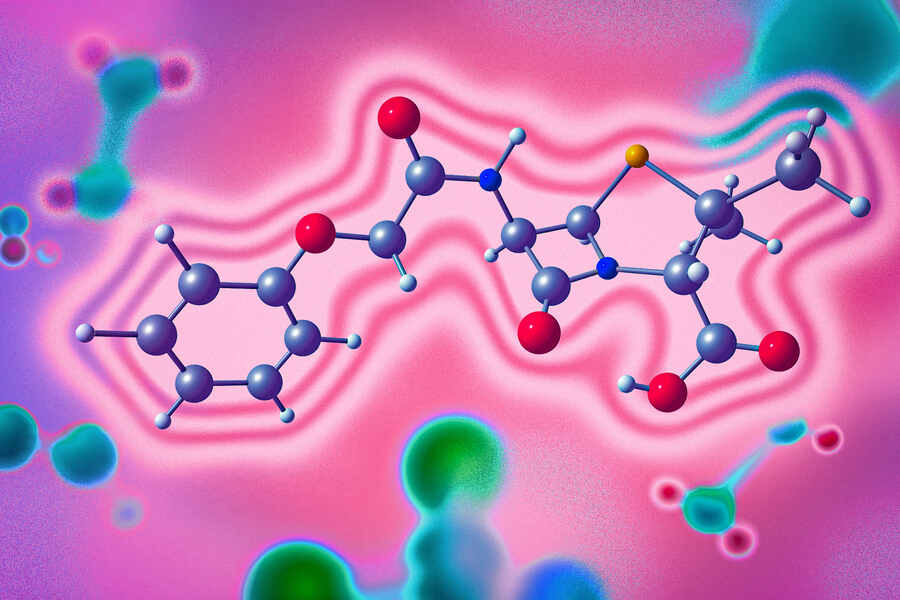
The focus of the study lies in the synthesis of compounds known as azetidines, which are distinguished by their four-membered rings containing nitrogen. While these structures boast desirable pharmaceutical properties, they have historically presented a formidable challenge to synthesize compared to the more prevalent five-membered nitrogen-containing rings found in numerous FDA-approved drugs.

The key innovation lies in a light-driven reaction that combines two precursors—an alkene and an oxime—facilitated by a photocatalyst that absorbs light energy to initiate the reaction. What sets this research apart is the integration of computational modeling to predict the compatibility of different reactants, streamlining the synthesis process and increasing the success rate.

Dr. Heather Kulik, an associate professor of chemistry and chemical engineering at MIT, expressed optimism about the new approach, emphasizing its potential to revolutionize drug development. “Rather than resorting to trial and error, scientists can now pre-screen compounds and determine beforehand which substrates are conducive to the formation of azetidines through this form of catalysis,” she explained.

Employing density functional theory to calculate the orbital energies of electrons within molecules, researchers were able to identify specific substrates whose close energy levels under light excitation facilitate successful reactions. This computational approach not only accelerates the prediction process but also enables the design of pharmaceutical compounds with unprecedented precision and efficiency.

By integrating cutting-edge techniques in quantum mechanics and chemical modeling, the team has expanded the realm of feasible substrates for azetidine synthesis, revealing a broader spectrum of compounds amenable to this innovative method.

The study’s experimental validation involved testing 18 predicted reactions, with the majority aligning with the computational forecasts. Among the synthesized compounds were derivatives of FDA-approved drugs such as amoxapine and indomethacin, underscoring the method’s potential for drug discovery and development.

Looking ahead, Dr. Kulik is committed to further advancing this computational approach, extending its applications to novel syntheses including compounds with three-membered rings. Beyond its implications for drug synthesis, the research holds promise for the broader field of chemical engineering, offering a new paradigm for predicting and optimizing complex reactions through computational modeling.

The successful integration of computational modeling into the realm of chemical synthesis represents a significant step forward in the quest for innovative drug compounds and underscores the transformative power of interdisciplinary collaboration in scientific research.

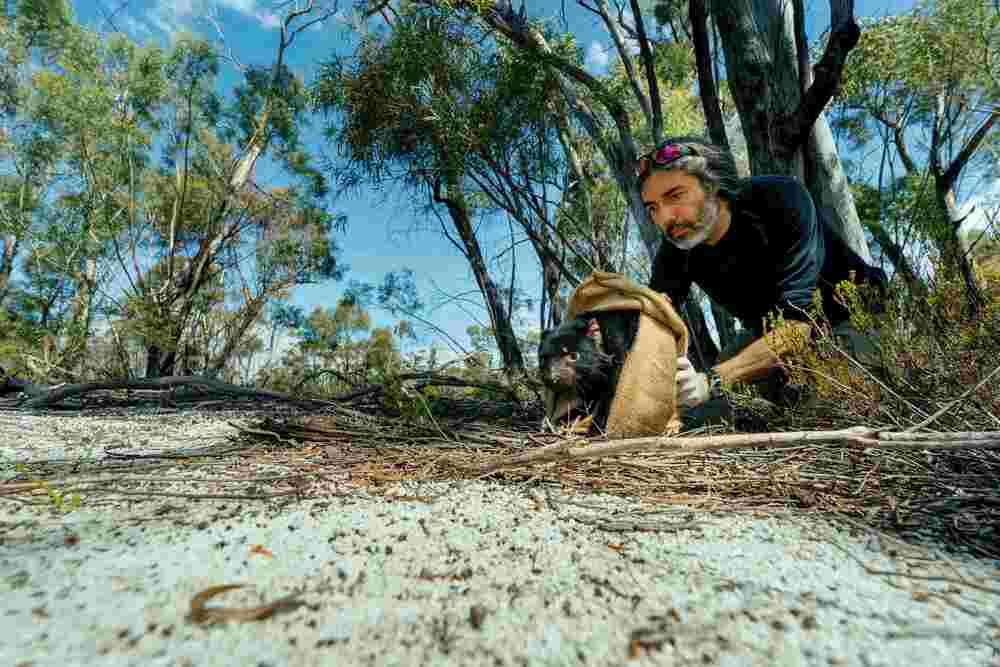
Dr Rodrigo Hamede
Dr Rodrigo Hamede

Australian scientists use AI to save the Tasmanian devil

Tasmania’s Tasmanian devil has been severely threatened by Devil Facial Tumour 2 (DFT2) in recent years. However, the University of Tasmania in Australia has developed innovative conservation technology that could save the species. Using groundbreaking artificial intelligence (AI) software, researchers at the School of Natural Sciences have transformed the way scientists monitor and manage wildlife diseases. Led by Dr. Rodrigo Hamede and Professor Barry Brook, this project combines data from remote cameras with advanced AI technology to process thousands of images in real time and identify diseased devils.

“Community support is vital. By working together, we can make a difference in managing wild devil populations affected by the disease,” said Dr. Hamede. “We are calling for landowners from the Huon Valley and Derwent Valley to sign up for our project so we can deploy cameras on their properties.”

The technology uses a three-step process where images of Tasmanian devils captured by remote cameras are first separated from blanks before determining the species. Finally, the software distinguishes between healthy devils and devils with tumors.

The team's AI software can monitor the progress of DFT2 much faster than human labeling, without compromising accuracy. The insights gathered from this project offer real hope for providing informed and timely interventions and could become the standard approach for monitoring devil populations and DFTD infection dynamics across Tasmania.

This innovative project points to the transformative potential of AI in wildlife disease management globally. It allows for more responsive detections and interventions by eliminating the time lag caused when experts need to manually process all the images.

“We are proud to be undertaking this vital work to help ensure the survival of the Tasmanian devil and ensure the management of Tasmania’s unique wildlife is cost-effective and time-efficient,” said Professor Brook.

To join the fight to save the Tasmanian devil, landowners in the Huon Valley and Derwent Valley are encouraged to sign up for their properties to be monitored by cameras. Their participation provides valuable data, raises awareness, and fosters a collective effort to combat DFT2.

In conclusion, the technologies developed by researchers at the University of Tasmania offer hope for the preservation of Tasmanian wildlife. With the active participation of the community and continued advancements in AI technology, we may be able to save the Tasmanian devil and other unique animals from the perils of disease and human encroachment.