

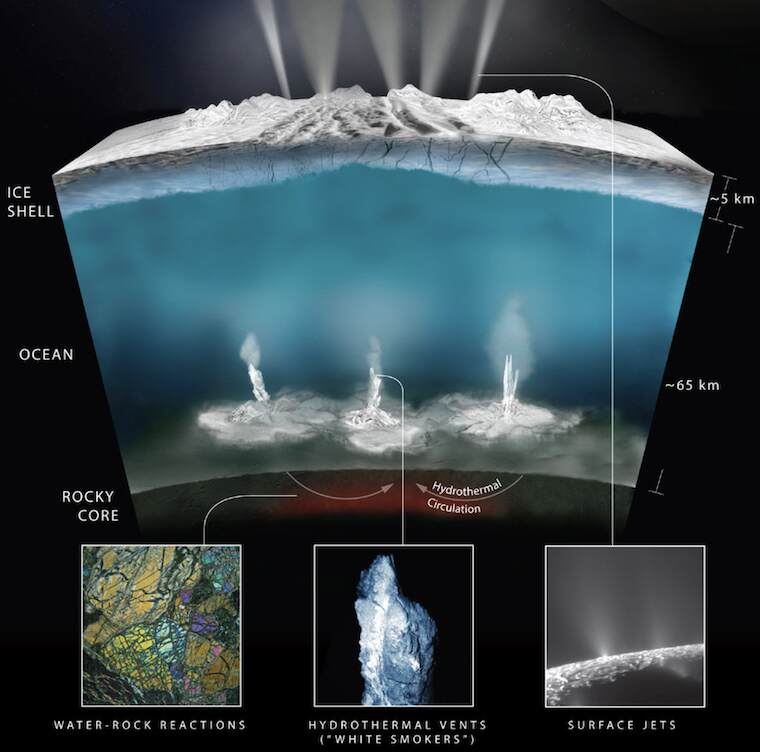
Supercomputer models contribute to insights into the potential for life in ocean worlds

A recent study by researchers at UC Santa Cruz investigates the potential for life to exist on "ocean worlds" within our solar system. Ocean worlds are celestial bodies with liquid oceans, hidden beneath icy shells or rocky interiors. The study used high-performance computer models to explore the role of hydrothermal vents in creating habitable conditions on these planets and moons. By adjusting various factors, such as gravity and heat, the researchers found that hydrothermal vents could potentially exist on ocean worlds like Jupiter's moon Europa, increasing the chances of supporting life.

The study, led by Professor Andrew Fisher, focused on supercomputer simulations based on Earth's seafloor ecosystems, specifically looking at the hydrothermal circulation system. The researchers discovered that low-temperature, life-supporting hydrothermal systems could have been sustained on ocean worlds beyond Earth over timescales comparable to those required for life to take hold on our planet.

One notable finding from the study is the potential for long-term fluid circulation systems with low to moderate temperatures on ocean worlds with low gravity, such as Saturn's moon, Enceladus. This challenges previous assumptions and offers a plausible explanation for the existence of stable hydrothermal environments on smaller ocean worlds throughout the solar system's lifespan.

However, it is important to note that direct observations of active hydrothermal systems on ocean worlds pose significant technical challenges due to their distance from Earth. As a result, researchers must rely on available data and insights gained from detailed studies of similar Earth systems.

The diverse team of authors, including researchers from various institutions, emphasizes the need for continued research and the contribution of various perspectives to deepen our understanding of ocean worlds and their potential for harboring life.

As we eagerly await the launch of the Europa Clipper spacecraft later this fall, observations from satellite missions will play a crucial role in uncovering the true nature of these mysterious ocean worlds. The authors of the study are hopeful that the mission will provide valuable insights into the conditions present or possible on Europa, facilitating further exploration of these intriguing celestial bodies.
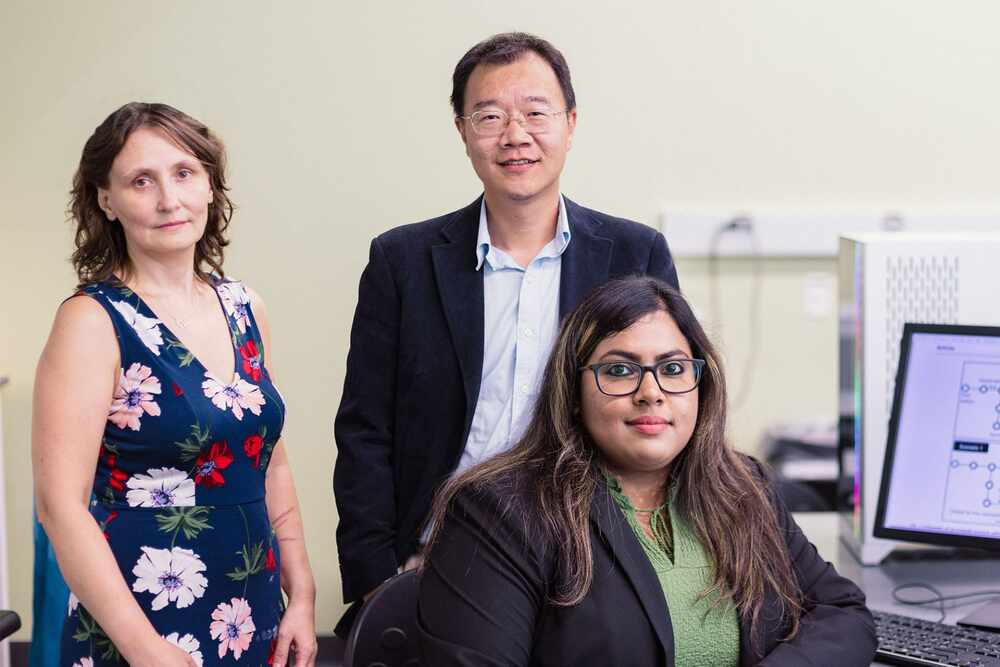
From left: Dr. Yulia Gel, Dr. Jie Zhang and electrical engineering doctoral student Roshni Anna Jacob

Researchers engineer AI path to prevent power outages

The University of Texas at Dallas researchers have revealed an artificial intelligence (AI) model that could revolutionize the prevention of power outages in electrical grids. Collaborating with engineers from the University at Buffalo in New York, the team demonstrated their innovative automated system, which could detect and repair issues such as storm-damaged power lines without any human intervention.

This cutting-edge solution exemplifies the potential of "self-healing grid" technology. By utilizing AI algorithms, the model can swiftly reroute electricity in a matter of milliseconds, ensuring minimal disruption to power supply. In contrast, current methods that rely on human control can take anywhere from minutes to hours to determine alternative routes.

Dr. Jie Zhang, associate professor of mechanical engineering at the Erik Jonsson School of Engineering and Computer Science, outlined the team's objective, stating, "Our goal is to find the optimal path to send power to the majority of users as quickly as possible." While acknowledging that further research is required before implementing the system, Zhang's enthusiasm was palpable.

Highlighting the complexity of the North American grid, with its vast network of transmission and distribution lines, generation facilities, and transformers, the researchers successfully demonstrated that their AI solution is capable of identifying alternative routes to transfer electricity, preempting outages. The use of machine learning applied to graphs allowed the team to map the intricate relationships between system components, enabling faster decision-making in real time.

Dr. Yulia Gel, professor of mathematical sciences in the School of Natural Sciences and Mathematics, emphasized the potential applications of this interdisciplinary approach beyond power distribution networks. She stated, "Network topology also may play a critical role in applying AI to solve problems in other complex systems, such as critical infrastructure and ecosystems."

Reinforcement learning formed a key aspect of the researchers' approach, with Dr. Souma Chowdhury, associate professor of mechanical and aerospace engineering at the University at Buffalo, leading the efforts in this area. This technique empowered the model to make optimal decisions towards maximizing results. For instance, if a fault occurs and electricity is blocked through a particular line, the system can swiftly reconfigure using switches and draw power from available sources nearby, such as solar panels or batteries.

Excitingly, the researchers are not stopping at preventing outages. They also plan to pursue the development of similar technology to repair and restore the grid after a power disruption. With support from the U.S. Office of Naval Research and the National Science Foundation, their groundbreaking work promises to transform how electrical grids are managed, ensuring reliable and efficient power supply for consumers.

This remarkable breakthrough in AI-driven power grid management not only inspires hope for a future with fewer power outages but also signifies a pivotal step towards more resilient and self-reliant infrastructures. With further research and development, a new era of automated and self-healing grids may become a tangible reality, redefining the way we think about electricity distribution.

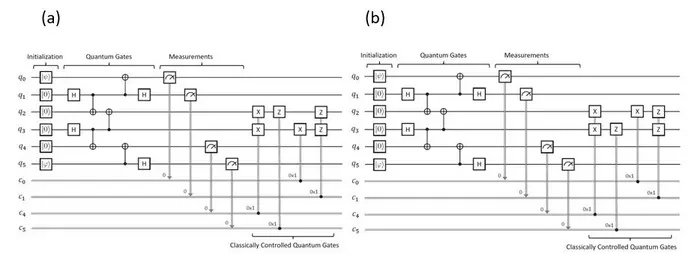
The proposed model-checking approach can be utilized to specify and verify quantum circuits along with their desired properties.

Japanese scientists present a new approach to quantum circuit verification

Quantum computing, considered a groundbreaking technology, has the potential to revolutionize computational power by leveraging the principles of quantum physics. A recent study conducted by Assistant Professor Canh Minh Do and Professor Kazuhiro Ogata from Japan Advanced Institute of Science and Technology (JAIST) introduces a symbolic model-checking approach to verify quantum circuits, aiming to ensure error-free quantum computing.

The researchers propose using the Maude programming language, known for its formal specification and verification abilities, to analyze quantum circuits and confirm their intended operation. This approach involves utilizing a set of quantum physics laws and basic matrix operations to evaluate the functionality of various quantum communication protocols, such as Quantum Teleportation and Entanglement Swapping.

While the study highlights the potential of this symbolic model-checking approach in enhancing the verification process of quantum circuits, there are some lingering doubts. One major limitation is the need for further research and refinement of the method, raising questions about its effectiveness in handling more complex quantum algorithms and cryptography protocols.

Moreover, concerns exist about the practical application of this approach in real-world scenarios. The gap between model-checking quantum programs and quantum circuits, as acknowledged by the researchers, suggests potential challenges in translating theoretical verification into functional quantum systems.

As the research community eagerly anticipates advancements in quantum computing, the proposed symbolic model-checking approach by Assistant Professor Canh Minh Do and Professor Kazuhiro Ogata presents an intriguing avenue for exploration. Nevertheless, the skepticism surrounding its limitations and the practicality of implementation urges a cautious approach toward hailing it as a solution for error-free quantum computing.