

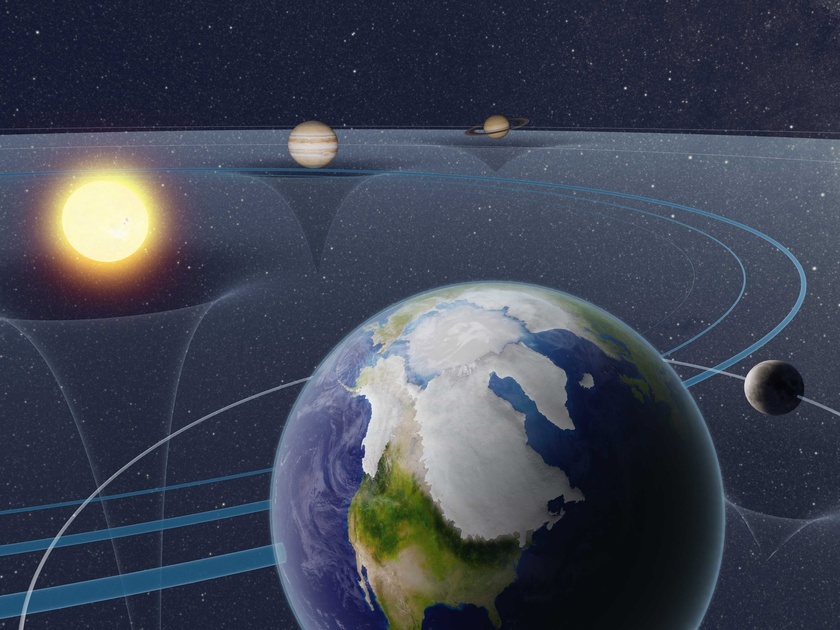
Artist's impression of how astronomical forces affect the Earth's motion, climate, and ice sheets. (Credit: NAOJ)

Japanese climatologists, astronomers use a supercomputer to enhance their models of the ice ages

A research team, composed of climatologists and an astronomer, has used an improved supercomputer model to reproduce the cycle of ice ages (glacial periods) 1.6 to 1.2 million years ago. The results show that the glacial process was driven primarily by astronomical forces in quite a different way than it works in the modern age. These results will help us better understand ice sheets' past, present, and future and the Earth’s climate.

Earth’s orbit around the Sun and its spin axis orientation change slowly over time, due to the pull of gravity from the Sun, the Moon, and other planets. These astronomical forces affect the environment on Earth due to changes in the distribution of sunlight and the contrast between the seasons. In particular, ice sheets are sensitive to these external forces resulting in a cycle between glacial and interglacial periods.

The present-day glacial-interglacial cycle has a period of about 100,000 years. However, the glacial cycle in the early Pleistocene (about 800,000 years ago) switched more rapidly, with a process of about 40,000 years. It has been believed that astronomical external forces are responsible for this change, but the details of the mechanism have not been understood. In recent years, it has become possible to investigate in more detail the role of astronomical forces through the refinement of geological data and the development of theoretical research.

A team led by Yasuto Watanabe at the University of Tokyo focused on the early Pleistocene Epoch from 1.6 to 1.2 million years ago using an improved climate supercomputer model. Astronomical forces based on modern state-of-the-art theory are considered in these simulations. The extensive numerical simulations in this study reproduce well the glacial cycle of 40,000 years of the early Pleistocene as indicated by the geological record data.

From the analysis of these simulation results, the team has identified three facts about the mechanisms by which astronomical forces caused changes in climate in those times. (1) The glacial cycle is determined by slight differences in the amplitude of variation of the spin axis orientation and the orbit of the Earth. (2) The timing of deglaciation is determined mainly by the position of the summer solstice on its orbit, which is at perihelion, not only by the effect of periodical change of the tilt of the Earth’s axis. (3) The timing of the change in the spin axis orientation and the position of the summer solstice on its orbit determines the duration of the interglacial period.

 “As geological evidence from older times comes to light, it is becoming clear that the Earth had a different climatic regime than it does today. We must have a different understanding of the role of astronomical forcing in the distant past,” says Takashi Ito from the National Astronomical Observatory of Japan, a member of this research team who led the discussion on astronomical external forces. “The numerical simulations performed in this study not only reproduce the Pleistocene glacial-interglacial cycle well but also successfully explain the complex effects of how astronomical forcing drove the cycle at that time. We can regard this work as a starting point for the study of glacial cycles beyond the present-day Earth.”
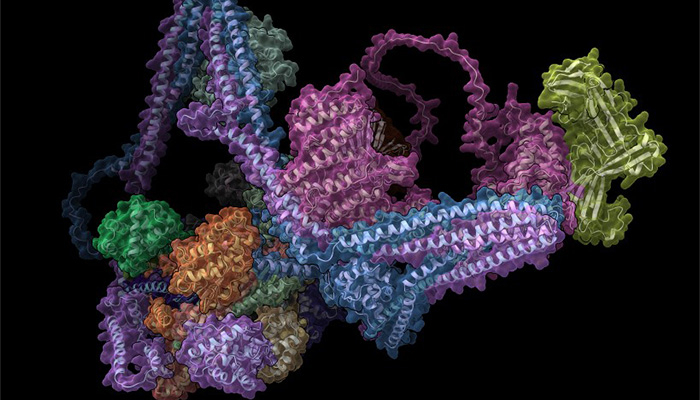
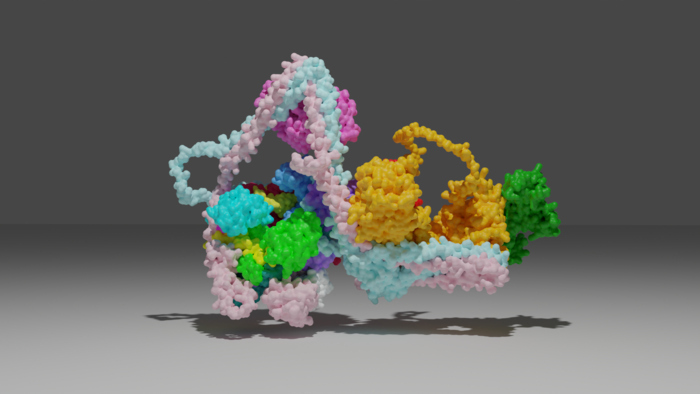
A 3D model of the Commander complex, a bundle of proteins that act as postal workers in cells.

Australian researchers use AI to better understand dementia, infectious diseases including COVID-19

Professor Brett Collins from the University of Queensland (UQ) Institute for Molecular Bioscience and Professor Pete Cullen from the University of Bristol led a team that modeled the 16-subunit Commander complex, a bundle of proteins that act as ‘postal workers’ in cells.

“Just as the postal system has processes to transport and sort cargo, cells in our bodies have molecular machines that transport and sort proteins,” Professor Collins said.  A 3D model of the Commander complex, a bundle of proteins that act as postal workers in cells.

“Cargo transport is all about getting the right parcels to the right destination at the right time and in cells, the Commander complex controls this system to ensure the right amount of protein is delivered to the right place.”

This protein transport system is implicated in many diseases including heart disease, Alzheimer’s disease, and infections.

“Knowing the 3D shape of these proteins helps us understand how they function, why mutations cause disease, and how to design drugs to target them in the future,” Professor Collins said.

“Viruses such as SARS-CoV-2 – which causes COVID-19 – and human papillomavirus (HPV) which can lead to cancer need the Commander complex to infect cells and it has been linked to the transport of the amyloid protein in Alzheimer’s disease.

“Mutations in the Commander complex disrupt the transport of lipids into cells, causing high cholesterol and heart defects in people with the rare Ritscher-Schinzel syndrome which is characterized by intellectual disability and development delay.

“Knowing the structure of the Commander complex means we can better understand how this happens and advance our understanding of how it is involved in disease.” 

{media id=310,layout=solo}

The international team used state-of-the-art electron microscopy and machine learning methods to decipher the structure of the entire Commander protein complex.

Professor Cullen said mapping the complete structure of the Commander complex would not have been possible even 2 years ago without these new technologies.

The team also included Dr. Michael Healy from IMB, Dr. Kerrie McNally from the University of Cambridge, and Rebeka Butkovic and Molly Chilton from the University of Bristol.

This research was funded by organizations including the National Health and Medical Research Council (Australia), Medical Research Council (UK), and the Wellcome Trust.

The research is published in Cell.

Assembly of the 3D model of the Commander Complex

The Commander Complex is a 16-subunit bundle of proteins that act as ‘postal workers’ in cells, transporting and sorting proteins. This protein transport system is implicated in many diseases including heart disease, Alzheimer’s disease, and infections.

Read more