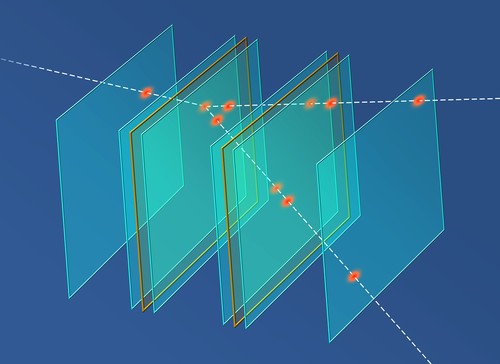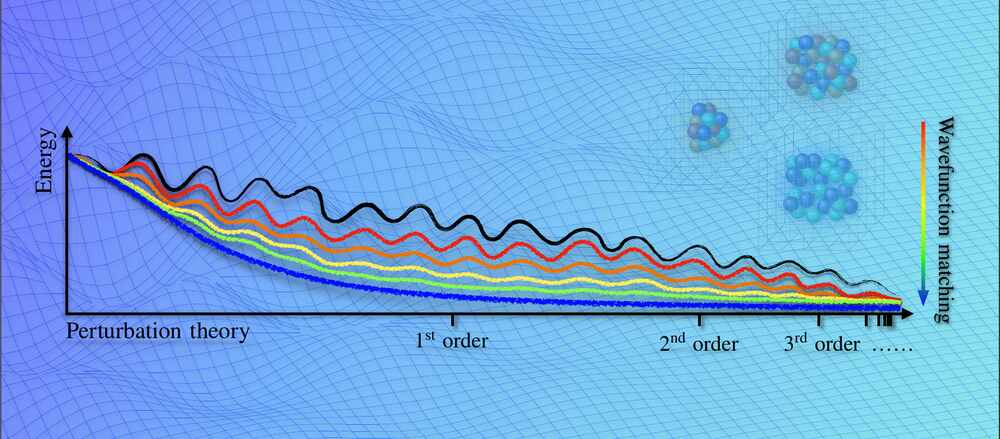
In a recent study, researchers from Japan developed an analysis method, based on persistent homology, a mathematical tool, and principal component analysis, to quantify the complex changes in microscopic magnetic domain structures that are hard to detect with the naked eye.  CREDIT Kotsugi Laboratory from Tokyo University of Science, Japan.
In a recent study, researchers from Japan developed an analysis method, based on persistent homology, a mathematical tool, and principal component analysis, to quantify the complex changes in microscopic magnetic domain structures that are hard to detect with the naked eye. CREDIT Kotsugi Laboratory from Tokyo University of Science, Japan.

Kotsugi lab develops an AI method to quantify complex magnetization reversal mechanisms with topological data analysis

Japanese researchers develop a super-hierarchical and explanatory analysis of magnetization reversal that could improve the reliability of spintronics devices 20221207 1615 02 7e6ba

The reliability of data storage and writing speed in advanced magnetic devices depend on drastic, complex changes in microscopic magnetic domain structures. However, it is extremely challenging to quantify these changes, limiting our understanding of magnetic phenomena. To tackle this, researchers from Japan developed, using machine learning and topology, an analysis method that quantifies the complexity of the magnetic domain structures, revealing hidden features of magnetization reversal that are hardly seen by human eyes.

Spintronic devices and their operation are governed by the microstructures of magnetic domains. These magnetic domain structures undergo complex, drastic changes when an external magnetic field is applied to the system. The resulting fine structures are not reproducible, and it is challenging to quantify the complexity of magnetic domain structures. Our understanding of the magnetization reversal phenomenon is, thus, limited to crude visual inspections and qualitative methods, representing a severe bottleneck in material design. It has been difficult to even predict the stability and shape of the magnetic domain structures in Permalloy, which is a well-known material studied over a century.

Addressing this issue, a team of researchers headed by Professor Masato Kotsugi from Tokyo University of Science, Japan, recently developed an AI-based method for analyzing material functions more quantitatively. In their work published in Science and Technology of Advanced Materials: Methods, the team used topological data analysis and developed a super-hierarchical and explanatory analysis method for magnetic reversal processes. In simple words, super-hierarchical means, according to the research team, the connection between micro and macro properties, which are usually treated as isolated but, in the big scheme, contribute jointly to the physical explanation.

The team quantified the complexity of the magnetic domain structures using persistent homology, a mathematical tool used in computational topology that measures topological features of data persisting across multiple scales. The team further visualized the magnetization reversal process in two-dimensional space using principal component analysis, a data analysis procedure that summarizes large datasets by smaller “summary indices,” facilitating better visualization and analysis. As Prof. Kotsugi explains, “The topological data analysis can be used for explaining the complex magnetization reversal process and evaluating the stability of the magnetic domain structure quantitatively.” The team discovered that slight changes in the structure invisible to the human eye that indicated a hidden feature dominating the metastable/stable reversal processes can be detected by this analysis. They also successfully determined the cause of the branching of the macroscopic reversal process in the original microscopic magnetic domain structure.

The novelty of this research lies in its ability to connect magnetic domain microstructures and macroscopic magnetic functions freely across hierarchies by applying for the latest mathematical advances in topology and machine learning. This enables the detection of subtle microscopic changes and subsequent prediction of stable/metastable states in advance which was hitherto impossible.  “This super-hierarchical and explanatory analysis would improve the reliability of spintronics devices and our understanding of stochastic/deterministic magnetization reversal phenomena,” says Prof. Kotsugi.  Magnetic materials find several applications in data storage. Such applications rely on the changes in magnetic domain structures in these materials. However, these changes have been difficult to quantify owing to our inability to visualize the domains. Now, researchers from Japan have made the visualization of these domains possible, revealing hidden features that are hard to recognize with human vision. Additionally, their approach can be used to study the butterfly effect, a well-known phenomenon in chaos.

Interestingly, the new algorithm, with its superior explanatory capability, can also be applied to study chaotic phenomenon as the butterfly effect. On the technological front, it could potentially improve the reliability of next-generation magnetic memory writing, and aid the development of new hardware for the next generation of devices.

Vegetation dynamics in 2016

Korean researchers build eco-morphodynamic model to predict the landscape of a river

Climate change is changing the environmental condition of rivers; hence, it is no longer possible to manage modern rivers with methods that have been practiced under past environmental conditions.

A joint research team, the Korea Institute of Civil Engineering and Building Technology (KICT) and Deltares of the Netherlands, researched prediction of the future changes in river landscapes using an eco-morphodynamic model applied to an actual river. According to the study result, the vegetation cover increases continuously until 2031, and the area covered by willow trees occupies up to 20% of the river area. Using this modeling, efficiency in river management can be achieved by planning management practices.

Eco-morphodynamic model developed by Deltares is a model that combines a vegetation model with Delft3D software, which is widely used in the field of river hydraulics. The Delft3D computes flow velocity, water depth, and elevation of a riverbed. Then the vegetation model simulates the germination, settlement, growth, and mortality of vegetation based on the Delft3D computation. Simultaneously, vegetation properties are converted to flow resistance and fed back into Delft3D.

KICT and Deltares applied the eco-morphodynamic model to Naeseongcheon Stream in Korea which belongs to a temperate monsoon climate region with large seasonal hydrological fluctuations. Most of the Naeseongcheon Stream has characteristics of a natural river. As its riverbed is mainly composed of sand, the movement is due to hydrological fluctuations and consequently, the vegetation dynamics are active.

KICT has been conducting long-term monitoring including LiDAR and hydrological surveys and vegetation map production since 2012, before significant vegetation establishment in Naeseongcheon Stream began. These monitoring data were used to build and verify the eco-morphodynamic modeling. The modeling area is approximately 5 km long curved reach, located in the middle-lower section of the Naeseongcheon Stream. The width is approximately 300 m, and the model's grid was constructed considering the actual vegetation distribution which had occurred narrowly along the shoreline.

After conducting modeling for the past data(2012-2019 period), the results were compared with the observed data. Compared with the ratio of coverage of tree species in the land cover map made with aerial photos, the area fraction of willow trees in the model result had a similar coverage ratio (In 2014, actual: 2.02%, model: 2.21%). In 2016, the model adequately reproduced the actual situation by simulating the survival and growth of vegetation in the spring and the mortality of vegetation after the flood.

Considering the climate change scenario, the joint research team has performed long-term modeling from 2012 to 2031. The vegetation cover continued to increase until 2031, and the area of trees reached 20% in 2031. Changes in vegetation cover from 2012 to 2031

This eco-morphodynamic model, jointly performed by KICT and Deltares, is a fully coupled model that links the hydrology-vegetation-morphology and can reproduce the actual phenomenon better than other models. It has the advantage of increasing the model's reliability through application and verification in the real river with abundant observed data. With this model, we can predict future changes in a river landscape, ecosystem diversity, and potential flood risks due to vegetation development.

Dr. Lee said, “This eco-morphodynamic model can aid decision-making for implementing appropriate river and vegetation management by simulating the landscape of future rivers according to climate change, though it needs continuous improvement to reflect the complexity of real rivers.”

The estimated Var (a quantification of salinity subgrid variability) of in situ observations in this study. The original (a, c) and objectively analyzed fields (b, d) are presented for the depths of 20 m (a, b) and 300 m (c, d), respectively, as two examples.

China uses ML method for reconstructing high-resolution ocean subsurface salinity dataset

As a key parameter of seawater, salinity plays a vital role in regulating ocean density, stratification, and circulation. It also indicates the coupling between the ocean, atmosphere, and land through the water cycle. Gridded ocean datasets with complete global ocean coverage are significant to marine and climate research.

Currently, owing to the sparsity of in situ observations, most ocean salinity gridded products are with 1° × 1° horizontal resolution, which is difficult to meet the requirements of small-scale marine information research.

Recently, researchers from the Institute of Atmospheric Physics (IAP) of the Chinese Academy of Sciences have reported a high-resolution (0.25° × 0.25°) ocean subsurface (1–2000 m) salinity dataset for the period 1993–2018 using a machine-learning method called feed-forward neural network.

The study was published in Earth System Science Data on Nov. 18.

The study merges in-situ salinity profile observations with high-resolution (0.25° × 0.25°) satellite remote sensing altimetry absolute dynamic topography, sea surface temperature, sea surface wind field data, and a coarse resolution (1° × 1°) gridded salinity product.

"IAP1° gridded salinity dataset was formally released in 2020. Two years later, we developed the new 0.25° × 0.25° reconstruction dataset, or what we call IAP0.25°," said Prof. CHENG Lijing, corresponding author of the study.

Compared with the available IAP 1° × 1° resolution product, the new dataset shows more realistic spatial signals in regions with strong mesoscale variations, e.g., the Gulf Stream, Kuroshio, and Antarctic Circumpolar Current regions. "This indicates the efficiency of the machine learning approach in bringing satellite observations together with in-situ observations," said Prof. CHENG.

According to the study, the large-scale salinity patterns from IAP0.25° are consistent with the IAP1° gridded salinity field, suggesting the persistence of the large-scale signals in the high-resolution reconstruction. The SHAP method is also used to evaluate the effects of different inputs on the reconstruction of IAP0.25°.

The new IAP0.25° dataset is available at http://doi.org/10.57760/sciencedb.o00122.00001, http://www.ocean.iap.ac.cn/ftp/cheng/IAP_v0_Ocean_Salinity_0p25_FFNN_0_2000m/, and http://www.ocean.iap.ac.cn/.