UK astrophysics, AI may offer key to early dementia diagnosis

Crucial early diagnosis of dementia in general practice could improve thanks to a supercomputer model designed in a collaboration between Brighton and Sussex Medical School (BSMS) and astrophysicists at the University of Sussex.

Currently, only two-thirds of people with dementia in the UK receive a formal diagnosis, and many receive it late in the disease process, meaning that a large number are missing out on the care that could help them achieve a good quality of life.

The team, led by Dr Elizabeth Ford, Senior Lecturer in Primary Care Research at BSMS, used data from GP patient records to create a list of 70 indicators related to the onset of dementia and recorded in the five years before diagnosis. Working with data scientists from astrophysics, they then tried several types of machine-learning models to identify patterns of clinical information in patient records before a dementia diagnosis. The best model was able to identify 70% of dementia cases before the GP, but also threw up a number of false positives. {module INSIDE STORY}

Dr Ford said: "Patients appear to be exhibiting a wide range of indicators prior to being diagnosed with dementia. It can be really hard for GPs to connect all these indicators and make the link with dementia, but with a supercomputer program, we can potentially do that. Early diagnosis could make a significant difference to the care dementia patients then receive.

"These findings are exciting but they spark the need for discussion with GPs and patients about what place this kind of technology should have in the GP clinic. As technology develops, we need to have wider conversations on whether we are happy with computers working out our chance of having life-changing conditions like dementia."

Seb Oliver, Professor of Astrophysics in the School for Mathematical and Physical Sciences, said: "It has been fantastic working on this project with Dr Ford and her team. It is always amazing to see how statistical methods such as AI and machine-learning can be used to extract useful information from data, whether that be images from space telescopes or GP patient records. Of course the statistics are only one part of the understanding and it is really exciting to work in new areas to try to understand the different challenges that those present."

Bristol physics prof. shows generation, sampling of quantum states of light in a silicon chip

Scientists from the University of Bristol and the Technical University of Denmark have found a promising new way to build the next generation of quantum simulators combining light and silicon microchips.

In the roadmap to develop quantum machines able to compete and overcome classical supercomputers in solving specific problems, the scientific community is facing two main technological challenges.

The first is the capability of building large quantum circuits able to process the information on a massive scale, and the second is the ability to create a large number of single quantum particles that can encode and propagate the quantum information through such circuits.

Both these two requirements need to be satisfied in order to develop an advanced quantum technology able to overcome classical machines.

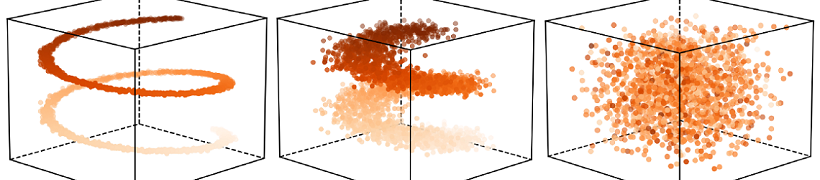
A very promising platform to tackle such challenges is silicon quantum photonics. In this technology, the information carried by photons, a single particle of lights, is generated and processed in silicon microchips. CAPTION By exploring complex integrated circuits, photonic states can be generated and processed at larger scales.  CREDIT Dr Stefano Paesani, University of Bristol{module In-article}

These devices guide and manipulate light at the nanoscale using integrated waveguides - the analog of optical fibers at the nanometre-scale.

Crucially, the fabrication of photonic chips requires the same techniques used for fabricating electronic micro-chips in the semiconductor industry, making the fabrication of quantum circuits at a massive scale possible.

In the University of Bristol's Quantum Engineering Technology (QET) Labs, the team has recently demonstrated silicon photonic chips embedding quantum interferometer composed of almost a thousand optical components, orders of magnitude higher than what was possible just a few years ago.

However, the big question that remained unanswered was if these devices were also able to produce a number of photons large enough to perform useful quantum computational tasks. The Bristol-led research, published today in the journal Nature Physics, demonstrates that this question has a positive answer.

By exploring recent technological developments in silicon quantum photonics, the team has demonstrated that even small-scale silicon photonic circuits can generate and process a number of photons unprecedented in integrated photonics.

In fact, due to imperfections in the circuit such as photon losses, previous demonstrations in integrated photonics have been mostly limited to experiments with only two photons generated and processed on-chip, and only last year, four-photon experiments were reported using complex circuitry.

In the work, by improving the design of each integrated component, the team show that even simple circuits can produce experiments with up to eight photons, double than the previous record in integrated photonics. Moreover, their analysis shows that by scaling up the circuit complexity, which is a strong capability of the silicon platform, experiments with more than 20 photons are possible, a regime where photonic quantum machines are expected to surpass the best classical supercomputers.

The study also investigates possible applications for such near-term photonics quantum processors entering a regime of quantum advantage.

In particular, by reconfiguring the type of optical nonlinearity in the chip, they demonstrated that silicon chips can be used to perform a variety of quantum simulation tasks, known as boson sampling problems.

For some of these protocols, for example, the Gaussian Boson Sampling, this new demonstration is a world-first.

The team also demonstrated that using such protocols, silicon quantum devices will be able to solve industrially relevant problems. In particular, they show how the chemical problem of finding the vibrational transitions in molecules undergoing an electronic transformation can be simulated on our type of devices using Gaussian Boson Sampling.

Lead author Dr. Stefano Paesani from the University of Bristol's Centre for Nanoscience and Quantum Information, said: "Our findings show that photonic quantum simulators surpassing classical supercomputers are a realistic near-term prospect for the silicon quantum photonics platform.

"The development of such quantum machines can have potentially ground-breaking impacts on industrially relevant fields such as chemistry, molecular designing, artificial intelligence, and big-data analysis.

"Applications include the design of better pharmaceutics and the engineering of molecular states able to generate energy more efficiently."

Co-author, Dr Raffaele Santagati, added: "The results obtained make us confident that the milestone of quantum machines faster than any current classical computers is within reach of the integrated quantum photonics platform.

"While it is true that also other technologies have the capability to reach such regime, for example, trapped ions or superconducting systems, the photonics approach has the unique advantage of having the near-term applications we investigated. The photonic path, although perilous, is set, and is very much worth pursuing."

Professor Anthony Laing, Associate Professor of Physics at Bristol supervised the project. He said: "In quadrupling the number of photons both generated and processed in the same chip, the team has set the scene for scaling up quantum simulators to tens of photons where performance comparisons with today's standard computing hardware become meaningful."

UCF physics prof. Colwell develops supercomputer model that reveals new details about Saturn's rings

Researchers are offering glimpses into the nature and composition of Saturn's legendary rings by using data from some of the closest observations ever made of the main rings

Even though NASA's Cassini spacecraft's mission to Saturn ended in 2017, scientists are still poring over the copious amounts of data is transmitted.

Now, in a new paper that appeared in Science on Friday and includes two University of Central Florida co-authors, researchers are offering glimpses into the nature and composition of the mighty planet's legendary rings by using data from some of the closest observations ever made of the main rings.

The paper is a big picture and detailed look at the planet's rings and includes an analysis of Cassini's "grand finale" observations made before the spacecraft's planned crash into the planet on Sept. 15, 2017.

The study reports the rings, which are comprised of icy particles ranging from the size of a marble to the size of a car, have three distinct textures - clumpy, smooth and streaky - and that tiny moons exist within the rings and interact with surrounding particles. Credit: NASA/JPL-Caltech/University of Arizona/CNRS/LPG-Nantes and NASA/JPL-Caltech/Space Science Institute/G. Ugarkovic{module In-article}

Josh Colwell, a UCF physics professor, and study co-author has been a part of the Cassini mission since some of its earliest planning stages in 1990, including the design and observation planning for the Ultraviolet Imaging Spectrograph, or UVIS, on the multi-instrument spacecraft.

In the paper, Colwell and his former student Richard Jerousek, a researcher with UCF's Florida Space Institute and a study co-author, measured and described the structure of Saturn's largest innermost ring, the C Ring, using UVIS data recorded by Cassini.

Using the UVIS's photometer, which measured the brightness of starlight shining through the rings, and by having Cassini take observations from multiple different angles, the researchers were able to create a three-dimensional map of the ring.

They did this by having the photometer focus on a star from a particular angle and then measure the star's brightness as the spacecraft looked at the star through the ring.

Areas where more light passed through indicated areas with less material or gaps in the ring, while areas with less light shining through indicated a denser area where more material was present.

"You can think of it like a friend running through the woods at night with a flashlight pointed at you," Colwell said. "You would see the flashlight flicker because of trees blocking the light."

"So, we did a similar thing with the rings and the flickering of the star tells us something about how many ring particles there are, how big they are and how they are clumped together," Colwell said. "We did many of these observations called stellar occultations."

Colwell and Jerousek found streaky textures in the ring, which seem to be big holes created by the gravity of large boulders that are significantly larger than most ring particles.

They found that vertical thickness of the ring in the locations of these holes is only about 20 feet, while the rings themselves span hundreds of thousands of miles across.

Colwell said it's somewhat odd that there appears to be a larger proportion of the large, boulder-like objects at certain locations in the ring because they could be made from smaller particles that have run into each other and are sticking together, a process known as accretion. This would be intriguing as the tidal force from Saturn tends to pull objects apart in the rings. The large boulder-like objects also could be fragments of something that's broken apart.

"Both of those possibilities are interesting, and it ties into questions about the early stages of how planets form because the same kinds of processes that form planets could be going on in Saturn's rings today," Colwell said.

Colwell developed the supercomputer model of the mapping procedure to originally examine clumps in the rings, while Jerousek flipped the model to measure the holes.

"From this work, we were able to constrain the widths and number of these very narrow gaps or holes as well as the vertical extent of these regions of the rings," Jerousek said.

"These properties are helping us to understand more about the icy boulders that open these gaps and may provide an excellent analog to the early stages of planet formation."

"Understanding these small moonlets and the gaps and textures they create in Saturn's rings provide a snapshot into the early solar system and the conditions in the protoplanetary disk from which planets formed," he said. "Since the details of planet formation are still poorly understood, we're really lucky to have a ring system like Saturn's in our astronomical backyard to help us work out the kinks in our understanding."

Colwell said the end of the mission has been sad, as it has been a part of his life for more than 25 years, and he's made many personal and professional connections as well as had many great experiences. However, he said there is much data still to be analyzed from the mission, and it is something he and his students plan to be working on for years to come.

"We still have so much excellent data, and there's still a tremendous amount to learn," he said.

And while there are no immediate plans to go back to Saturn, there are mission proposals developed. However, Colwell said considering the expense and time it takes to get to Saturn, it could be decades before there is a return.

That means as of now, Cassini is the only spacecraft to make an extensive visit to Saturn. Previous visits were only the flybys made by Voyager 2 in 1981, Voyager 1 in 1980 and Pioneer 11 in 1979. Cassini was launched from Cape Canaveral Air Force Station on Oct. 15, 1997. It arrived at Saturn on June 30, 2004.