Oxford researchers build the world's first ultra-fast photonic supercomputing processor using polarisation

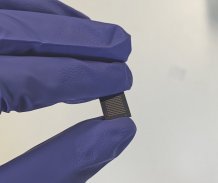
New research uses multiple polarisation channels to carry out parallel processing – enhancing computing density by several orders over conventional electronic chips. Chip Image. Credit: June Sang Lee

In a paper published in Science Advances, researchers at the University of Oxford, in collaboration with the University of Exeter, have developed a method using the polarization of light to maximize information storage density and computing performance using nanowires.

Light has an exploitable property – different wavelengths of light do not interact with each other – a characteristic used by fibreoptics to carry parallel streams of data.

Similarly, different polarisations of light do not interact with each other either. Each polarisation can be used as an independent information channel, enabling more information to be stored in multiple channels, hugely enhancing information density.

First author and DPhil student June Sang Lee, Department of Materials, University of Oxford said: "We all know that the advantage of photonics over electronics is that light is faster and more functional over large bandwidths. So, our aim was to fully harness such advantages of photonics combining with tunable material to realize faster and denser information processing."

The research team developed a HAD (hybridized-active-dielectric) nanowire, using a hybrid glassy material that shows switchable material properties upon the illumination by optical pulses.

Each nanowire shows selective responses to a specific polarization direction, so information can be simultaneously processed using multiple polarisations in different directions.

Using this concept, the researchers developed a photonic processor that utilizes polarisations of light to process information.

Computing is carried out through multiple polarisation channels, leading to an enhancement in computing density by several orders compared to that of conventional electronic chips.

For over a decade, researchers in Professor Harish Bhaskaran’s lab in the Department of Materials, University of Oxford, and in Professor Wright’s lab in the Department of Engineering at the University of Exeter, have been looking into using light as a means to supercomputing.

Professor Bhaskaran, who led the work, said: "This is just the beginning of what we would like to see in the future, which is the exploitation of all degrees of freedoms that light offers, including polarisation to dramatically parallelize information processing. Definitely early-stage work – our speed estimates still need research to verify them experimentally – but super exciting ideas that combine electronics, non-linear materials, and computing. Lots of exciting prospects to work on which is always a great place to be in!"

Professor Wright added: "Just a few years ago most people would have thought that computing with light lay within the realms of science fiction, but recent advances mean light-based processors could become a realistic commercial prospect in the not too distant future."

The full paper, Polarisation-selective reconfigurability in hybridized-active-dielectric nanowires, is published in Science Advances.

Rambus grows quarterly sales by 41 percent; driven by memory interface chips

Rambus Inc. has reported financial results for the first quarter ended March 31, 2022. GAAP revenue for the first quarter was $99.0 million compared to $70.4 million in 1Q2021, licensing billings were $64.1 million, product revenue was $48.0 million, and contract and other revenue was $20.6 million. The Company also generated $42.6 million in cash provided by operating activities in the first quarter.

“Rambus delivered a strong first quarter with record product revenue propelled by robust demand in the data center,” said Luc Seraphin, chief executive officer of Rambus. “With our balanced and diverse portfolio of offerings contributing at scale, we continue to generate cash, execute on our strategy and invest in exciting programs to accelerate the company’s profitable growth.”

The Company had a GAAP cost of revenue of $22.4 million and operating expenses of $68.3 million. The Company also had total non-GAAP operating expenses of $74.9 million (which includes the non-GAAP cost of revenue). The Company had a GAAP diluted net loss per share of $0.60. The Company's basic share count was 110 million shares and its diluted share count would have been 113 million shares.

Cash, cash equivalents, and marketable securities as of March 31, 2022, were $343.7 million, a decrease of $141.9 million from December 31, 2021, mainly due to approximately $174.5 million paid in connection with the repayment of 2023 senior notes, $55.1 million paid in connection with the settlement of warrants, partially offset by proceeds of $72.4 million from the settlement of senior convertible note hedges and $42.6 million cash generated by operating activities.

For the second quarter of 2022, the Company expects licensing billings to be between $61 million and $67 million. The Company also expects royalty revenue to be between $42 million and $48 million, product revenue to be between $49 million and $55 million, and contract and other revenue to be between $18 million and $24 million. Revenue is not without risk and achieving revenue in this range will require that the Company sign customer agreements for various product sales, and solutions licensing among other matters.

The Company also expects operating costs and expenses to be between $92 million and $88 million. Additionally, the Company expects non-GAAP operating costs and expenses to be between $79 million and $75 million. These expectations also assume non-GAAP interest and other income (expense), net, of ($1 million), a tax rate of 24%, and a diluted share count of 114 million, and exclude stock-based compensation expense ($9 million), amortization expense ($4 million), non-cash interest expense on convertible notes ($0.1 million) and interest income related to the significant financing component from fixed-fee patent and technology licensing arrangements ($2 million).

UCL, Oxford study shows promise of quantum supercomputing using factory-made silicon chips

A single qubit on a standard silicon transistor chip has been successfully demonstrated as "quantum capable" in a new study by the UCL spinout Quantum Motion, led by researchers at UCL and Oxford University.

The qubit is the building block of quantum supercomputing, analogous to the bit in classical computers. To perform error-free calculations, quantum supercomputers of the future are likely to need at least millions of qubits. The latest study, published in the journal PRX Quantum, suggests that these computers could be made with industrial-grade silicon chips using existing manufacturing processes, instead of adopting new manufacturing processes or even newly discovered particles.

For the study, researchers were able to isolate and measure the quantum state of a single electron (the qubit) in a silicon transistor manufactured using a 'CMOS' technology similar to that used to make chips in computer processors.

Furthermore, the spin of the electron was found to remain stable for a period of up to nine seconds. The next step is to use a similar manufacturing technology to show how an array of qubits can interact to perform quantum logic operations. Professor John Morton next to a dilution fridge  CREDIT A. Abrusci / UCL

Professor John Morton (London Centre for Nanotechnology at UCL), the co-founder of Quantum Motion, said: "We're hacking the process of creating qubits, so the same kind of technology that makes the chip in a smartphone can be used to build quantum computers.

"It has taken 70 years for transistor development to reach where we are today in computing and we can't spend another 70 years trying to invent new manufacturing processes to build quantum computers. We need millions of qubits and an ultra-scalable architecture for building them, our discovery gives us a blueprint to shortcut our way to industrial-scale quantum chip production."

The experiments were performed by Ph.D. student Virginia Ciriano Tejel (London Centre for Nanotechnology at UCL) and colleagues working in a low-temperature laboratory. During operation, the chips are kept in a refrigerated state, cooled to a fraction of a degree above absolute zero (?273 degrees Celsius).

Ms Ciriano Tejel said: "Every physics student learns in textbooks that electrons behave like tiny magnets with weird quantum properties, but nothing prepares you for the feeling of wonder in the lab, being able to watch this 'spin' of a single electron with your own eyes, sometimes pointing up, sometimes down. It's thrilling to be a scientist trying to understand the world and at the same time be part of the development of quantum computers." The dilution fridge at UCL  CREDIT A. Abrusci / UCL

A quantum computer harnesses laws of physics that are normally seen only at the atomic and subatomic level (for instance, that particles can be in two places simultaneously). Quantum supercomputers could be more powerful than today's supercomputers and capable of performing complex calculations that are otherwise practically impossible. Dilution fridge at UCL  CREDIT A. Abrusci / UCL

While the applications of quantum computing differ from traditional computers, they will enable us to be more accurate and faster in hugely challenging areas such as drug development and tackling climate change, as well as more everyday problems that have huge numbers of variables - just as in nature - such as transport and logistics.