AI meets DNA: Scientists create custom gene editors with machine learning

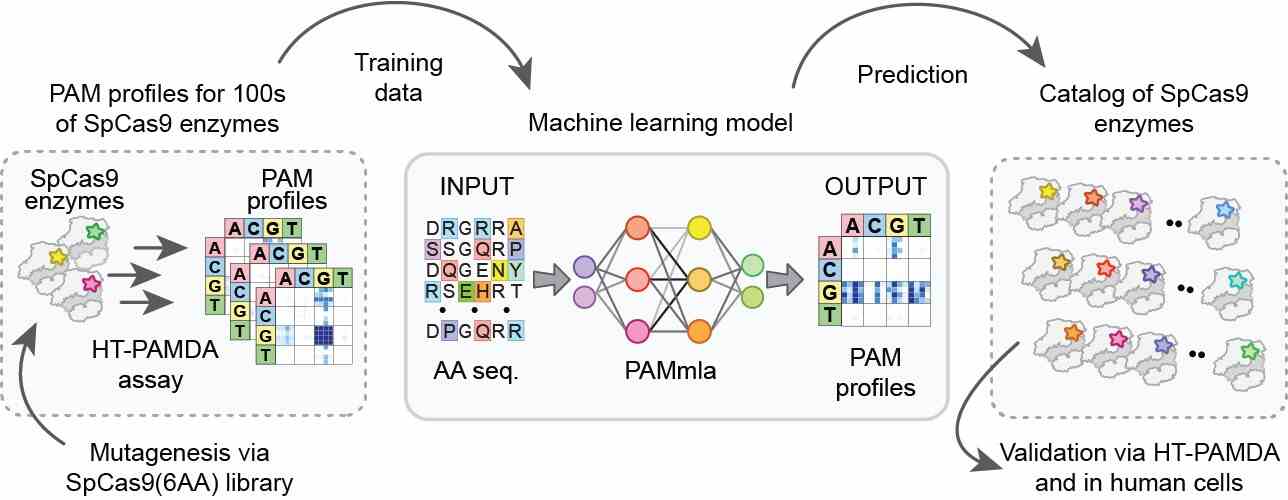
In a remarkable convergence of artificial intelligence and biotechnology, researchers at Mass General Brigham have introduced a groundbreaking method for engineering "bespoke enzymes" specifically designed for gene editing. This innovative approach utilizes machine learning to create enzymes with unprecedented precision, potentially revolutionizing treatments for a wide range of genetic disorders.

The Quest for Precision

Gene editing has long been recognized as a leading frontier in modern medicine, offering the promise of correcting genetic anomalies at their source. However, a significant challenge has always been ensuring specificity—ensuring that edits occur exactly where intended, without any off-target effects. Traditional enzymes used in gene editing, while effective, often lack the level of precision required for such meticulous tasks.

This is where machine learning comes into play. By training algorithms on extensive datasets of enzyme structures and functions, the research team has developed models capable of predicting and designing enzyme variants with improved specificity. These custom-designed enzymes can precisely target genetic sequences, minimizing unintended alterations.

A Symphony of Science and Technology

Dr. Rachel A. Silverstein, the principal investigator of the study, stated, "This is a paradigm shift. By integrating machine learning into enzyme design, we're not just refining existing tools—we're creating entirely new instruments for gene editing."

The implications of this technology are profound. It could lead to more effective and safer treatments for conditions such as cystic fibrosis, sickle cell anemia, and certain types of cancer. Additionally, the adaptability of this approach means it can be customized to fit individual genetic profiles, paving the way for an era of personalized medicine.

Looking Ahead

Although the research is still in its early stages, the results are promising. The team is now focusing on refining the algorithms and conducting preclinical trials to evaluate the efficacy and safety of these bespoke enzymes in living organisms.

Dr. Ben Kleinstiver, a co-author of the study, emphasized the collaborative nature of the project: "This achievement is the culmination of interdisciplinary efforts, bringing together experts in computational biology, genetics, and molecular engineering."

As the lines between biology and technology continue to blur, innovations like this underscore the transformative potential of interdisciplinary research. The intersection of machine learning and gene editing not only showcases scientific ingenuity but also offers hope for countless individuals affected by genetic diseases.

German-built simulations offer hope for honeybee conservation

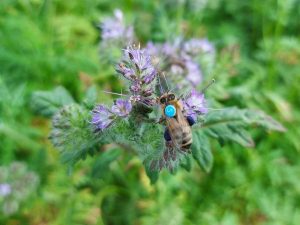
Scientists in Germany, funded by the Federal Ministry of Food and Agriculture, have developed a new approach to studying the effects of pesticides on honeybee colonies, providing promising strategies for their protection. By integrating artificial intelligence (AI) with advanced supercomputer modeling, researchers have developed a system that connects the exposure of individual bees to neonicotinoid pesticides with the overall health of their colonies.

The research, published in Environmental Science & Technology, involved exposing honeybees to sublethal doses of neonicotinoids and monitoring their foraging behavior using AI-based camera technology. The collected data was analyzed with BEEHAVE, a supercomputer simulation designed to investigate stress effects on honeybee colony dynamics. The findings revealed that even low levels of pesticide exposure led to decreased efficiency in pollen foraging, both individually and collectively within the colony.

A particularly encouraging aspect of this study is the reproducibility of the results. The team successfully replicated findings from a 2019 field experiment, demonstrating the robustness of their methodology. This consistency is significant, given the inherent variability in honeybee behavior that often complicates the detection of statistically significant effects.

The implications of this research are extensive. By establishing a clear connection between individual bee behavior and colony health, the study provides a valuable tool for assessing the risks associated with pesticide use. This approach could inform more bee-friendly agricultural practices and guide policy decisions to conserve these essential pollinators.

As honeybees play a crucial role in pollinating crops and maintaining biodiversity, developing such predictive models represents a significant advancement. By harnessing the power of AI and simulation, scientists are better equipped to protect honeybee populations and ensure their ongoing contribution to ecosystems and agriculture.

Cassiopeia A (Cas A)

NASA shows how advanced algorithms transform raw data into meaningful models

NASA’s Chandra X-ray Observatory has introduced new three-dimensional (3D) models of cosmic objects, providing valuable insights into the universe's mysteries. These models, created with advanced theoretical frameworks and computational algorithms, allow scientists and the public to explore stellar remnants and young stars in detail. 

The project focuses on four celestial objects: the supernova remnants Cassiopeia A (Cas A), G292.0+1.8, the Cygnus Loop, and the young star BP Tau. By integrating data from space-based telescopes like Chandra, researchers have produced accurate 3D representations that illustrate these objects' complex structures and evolution.

Central to this initiative are computational algorithms that analyze X-ray emissions and other spectral data, modeling elements and energy distribution within these cosmic bodies. This includes insights into the "Green Monster" in Cas A, an oxygen-rich region with more straightforward origins.

Beyond visualization, these models are valuable research tools, enabling simulations and hypothesis testing about stellar evolution. They are also available for 3D printing, allowing educators and enthusiasts to engage with these celestial representations.

This project highlights the collaboration between observational astronomy and computational science, showcasing how advanced algorithms can transform raw data into meaningful interactive models. Such interdisciplinary approaches will be crucial for understanding the cosmos as technology progresses.