The spiral galaxy Messier 77 (NGC 1068), as observed by ALMA and the Hubble Space Telescope. Hydrogen cyanide isotopes (H13CN), shown in yellow, are found only around the black hole at the center. Cyanide radicals (CN), shown in red, appear not only in the center and a large-scale ring-shaped gas structure, but also along the bipolar jets extending from the center towards the northeast (upper left) and southwest (lower right). Carbon monoxide isotopes (13CO), shown in blue, avoid the central region. (Credit: ALMA (ESO/NAOJ/NRAO), NASA/ESA Hubble Space Telescope, T. Nakajima et al.)

Japanese researchers use ALMA, machine-learning to show how supermassive black holes change galactic chemistry

New research shows that the supermassive black hole at the center of a galaxy can directly impact the host galaxy's chemical distribution. This provides another piece of the puzzle for understanding how galaxies evolve.

It is well known that active supermassive black holes can produce major changes in their host galaxies by heating up and removing the interstellar gas in the universe. But the compact sizes of black holes, the long distances from Earth, and the obscuration by dust in the galaxies have made it difficult to measure the chemical composition distribution of the gas around an active supermassive black hole.

In this study, an international team of researchers led by Toshiki Saito at the National Astronomical Observatory of Japan and Taku Nakajima at Nagoya University used ALMA (Atacama Large Millimeter/submillimeter Array) to observe the central region of Messier 77 located 51.4 million light-years away in the direction of the constellation Cetus. Messier 77 is a nearby example of a galaxy hosting an active supermassive black hole.

Thanks to ALMA’s high spatial resolution and a new machine-learning analysis technique, the team was able to map the distribution of 23 molecules. This is the first survey to objectively depict the distribution of all detected molecules through unbiased observations. The results show that along the path of the bipolar jets emanating near the black hole, molecules commonly found in galaxies such as carbon monoxide (CO) seem to break down, while the concentrations of distinctive molecules such as an isomer of HCN and the cyanide radical (CN) increase. This is direct evidence that supermassive black holes affect not only the large-scale structure but also the chemical composition of their host galaxies.

Jamie Spangler  IMAGE CREDIT: WILL KIRK / JOHNS HOPKINS UNIVERSITY
Jamie Spangler IMAGE CREDIT: WILL KIRK / JOHNS HOPKINS UNIVERSITY

Sprangler unlocks the power of nature with 'protein legos'

Breakthrough research has potential implications for the treatment of injuries

Johns Hopkins engineers have helped develop and characterize an artificial protein that triggers the same response in the human body as its natural counterpart, a breakthrough that not only has the potential to facilitate the design of drugs to accelerate healing but also sheds light on the mechanisms behind various diseases.

"It's protein Legos, essentially," said team leader Jamie Spangler, an assistant professor of chemical and biomolecular engineering and biomedical engineering. "We know what the different pieces look like, and we put them together in an arrangement that is predicted to look like the protein we're trying to mimic. As far as the body is concerned, this newly created protein is as genuine as the one that occurs in nature."

The synthetic protein, called Neo-4, mimics the function of the natural protein interleukin-4 (IL-4): a crucial player in immune system regulation. White blood cells release IL-4 in response to a range of immune triggers, from allergic inflammation to muscle injuries. IL-4 can then attach to various receptors on cells throughout the body. However, when IL-4 is directly injected as a drug, it can bind to unintended cells, causing unwanted side effects.

"If you give someone IL-4 it just acts on everything," said Zachary Bernstein, team member and PhD candidate in biomedical engineering. "But that makes it difficult for therapeutic use. Neo-4 is more specific and only activates immunologically relevant cells."

Neo-4 attaches to a narrower range of cells than IL-4, a characteristic that the researchers say could make it a promising candidate for future drug development. For instance, a torn anterior cruciate ligament (ACL) is a common season-ending sports injury. Cytokines like Neo-4 has the potential to speed up the healing of torn ACLs and other damaged ligaments and muscles.

"These are computationally designed proteins that behave like proteins in nature but have better properties," Spangler said. "That means we can build these robust, hyper-stable proteins to do whatever we want. The hope is that we can use this mimetic to deliver IL-4 in a way that is safer and more robust than the natural cytokine, which could help with its therapeutic advancement."

Huilin Yang, a graduate of the doctoral program in chemical and biomolecular engineering contributed to this research.

The use of "protein legos" to enhance the function of natural proteins is a promising development in the field of biochemistry. This technique has the potential to revolutionize the way scientists approach protein engineering, and could lead to the development of new treatments for diseases, as well as new materials and technologies. By continuing to explore the possibilities of this technique, researchers can create a better future for all.

This project was supported by the National Institute of Health and the Emerson Collective Cancer Research Fund, Bruce and Jeannie Nordstrom, and Patty and Jimmy Barrier Gift for the Institute for Protein Design Fund and the National Cancer Institute.

Biomedical engineers and applied mathematicians at Brown created a machine learning algorithm that uses computational topology to study how these cells organize themselves into tissue-like architectures.

Scientists utilize machine learning to uncover the organization of cells and the crucial role topology plays in the process

The research can aid in understanding how cells organize during embryonic development and the consequences of errors in this process.

Embryonic development is a crucial process for the growth and development of living organisms. The process involves the organization of cells in the right way, at the right place and time, to form healthy tissue. Failure in this process can lead to birth defects, impaired tissue regeneration, or cancer. Therefore, understanding how different cell types organize themselves into a complex tissue architecture is a vital question in developmental biology.

For the past few years, a group of Brown University scientists have been using topology, a branch of mathematics, to help the field get closer to understanding an elusive process.

A group of biomedical engineers and applied mathematicians have developed a machine learning algorithm using computational topology to analyze the shapes and spatial patterns of embryos. This algorithm helps study how cells organize themselves into tissue-like structures. In a recent study, the team took this system to the next level by enabling it to study how various types of cells assemble themselves.

“In tissues, there may be differences in how one cell adheres to the same cell type, relative to how it adheres to a different cell type,” said Ian Y. Wong, an associate professor in the School of Engineering who helped develop the algorithm. “There's this interesting question of how these cells know exactly where to end up within a given tissue, which is often spatially compartmentalized into distinct regions.”

During embryonic development in animals, the cells in the outer layer form the skin, the middle layer forms muscle and bone, and the innermost layer forms the liver or lungs. The cells in each layer have an affinity for each other, which means that they preferentially stick together, separating from cells in other layers that go on to form other parts of the body.

In the 1970s, researchers discovered that cells in frog embryos could be gently separated and, when mixed back together, would spontaneously rearrange into their original organization. This occurs because cells have different affinities for each other, and as they cluster and assemble, certain topological patterns of linkages and loops are preserved.

“In the context of these spatial arrangements of tissues, you can learn a lot from what's there, but also from what’s not there at the same time,” said Dhananjay Bhaskar, a recent Brown Ph.D. graduate.

The Brown researchers demonstrated in 2021 how their method can profile the topological traits of a single cell type that organizes into various spatial configurations and make predictions on it.

Originally, the system had a major issue - it was a slow and laborious process. The algorithm compared topological features one by one with other sets of cell positions to determine their differences or similarities. This process took several hours, hindering the algorithm's full potential in understanding how cells assemble themselves. Additionally, it made it difficult to accurately compare what happens when conditions change - a crucial aspect in investigating what goes wrong.

A new study has introduced a method to overcome the limitation of comparing large datasets of cell positions. The research team used persistence images, which are standardized picture-like formats to represent topological features, making it easier to compare these features. They also trained algorithms to generate "digital fingerprints" that capture the key topological features of the data, which allows researchers to classify thousands of simulations of cell organization into similar patterns without human input. This significantly reduces the computation time from hours to seconds. The researchers aim to infer the rules that govern how different cell types arrange themselves based on the final pattern. By tinkering with how certain cells are more or less adhesive, they can identify how and when dramatic alterations occur in tissue architecture.

The process has potential applications in understanding abnormal developmental processes and laboratory experiments involving drug-induced changes to cell migration and adhesion.

“If you can see a certain pattern, we can use our algorithm to tell why that pattern emerges,” Bhaskar said. “In a way, it’s telling us the rules of the game when it comes to cells assembling themselves.”

The research carried out by the scientists has shown the effectiveness of topology in providing a deeper comprehension of how cells organize themselves. This study has the potential to unlock new paths for further investigation into the mechanisms of cellular organization, which could lead to fresh insights into the development and functioning of living organisms. By utilizing topology to investigate the intricate nature of cellular organization, this research has made a valuable contribution to the field of biology and has the potential to transform our understanding of the basic processes of life.

Stockholm Resilience Center maps all nine planetary boundaries with six crossed

A team of scientists from around the world has developed a comprehensive framework for assessing planetary resilience. This groundbreaking research identifies nine key processes that impact humanity's ability to thrive safely within our planet's boundaries. Unfortunately, the team's findings show that six of these processes are currently being exceeded, and pressure on all nine is growing. The areas of concern include global warming, the biosphere, deforestation, pollutants, plastic, nitrogen cycles, and freshwater.

“This update on planetary boundaries clearly depicts a patient that is unwell, as pressure on the planet increases and vital boundaries are being breached. We don’t know how long we can keep transgressing these key boundaries before combined pressures lead to irreversible change and harm,” says Stockholm Resilience Center researcher Johan Rockström.

The planetary boundaries framework, which was first introduced in 2009, has been assessed for the third time in a new study. This study is the first to conduct a complete check-up of all nine processes and systems that are responsible for maintaining the stability and resilience of our planet. While the transgression of a boundary does not necessarily result in immediate drastic changes, it indicates a critical threshold of increasing risks to both people and the ecosystems that we are a part of. Planetary Boundaries 2023 b2e84

New scientific evidence allows the team to quantify atmospheric aerosol loading. While the boundary is not yet transgressed, rising pressures are evident in regions where air particle pollution impacts monsoon systems.

The assessment confirms that the novel entity boundary, which includes all human-made chemical compounds like microplastics, pesticides, and nuclear waste, has been breached.

The freshwater boundary now considers both green water (held in soil and plants) and blue water (in rivers, lakes, etc.) - both are transgressed.

It is worth noting that a novel method for evaluating biosphere integrity in real-time has been developed. This approach has uncovered signs of compromised ecosystem functionality, indicating that the limit was crossed as early as the late 1800s, when global agriculture and forestry experienced their initial significant expansions.

It is important to comprehend the Earth's climate and ecosystems as a whole system.

In light of these new outcomes, the researchers emphasize that Earth's resilience goes well beyond climate change. 

"The planetary boundaries framework helps scientists to track and communicate how these rising pressures are destabilizing our planet. Earth is a living planet, so the consequences are impossible to predict. That is why we are working more and more with policymakers, businesses, and wider society to try to mitigate pressures on all boundaries,” stresses co-author Sarah Cornell of the Stockholm Resilience Centre at Stockholm University.

The boundary for ozone depletion was exceeded in the 1990s but – thanks to global initiatives, catalyzed by the Montreal Protocol, this boundary is no longer transgressed.

The application of advanced supercomputer models and simulations has proven instrumental in analyzing Earth's ecosystem. Such models facilitate the exploration of the interplay between climate and biosphere interactions. These simulations are conducted over an extended period of several centuries, taking into account both immediate and gradual Earth system processes that culminate in the eventual outcomes of environmental changes triggered today.

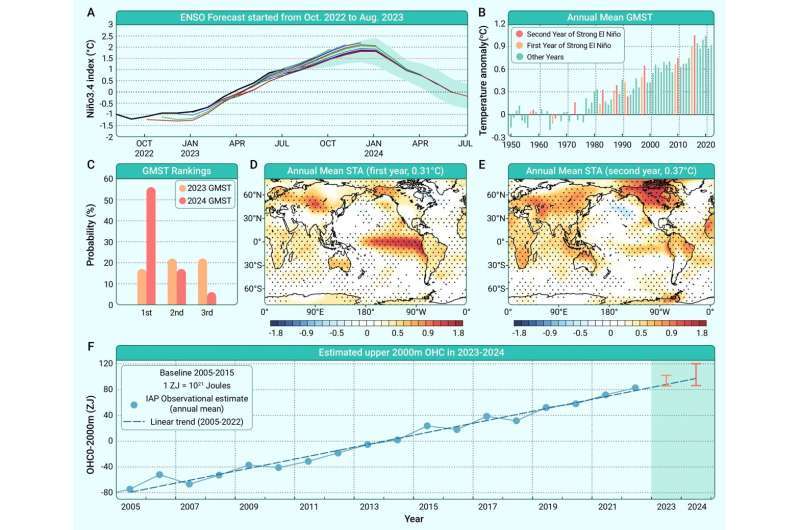
"Science and the world at large are really concerned over all the extreme climate events hitting societies across the planet as we move through the third human-amplified El Niño in only 25 years. But what worries us, even more, is the rising signs of dwindling planetary resilience, manifested by the breaching of planetary boundaries, which brings us closer to tipping points, and closes the window to having any chance of holding the 1.5°C planetary climate boundary," Johan Rockström says. 

The planetary boundaries assessment highlights the intricate links between humans and the environment. It provides a framework for systematic efforts to protect, restore, and enhance the Earth's resilience.

“Ultimately, it highlights the environmental consequences of living in the Anthropocene, and our responsibility as future stewards for the planet,” concludes co-author Ingo Fetzer of the Stockholm Resilience Centre at Stockholm University.

The research findings provide a clear reminder of the detrimental impact of human activity on our planet. As of now, six out of the nine planetary boundaries have been breached. If we don't take prompt action to reverse this trend, the resulting consequences could be catastrophic. We must act immediately to safeguard our planet and secure its future well-being.

Hidde ten Berg
Hidde ten Berg

Revolutionizing emergency medicine diagnoses: A new era of accuracy, efficiency with ChatGPT

In a pilot study that will be presented at the European Emergency Medicine Congress, ChatGPT, an artificial intelligence chatbot, was found to be as effective as a trained doctor in suggesting probable diagnoses for patients being evaluated in emergency medicine departments. This is a significant development that demonstrates the potential of AI-powered assistants to aid in healthcare.

Although the researchers say that more work is needed, their findings suggest that the technology could potentially support doctors working in emergency medicine, which could lead to shorter waiting times for patients. The study was conducted by Dr. Hidde ten Berg from the Department of Emergency Medicine and Dr. Steef Kurstjens from the Department of Clinical Chemistry and Hematology, both at Jeroen Bosch Hospital in 's-Hertogenbosch, the Netherlands.

Dr ten Berg told the Congress: “Like a lot of people, we have been trying out ChatGPT and we were intrigued to see how well it worked for examining some complex diagnostic cases. So, we set up a study to assess how well the chatbot worked compared to doctors with a collection of emergency medicine cases from daily practice.”

The Annals of Emergency Medicine has published a research study that provides anonymized data on 30 patients who received treatment at the emergency department of Jeroen Bosch Hospital in 2022. The research team entered the physicians' notes on patients' symptoms, signs, and physical examinations into two versions of ChatGPT (the free 3.5 version and the subscriber 4.0 version). Additionally, they provided the chatbot with the results of lab tests, including blood and urine analysis. For each case, the researchers compared the chatbot's shortlist of probable diagnoses with the shortlist made by emergency medicine doctors and the actual diagnosis of the patient.

During the study, it was discovered that ChatGPT's shortlists had a significant overlap of about 60% with those of the doctors. In 87% of the cases, doctors correctly diagnosed the disease within their top five likely diagnoses, compared to 97% and 87% of ChatGPT versions 3.5 and 4.0, respectively. Dr. Ten Berg acknowledged ChatGPT's ability to provide a list of possible diagnoses and suggest the most probable option. The overlap of the shortlisted diagnoses with those of the doctors indicates that ChatGPT can suggest medical diagnoses like a human doctor.

“For example, we included a case of a patient presenting with joint pain that was alleviated with painkillers, but redness, joint pain, and swelling always recurred. In the previous days, the patient had a fever and sore throat. A few times there was a discoloration of the fingertips. Based on physical exam and tests, doctors suspected rheumatic fever. However, ChatGPT correctly diagnosed vasculitis.

“It’s vital to remember that ChatGPT is not a medical device and there are privacy concerns when using ChatGPT with medical data. However, there is potential here for saving time and reducing waiting times in the emergency department. The benefit of using artificial intelligence could be in supporting doctors with less experience, or it could help in spotting rare diseases.”

Professor Youri Yordanov from the St. Antoine Hospital emergency department (APHP Paris), France, is Chair of the EUSEM 2023 abstract committee and was not involved in the research. He said: “We are a long way from using ChatGPT in the clinic, but it’s vital that we explore new technology and consider how it could be used to help doctors and their patients. People who need to go to the emergency department want to be seen as quickly as possible and to have their problems correctly diagnosed and treated. I look forward to more research in this area and hope that it might ultimately support the work of busy health professionals.”