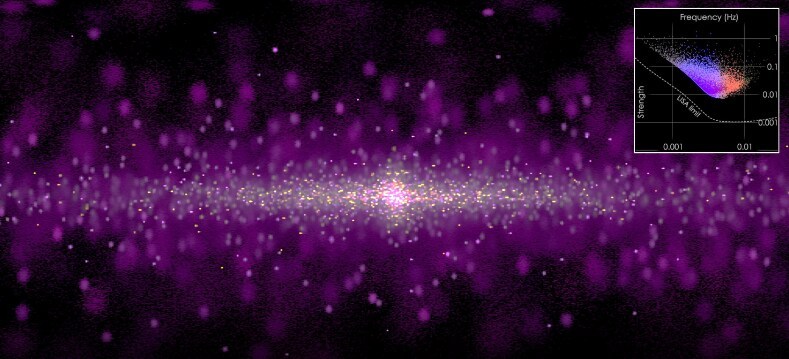
Image of the Hyades star cluster. Image: Jose Mtanous

A recent study suggests that the Hyades star cluster may contain the closest black holes to Earth

A new study suggests that there may be multiple black holes in the Hyades cluster, which is the closest open cluster to our solar system. This discovery marks the detection of the nearest black holes to Earth. The research was conducted by a group of scientists led by Stefano Torniamenti from the University of Padua, with significant contributions from Mark Gieles, ICREA professor at the Faculty of Physics, the Institute of Cosmos Sciences of the University of Barcelona (ICCUB), and the Institute of Space Studies of Catalonia (IEEC), and Friedrich Anders (ICCUB-IEEC).

Specifically, the finding took place during a research stay of the expert Stefano Torniamenti at the ICCUB, one of the research units that make up the IEEC.

Black holes in the Hyades star cluster?

Black holes have always been one of the most enigmatic and captivating phenomena in the Universe, enticing researchers from all corners of the world. The interest in black holes has particularly surged after their discovery through the detection of gravitational waves. Since the first gravitational waves were detected in 2015, experts have recorded numerous events that point to the mergers of low-mass black hole pairs.

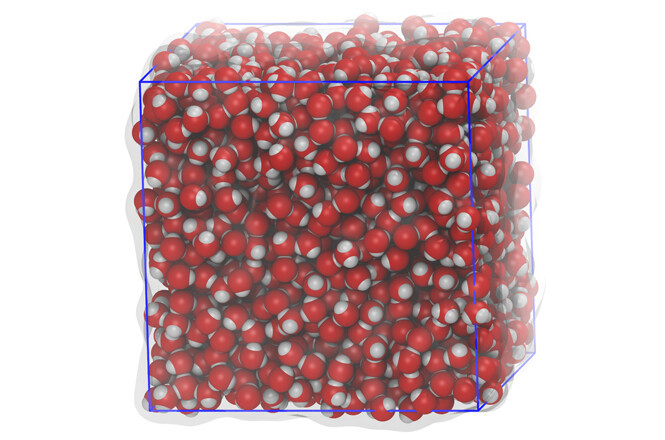
The team of astrophysicists conducted a study using supercomputer simulations to track the motion and evolution of all the stars in the Hyades. This star cluster is located at a distance of about 45 parsecs or 150 light-years from the Sun. They used the simulations to replicate the current state of the stars in the cluster.

Loosely bound groups of hundreds of stars that share certain properties such as age and chemical characteristics are called open clusters. To validate simulation results, the positions and velocities of stars in the Hyades were compared with the actual data collected by the European Space Agency's (ESA) Gaia satellite.

"Our simulations can only simultaneously match the mass and size of the Hyades if some black holes are present at the center of the cluster today (or until recently)", says Stefano Torniamenti, a postdoctoral researcher at the University of Padua and first author of the paper.

The properties observed in the Hyades can be best replicated with supercomputer simulations that include two or three black holes at present. However, simulations that do not include any black holes, because they were all ejected within the last 150 million years (roughly the last quarter of the cluster's age), can still provide a good match. This is because the cluster's evolution could not erase the traces of its previous black hole population.

The new results indicate that the Hyades-born black holes are still inside the cluster, or very close to the cluster. This makes them the closest black holes to the Sun, much closer than the previous candidate (namely the black hole Gaia BH1, which is 480 parsecs from the Sun).

In recent years, the breakthrough of the Gaia space telescope has made it possible for the first time to study the position and velocity of open cluster stars in detail and to identify individual stars with confidence.

"This observation helps us understand how the presence of black holes affects the evolution of star clusters and how star clusters, in turn, contribute to gravitational wave sources", says Mark Gieles, a member of the UB Department of Quantum Physics and Astrophysics and host of the first author in Barcelona. "These results also give us insight into how these mysterious objects are distributed across the galaxy”.

The new study is the result of close collaboration between the University of Padova, ICUBB-IEEC, the University of Cambridge (United Kingdom), the European Southern Observatory (ESO), and the National Sun Yat-sen University (China).

The study of the Hyades star cluster has led to the discovery of the black holes closest to Earth so far. This remarkable discovery provides a great insight into the universe around us and has the potential to open up a new field of research, enabling us to explore the mysteries of these objects in greater detail. It also serves as an inspirational reminder that the universe is full of wonders and that we should never stop exploring and pushing the boundaries of our knowledge.

An AI-based test for Parkinson's disease severity, developed by researchers from the University of Rochester, has users repeat a simple hand gesture. (Getty Images photo)

The power of AI revealed: A promising future for Parkinson's disease diagnosis

The severity of Parkinson's disease can be assessed by tapping the finger 10 times and results are provided within minutes.

Researchers at the University of Rochester have developed an artificial intelligence tool that can remotely assess the severity of Parkinson's disease symptoms within minutes. The tool, which is described in a study published in npj Digital Medicine, requires users to tap their fingers in front of a webcam 10 times to assess motor performance on a scale of 0-4. This new development is expected to help people with Parkinson's disease assess their symptoms more accurately and conveniently.

Doctors often have patients perform simple motor tasks to assess movement disorders and rate the severity using guidelines such as the Movement Disorder Society Unified Parkinson’s Disease Rating Scale (MDS-UPDRS). The AI model provides a rapid assessment using the MDS-UPDRS guidelines, automatically generating computational metrics such as speed, amplitude, frequency, and period that are interpretable, standardized, repeatable, and consistent with medical guidebooks. It uses those attributes to classify the severity of tremors.

The finger-tapping task was performed by 250 global participants with Parkinson’s disease and the AI system’s ratings were compared with those by three neurologists and three primary care physicians. While expert neurologists performed slightly better than the AI model, the AI model outperformed the primary care physicians with UPDRS certification.

“These findings could have huge implications for patients who have difficulty gaining access to neurologists, getting appointments, and traveling to the hospital,” says Ehsan Hoque, an associate professor in Rochester’s Department of Computer Science and co-director of the Rochester Human-Computer Interaction Laboratory. “It’s an example of how AI is being gradually introduced into health care to serve people outside of the clinic and improve health equity and access.”

The study was led by Md. Saiful Islam, a Google Ph.D. fellow and a graduate student in computer science advised by Hoque. The team of computer scientists collaborated with several members of the Medical Center’s Department of Neurology, including associate professor Jamie AdamsRay Dorsey, the David M. Levy Professor of Neurology; and associate professor Ruth Schneider.

The researchers say their method can be applied to other motor tasks, which opens the door to evaluating other types of movement disorders such as ataxia and Huntington’s disease. The new Parkinson’s disease assessment is available online, though the researchers caution that it reflects an emerging technology and at this early stage should not be considered, on its own and without a physician’s input, as a definitive measure of the presence or severity of the disease.

The results of this study demonstrate the potential of AI-based tests to accurately assess the severity of Parkinson's disease. This technology could revolutionize the way medical professionals diagnose and treat Parkinson's disease, providing more accurate and timely diagnoses and treatments. With further research and development, AI-based tests could be used to improve the quality of life of those affected by Parkinson's disease.

Image credit: Daniele B. Malesani / PanSTARRS

Black hole engulfs star matter equivalent to three Earths

A black hole in a nearby galaxy is devouring a star similar to our Sun, causing it to lose mass equivalent to three Earths every time it passes by.

The discovery by University of Leicester astronomers is reported today and provides a missing link in our knowledge of black holes disrupting orbiting stars. It suggests a whole menagerie of stars in the process of being consumed that still lie undiscovered. The team was supported by the UK Space Agency and the UK Science and Technology Facilities Council (STFC). 

The astronomers were alerted to the star by a bright X-ray flash that seemed to come from the center of the nearby galaxy 2MASX J02301709+2836050, around 500 million light-years away from the Milky Way. Named Swift J0230, it was spotted the moment it happened for the first time using a new tool developed by the scientists for the Neil Gehrels Swift Observatory. They rapidly scheduled further Swift observations of it, finding that instead of decaying away as expected, it would shine brightly for 7-10 days and then abruptly switch off, repeating this process roughly every 25 days. Image credit: Phil Evans (University of Leicester) / NASA Swift.

Similar behavior has been observed in what are termed quasi-periodic eruptions and periodic nuclear transients, where a star has material ripped away by a black hole as its orbit takes it close by, but they differ in how often they erupt, and in whether it is in X-rays or optical light that the explosion is predominant. The regularity of Swift J0230’s emissions fell between the two, suggesting that it forms the ‘missing link’ between the two types of outbursts.

Using the models proposed for these two classes of events as a guide, the scientists concluded that the Swift J0230 outburst represents a star of a similar size to our own sun in an elliptical orbit around a low-mass black hole at the center of its galaxy. As the star’s orbit takes it close to the intense gravitational pull of the black hole, material equivalent to the mass of three Earths is wrenched from the atmosphere of the star and heated up as it falls into the black hole. The intense heat, around 2 million degrees Celsius, releases a huge amount of X-rays which were first picked up by the Swift satellite.

Lead author Dr Phil Evans of the University of Leicester School of Physics and Astronomy said: “This is the first time we've seen a star like our Sun being repeatedly shredded and consumed by a low mass black hole.  So-called ‘repeated, partial tidal disruption’ events are themselves quite a new discovery and seem to fall into two types: those that outburst every few hours, and those that outburst every year or so. This new system falls right into the gap between these, and when you run the numbers, you find the types of objects involved fall nicely into place too.”

Dr. Rob Eyles-Ferris, who works with Dr. Evans on the Swift satellite, recently completed his Ph.D. at Leicester, which included the study of stars being disrupted by black holes. He explains: “In most of the systems we’ve seen in the past the star is completely destroyed. Swift J0230 is an exciting addition to the class of partially-disrupted stars as it shows us that the two classes of these objects already found are really connected, with our new system giving us the missing link.”

Dr. Kim Page from the University of Leicester, who worked on the data analysis for the study, said: “Given that we found Swift J0230 within a few months of enabling our new transient-hunting tool, we expect that there are a lot more objects like this out there, waiting to be uncovered.”

Dr Chris Nixon is a theoretical astrophysicist who recently moved from the University of Leicester to the University of Leeds. He led the theoretical interpretation of this event. His research is funded by the UK Science and Technology Facilities Council and the Leverhulme Trust.

They estimate that the black hole is around 10,000 to 100,000 times the mass of our sun, which is quite small for the supermassive black holes usually found at the center of galaxies. The black hole at the center of our own galaxy is thought to be 4 million solar masses, while most are in the region of 100 million solar masses.

It is the first discovery to be made using the new transient detector for the Swift satellite, developed by the University of Leicester team and running on their supercomputer. When an extreme event takes place, causing an X-ray burst in a region of the sky where there were previously no X-rays, astronomers call it an astronomical X-ray transient. Despite the extreme events they herald, these events are not easy to find, or at least, not quickly – and so this new tool was developed to look for new types of transients in real-time.

Dr Evans adds: “This type of object was essentially undetectable until we built this new facility, and soon after it found this completely new, never-before-seen event. Swift is nearly 20 years old and it's suddenly finding brand new events that we never knew existed. I think it shows that every single time you find a new way of looking at space, you learn something new and find there's something out there you didn't know about before.”

Dr Caroline Harper, Head of Space Science at the UK Space Agency, said: “This is yet another exciting discovery from the world-leading Swift mission - a low mass black hole taking ‘bites’ from a Sun-like star whenever it orbits close enough.

“The UK Space Agency has been working in partnership with NASA on this mission for many years; the UK led the development of hardware for two of the key science instruments and we provided funding for the Swift Science Data Centre, which we continue to support.  We look forward to even more insights from Swift about gamma-ray bursts throughout the cosmos, and the massive events that cause them, in the future.”

The discovery of this ravenous black hole serves as a reminder of the immense power of the universe and the importance of studying it. By understanding the behavior of these objects, we can gain insight into the evolution of galaxies and the formation of stars. This study is a testament to the power of collaboration and the importance of international research efforts. It is a reminder that the universe is full of mysteries and that by working together, we can unlock the secrets of the cosmos.

Photo: TiPACCs / Ronja Reese

West Antarctica's ice sheet remains stable, for now

Antarctica is known for its vast ice masses that are capable of raising global sea levels by several meters. A team of experts from European research institutes recently conducted the first systematic stability inspection of the ice sheet’s current state. Their analysis revealed that the ice sheet in West Antarctica is not yet experiencing irreversible, self-reinforcing retreat, but global warming so far could still trigger the gradual loss of ice over the next hundreds to thousands of years.

“With more and more ice being lost in Antarctica over the last years, concerns have been raised whether a tipping point has already been crossed and an irreversible, long-term collapse of the West Antarctic Ice Sheet has already been initiated,” explains Ronja Reese from the Potsdam Institute for Climate Impact Research (PIK) and the Northumbria University, Newcastle. “The results of our studies deliver two messages: First, while a number of glaciers in Antarctica are retreating at the moment, we find no indication of irreversible, self-reinforcing retreat yet, which is reassuring. However, our calculations also clearly indicate that an onset of an irreversible retreat of the ice sheet in West Antarctica is possible if the current state of the climate is sustained.”

The primary cause of ice loss in West Antarctica is the relatively warm ocean water that amplifies melting beneath the ice shelves. These ice shelves are the floating extensions of the grounded ice sheet. The melting of these ice shelves can enhance ice loss by speeding up the dropped sections of the ice sheet. Therefore, the Antarctic margin, with its grounding lines, which is the zone where the grounded and the floating ice are connected, is a crucial indicator of ice sheet health. An accelerated retreat of the grounding lines could indicate an imminent collapse of major marine regions of West Antarctica's ice sheet, particularly those parts of the ice sheet that are grounded below sea level.

Evolving over 10,000 years, triggered today: irreversible ice-loss and sea-level rise

Researchers used advanced ice sheet supercomputer models to conduct a comprehensive study on the irreversible retreat of marine sectors of the Antarctic ice sheet. They also ran simulations to predict how the ice sheet would evolve over the next 10,000 years under current conditions. The results of these hypothetical experiments suggest that certain marine regions of West Antarctica's ice sheet could be irreversibly collapsing even without additional warming beyond what we have already experienced today. The authors found that collapse occurs in their simulations at the earliest in 300 to 500 years from now, under current climate forcing, and a full collapse could take centuries to millennia.

“The thing with sea-level rise from Antarctica is not that changes would happen overnight as an immediate threat to coastal communities. The process of melting would happen over hundreds or thousands of years. However, the cause could be human actions today, as they have the power to trigger and commit a future of 10,000 years to several meters of global sea-level rise. And stronger warming in the future would even speed up this process,” Julius Garbe from PIK stresses. Changes in ice discharge from Antarctica remain one of the greatest uncertainties in future projections of global sea-level rise. “The Antarctic ice is our ultimate heritage of the past, millions of years old and often coined ‘eternal’ ice. But our work shows: that while current ice loss may still be reversible, a destabilization of marine sectors of the ice sheet could initiate a long-term ice loss that is slow but certain. Climate change today could already be enough to tip the scales, that is concerning. Yet, with West Antarctica not destabilized yet there is still a chance to mitigate at least some of the risk by ambitious climate action,” Ricarda Winkelmann from PIK concludes.

Despite the stability inspection for West Antarctica showing that the marine ice sheet is not destabilized yet, the evidence suggests that it is on a path to tipping. This is a worrying sign for the future of our planet, as the destabilization of the ice sheet could have a devastating effect on the environment and the global climate. We must take action now to prevent this from happening, or else we risk facing the consequences of our inaction in the future.

Coral bleaching. © Underwater Earth / XL Catlin Seaview Survey / Christophe Bailhache

Prepare now for a hotter ocean: UK scientists urge action to protect marine life

Communities must plan to reduce the risks of extreme weather patterns and record-high temperatures.

Since April 2023, the average global sea surface temperature has been abnormally high and increasing. By August, temperatures in the northern hemisphere ocean reached a record 25°C.

This rapidly warming trend, fuelled by the climate crisis, has manifested as a series of marine heatwaves — periods of unusually warm sea temperatures that can last weeks, months, or even years — across the northern and southern hemispheres.

Marine heatwaves are becoming more frequent, stronger, and longer-lasting. In some areas around the UK and Ireland, surface waters in June–July were 4–5°C above what is usually recorded at this time of the year. Temperatures are also soaring off the coast of Florida and into the Gulf of Mexico, extending across the tropical Pacific, around Japan, and off the coasts of Ecuador and Peru.

Marine heatwaves disrupt, threaten, and damage ecosystems. They are particularly dangerous for temperature-sensitive marine organisms that live in cool waters, such as kelps, invertebrates, and fishes, and organisms that cannot move, such as corals. Many species may be susceptible to disease or mortality, with knock-on effects.

Such events also affect local communities, who suffer economic losses from fisheries and aquaculture impacts.

This makes the concurrent onset of a strong El Niño -- a climate phenomenon that is typically associated with a rise in global temperatures -- particularly worrying. El Niño is a major climate phenomenon that comprises a warm phase (El Niño), a cool phase (La Niña), and a neutral phase. El Niño has the most widespread impact on sea surface temperatures globally. These switch, irregularly, every few years. The combination of marine heatwaves and strong El Niño are particularly worrying.

Earlier in 2023 conditions in the tropical Pacific began to reverse and El Niño appears to be developing. This is likely to increase to the end of the year and possibly next year and is poised to trigger major marine heatwaves.

With impending El Niño conditions with long-term warming trends, it is vital to monitor and help develop plans to reduce risk to wildlife and economies.

In a recent articleresearchers are urging decision-makers in marine and coastal biodiversity conservation, fishing, aquaculture, and tourism industries to set out a strategy to reduce risk before, during, and after the event. They also set out four main priorities:

  • Identify threatened regions

Historical data can show what areas suffered marine heatwaves during previous El Niños and suggest where future events are likely to occur.

  • Improve forecasts and warnings

Developing new predictive supercomputer models and improving the accuracy of current systems is crucial for local biodiversity efforts as well as the fishing, aquaculture, and tourism industries.

  • Plan local responses

Seasonal early warning systems should be developed to inform conservation agencies, fishing and aquaculture industries, and the public. Some industries like aquaculture and fisheries may need to change or adapt practices before and during predicted heatwaves.

  • Monitor impacts of warmer waters

To better understand ecological responses to extreme warming events, researchers should scale up monitoring efforts to understand more about the physical and biological conditions of a region before a heatwave occurs.

Scientists say that unfortunately, the climate crisis may eventually cause the ocean to reach a permanent heatwave state, and some regions may no longer support certain species and ecosystems.

Postdoctoral Research Assistant Dr Katie Smith from the Marine Biological Association (MBA) who co-authored the paper said: “Marine heatwaves are occurring with increasing regularity and it is crucial that we work towards predicting their impacts and implementing adaptive strategies to reduce the consequences of these events.

Regardless of whether marine heatwaves are exacerbated this year by an El Niño event, preparations to soften their impacts will help marine ecosystems and the industries that rely on them, offering them an opportunity to adjust or transform.”

According to scientists, we must take action now to prepare for stronger marine heat waves in the future. To achieve this, we need to reduce greenhouse gas emissions, improve ocean health, and increase our resilience to climate change. As individuals, we can play our part by reducing our carbon footprint, conserving energy, and supporting policies that protect our oceans and the planet. By taking these steps, we can ensure that future generations have a healthy and thriving marine environment.