South Korean researcher demos deteriorating safety on frozen lakes in a warming world

Schematic illustration of the effects of Global Warming on future lake-ice conditions and anticipated impacts on transportation and recreational activities. Warming levels are given relative to the long-term climate mean of 1900-1929 (Background graphics, licensed from Shutterstock.com).Millions of international viewers enjoyed watching the reality TV show “Ice Road Truckers”, in which experienced truck drivers were expected to master scary challenges, such as transporting heavy supplies across frozen lakes in the remote Arctic. According to a new study published in the prestigious journal Earth’s Future by an international team of climate and lake scientists, crossing frozen lakes with heavy trucks may soon be a matter of the past.

The study is based on one of the most comprehensive future climate change model simulations to date (the Community Earth System Model ver. 2 Large Ensemble) to determine at which warming levels and unsafe ice conditions will be reached regionally with regard to transportation and recreational activities, including ice-fishing or ice-skating.

The conclusion of the study is straightforward, namely that global warming will make lake ice much less safe (Figure). This is likely to affect indigenous communities in the Arctic as well as regional economies, where people rely on ice roads as a means for fast and comparatively cheap transportation and supply during winter. Thinning future ice conditions also threaten unique lake ecosystems that have adapted to recurring frozen lake conditions over tens of thousands of years.

“Our results demonstrate that the duration of safe ice over the next 80 years will shorten by 2-3 weeks depending on the future warming level. In regions where lakes are used as ice roads to transport heavy goods and supplies, the number of days with safe ice conditions will decline by more than 90%, even for moderate warming of 1.5°C above early 20th Century conditions”, says Dr. Lei Huang, corresponding author of the study and former postdoctoral researcher at the IBS Center for Climate Physics (ICCP), in Busan, South Korea.

“According to our computer model simulations, many densely populated regions in the mid-latitudes are projected to experience a large deterioration in safe ice conditions for recreational activities. Already a 1.5°C warming above early 20th Century conditions can lead to more than 60% loss in the duration of safe lake ice. This will negatively impact local communities that rely on the ice recreation industry.” says Dr. Iestyn Woolway from Bangor University, in the UK, the first author of the study.

Dr. Sapna Sharma from York University in Canada, one of the lead authors, added, “Given that our planet has already warmed by 1.2°C since the beginning of industrialization, it is time to implement proper regional adaptation strategies in affected communities to mitigate economic losses and to avoid loss of lives.”

Oxford discovers new nanowire assembly process could enable more powerful chips

Tapering of a polymer monofilament. a) Schematic of the heat-and-pull setup designed for fabricating the nano-crane. A polymer filament (PET, a diameter of 200 µm) is attached on an automated micromanipulator and melted on a clean and polished hot surface at 240 °C. By pulling operation, the melted polymer on the surface instantly cools down and forms a taper. b) Graph showing the characterization of the heat-and-pull setup for various pull lengths and velocities. Increasing pull length and velocity decreases the tip diameter down to sub-micron levels (≈0.4 µm). In a newly-published study, a team of researchers in Oxford University’s Department of Materials led by Harish Bhaskaran, Professor of Applied Nanomaterials, describe a breakthrough approach to pick up single nanowires from the growth substrate and place them on virtually any platform with sub-micron accuracy.

The innovative method uses novel tools, including ultra-thin filaments of polyethylene terephthalate (PET) with tapered nanoscale tips that are used to pick up individual nanowires. At this fine scale, adhesive van der Waals (tiny forces of attraction that occur between atoms and molecules) cause the nanowires to ‘jump’ into contact with the tips. The nanowires are then transferred to a transparent dome-shaped elastic stamp mounted on a glass slide. This stamp is then turned upside down and aligned with the device chip, with the nanowire then printed gently onto the surface.

Deposited nanowires showed strong adhesive qualities, remaining in place even when the device was immersed in liquid. The research team was also able to place nanowires on fragile substrates, such as ultra-thin 50-nanometre membranes, demonstrating the delicacy and versatility of the stamping technique.

In addition, the researchers used the method to build an optomechanical sensor (an instrument that uses laser light to measure vibrations) that was 20 times more sensitive than existing nanowire-based devices.

Nanowires, materials with diameters 1000 times smaller than human hair and fascinating physical properties, could enable major advancements in many different fields, from energy harvesters and sensors to information and quantum technologies. In particular, their minuscule size could allow the development of smaller transistors and miniaturized computer chips. A major obstacle, however, to realizing the full potential of nanowires has been the inability to precisely position them within devices.

Most electronic device manufacturing techniques cannot tolerate the conditions needed to produce nanowires. Consequently, nanowires are usually grown on a separate substrate and then mechanically or chemically transferred to the device. In all existing nanowire transfer techniques, however, the nanowires are placed randomly onto the chip surface, which limits their application in commercial devices.

DPhil student Utku Emre Ali (Department of Materials), who developed the technique, said: ‘This new pick-and-place assembly process has enabled us to create first-of-its-kind devices in the nanowire realm. We believe that it will inexpensively advance nanowire research by allowing users to incorporate nanowires with existing on-chip platforms, be it electronic or photonic, unlocking physical properties that have not been attainable so far. Furthermore, this technique could be fully automated, making full-scale fabrication of high-quality nanowire-integrated chips a real possibility.’

Professor Harish Bhaskaran (Department of Materials) added: ‘This technique is readily scalable to larger areas, and brings the promise of nanowires to devices made on any substrate and using any process. This is what makes this technique so powerful.’

The full paper, A Universal Pick-and-Place Assembly for Nanowires, is published in Smallhttps://onlinelibrary.wiley.com/doi/10.1002/smll.202201968

The work was funded by EPSRC via the Fellowships in Manufacturing (Grant no. EP/R001677/1).

Do people think computers make fair decisions?

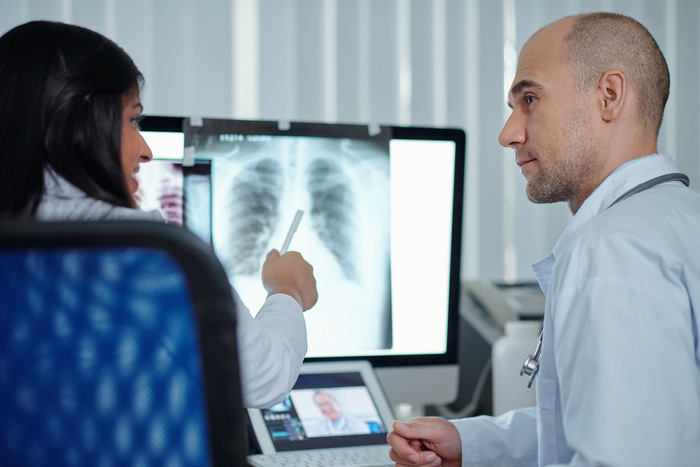
The heatmap shows relative frequencies of respondents that rated a scenario as “Fair” (i.e., either “Somewhat fair” or “Very fair”). The color scale is centered at the average fairness rating over all experiments.  CREDIT Patterns/Gordon and Kern et al.Today, machine learning helps determine the loan we qualify for, the job we get, and even who goes to jail. But when it comes to these potentially life-altering decisions, can computers make a fair call? In a study published today in the journal Patterns, researchers from Germany showed that with human supervision, people think a computer’s decision can be as fair as a decision primarily made by humans.

“A lot of the discussion on fairness in machine learning has focused on technical solutions, like how to fix unfair algorithms and how to make the systems fair,” says computational social scientist and co-author Ruben Bach of the University of Mannheim, Germany. “But our question is, what do people think is fair? It’s not just about developing algorithms. They need to be accepted by society and meet normative beliefs in the real world.”

Automated decision-making, where a conclusion is made solely by a computer, excels at analyzing large datasets to detect patterns. Computers are often considered objective and neutral compared with humans, whose biases can cloud judgments. Yet, bias can creep into computer systems as they learn from data that reflects discriminatory patterns in our world. Understanding fairness in computer and human decisions is crucial to building a more equitable society.

To understand what people consider fair in automated decision-making, the researchers surveyed 3,930 individuals in Germany. The researchers gave them hypothetical scenarios related to the bank, job, prison, and unemployment systems. Within the scenarios, they further compared different situations, including whether the decision leads to a positive or negative outcome, where the data for evaluation comes from, and who makes the final decision—human, computer, or both.

“As expected, we saw that completely automated decision-making was not favored," says computational social scientist and co-first author Christoph Kern of the University of Mannheim. “But what was interesting is that when you have human supervision over the automated decision-making, the level of perceived fairness becomes similar to human-centered decision-making.” The results showed that humans perceive a decision as fairer when involved.

People also had more concerns over fairness when decisions related to the criminal justice system or job prospects, where the stakes are higher. Possibly viewing the weight of losses greater than the weight of gains, the participants deemed decisions that can lead to positive outcomes fairer than negative ones. Compared with systems that only rely on scenario-related data, those that draw on additional unrelated data from the internet were considered less fair, confirming the importance of data transparency and privacy. Together, the results showed that context matters. Automated decision-making systems need to be carefully designed when concerns for fairness arise.

While hypothetical situations in the survey may not fully translate to the real world, the team is already brainstorming the next steps to understand fairness better. They plan on taking the study further to understand how different people define fairness. They also want to use similar surveys to ask more questions about ideas such as distributive justice, and the fairness of resource allocation among the community.

“In a way, we hope that people in the industry can take these results as food for thought and as things they should check before developing and deploying an automated decision-making system,” says Bach. “We also need to ensure that people understand how the data is processed and decisions are made based on it.”

Japanese researchers focus on complex waves

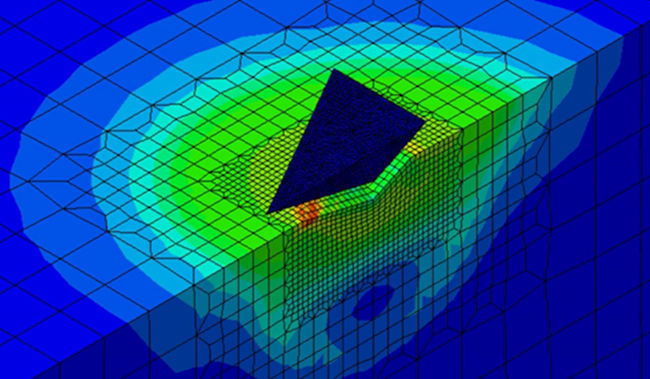
japanesewaves 85a43Extreme nonlinear wave group dynamics in directional wave states

Understanding the unpredictable behaviors of ocean waves can be a matter of survival for seafarers. Deep-water wave groups have been known to be unstable and become rogue, causing unsuspecting boats to tip over.

This rogue wave behavior results from modulation instability, which generally occurs only for uni-directional waves. Wave focusing -- the amplification of waves -- is also expected to weaken when interacting with other wave systems.

Now, a team led by Kyoto University has demonstrated that such unstable wave groups propagate independently regardless of interference.

"Our results seem to support the concept of an unperturbed nonlinear water wave group focusing in the presence of counter-propagating waves, implying that the wave states are directional," says lead author Amin Chabchoub.

Using a water wave tank, the team performed experiments validating results from supercomputer simulations based on the coupled nonlinear Schrödinger equation. This nonlinear wave equation model accounts for complex interactions of waves propagating from two different directions.

The team's findings demonstrate that the model agrees well with the experiments, including rogue and counter-propagating wave dynamics.

Fields such as offshore engineering, nonlinear optics, electrical engineering, and plasma physics, as well as the study of extreme ocean waves, stand to benefit from a better understanding of the role of nonlinearity.

"Our study may further motivate theoretical and experimental studies to improve our understanding of such dynamics in the cacophony of different wave systems," Chabchoub concludes.

UK prof Nawaz deploys new algorithm for reconstructing particles at the LHC

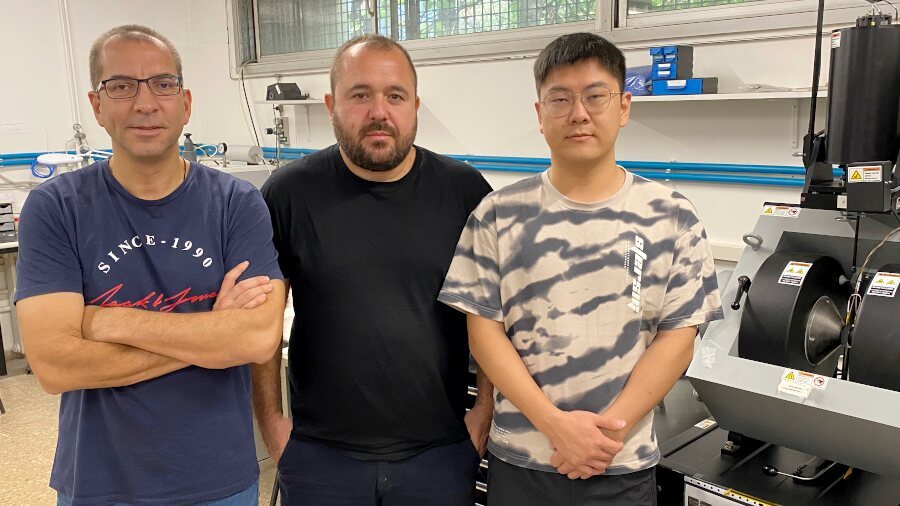
Professor Nawaz on a visit to CERNThe Large Hadron Collider (LHC) is the most powerful particle accelerator ever built which sits in a tunnel 100 meters underground at CERN, the European Organisation for Nuclear Research, near Geneva in Switzerland. It is the site of long-running experiments which enable physicists worldwide to learn more about the nature of the Universe.

The project is part of the Compact Muon Solenoid (CMS) experiment – one of seven installed experiments that use detectors to analyze the particles produced by collisions in the accelerator.

The subject of a new study on in high occupancy imaging calorimeters with graph neural networks, the project has been carried out ahead of the high luminosity upgrade of the Large Hadron Collider. The High Luminosity Large Hadron Collider (HL-LHC) project aims to crank up the performance of the LHC to increase the potential for discoveries after 2029. The HL-LHC will increase the number of proton-proton interactions in an event from 40 to 200.

Professor Raheel Nawaz, Pro Vice-Chancellor for Digital Transformation, at Staffordshire University, has supervised the research. He explained: “Limiting the increase of computing resource consumption at large pileups is a necessary step for the success of the HL-LHC physics program and we are advocating the use of modern machine learning techniques to perform particle reconstruction as a possible solution to this problem.”

He added: “This project has been both a joy and a privilege to work on and is likely to dictate the future direction of research on particle reconstruction by using more advanced AI-based solution.”

Dr. Jan Kieseler from the Experimental Physics Department at CERN added: "This is the first single-shot reconstruction of about 1000 particles from and in an unprecedentedly challenging environment with 200 simultaneous interactions each proton-proton collision. Showing that this novel approach, combining dedicated graph neural network layers (GravNet) and training methods (Object Condensation), can be extended to such challenging tasks while staying within resource constraints represents an important milestone towards future particle reconstruction.”

Shah Rukh Qasim, leading this project as part of his Ph.D. at CERN and Manchester Metropolitan University, said: "The amount of progress we have made on this project in the last three years is truly remarkable. It was hard to imagine we would reach this milestone when we started!"

Professor Martin Jones, Vice-Chancellor and Chief Executive at Staffordshire University, added: “CERN is one of the world’s most respected centers for scientific research and I congratulate the researchers on this project which is effectively paving the way for even greater discoveries in years to come.

“Artificial Intelligence is continuously evolving to benefit many different industries and to know that academics at Staffordshire University and elsewhere are contributing to the research behind such advancements is both exciting and significant.”