
Japanese researchers use MD simulations to understand RNA folding

In a quietly riveting development, researchers at the Tokyo University of Science (TUS) have harnessed molecular dynamics simulations to unravel how RNA molecules fold. A new paper from Associate Professor Tadashi Ando’s team reports that they successfully simulated the folding of a broad library of RNA stem-loops with unprecedented accuracy.

Why This Matters

RNA isn’t just a messenger of genetic code; it folds into complex 3-D shapes (secondary & tertiary structures) that determine its function in cells. Understanding this folding is key to the design of RNA-based therapies. However, computationally modeling this process is extremely challenging, as it requires considering every atom, bond, solvent molecule, and timescale. This is where supercomputing comes in.
 
The team conducted large-scale molecular dynamics (MD) simulations, starting with completely unfolded RNA stem-loops (10–36 nucleotides). They employed two advanced computational components: the DESRES-RNA atomistic force field (refined for high-accuracy RNA modeling) and the GB-neck2 implicit solvent model, which treats the surrounding solvent as a continuous medium, accelerating the simulations.
 
Results: Out of 26 RNA molecules, 23 folded into their expected shapes. For simpler stem-loops (18 total), they achieved a root mean square deviation (RMSD) of < 2 Å for the stems and < 5 Å for the full molecule, closely matching experimental structures. Even some complex motifs with bulges and internal loops (5 of 8) folded correctly, revealing distinctive folding pathways.
 
While the article doesn't explicitly state this, the research needs more massively parallel computing, large memory footprints, and high-throughput sampling of molecular trajectories. The use of implicit solvent models (GB-neck2) helped make the problem tractable, though it remained computationally intensive. Given Japan's rich supercomputing history and high-end compute centers, Ando's team effectively applied this level of computing to a biomolecular-folding challenge.
 
This research establishes a reliable foundation for studying large-scale RNA conformational changes, a previously challenging area. Furthermore, it opens avenues for RNA-based drug design; accurate RNA folding simulations allow us to design molecules that target or mimic this folding.
 
Finally, it indicates a paradigm shift in supercomputing application, moving beyond raw power to employ smart methods, like force fields and solvent models, to optimize computational efficiency while maintaining accuracy.
 
Loop regions (parts of the RNA structure with internal loops or bulges) still showed lower accuracy (≈ 4 Å RMSD), indicating the models aren’t perfect yet. Implicit solvent models (GB-neck2) simplify the environment and accelerate simulations but might miss certain effects, such as how divalent cations (e.g., Mg²⁺) influence RNA structure. For supercomputing-scale applications, modeling even larger RNAs or including explicit solvent models will require significantly increased memory, compute time, and algorithmic complexity.

The Big Picture: Supercomputing → Biology → Therapies

The study used a combination of the DESRES-RNA atomistic force field and the GB-neck2 implicit solvent model to simulate 26 RNA stem-loops (10–36 nucleotides) from an unfolded state. They achieved folding success in 23/26 structures, with strong accuracy for many of them. The researchers explicitly mention that the use of an implicit solvent model (GB-neck2) is a compute-speed optimized because fewer explicit water molecules mean fewer total particles and, thus, less compute time.
 
Given the scale of the problem, simulating 26 RNA molecules using atomistic models starting from an unfolded state, even with an implicit solvent, here's a reasoned estimate: If each RNA simulation ran for tens to hundreds of nanoseconds of physical time, and accounting for simulation overhead, it would likely require hundreds to thousands of core-hours per RNA. Running these simulations in parallel on a mid-sized cluster (e.g., 100–1000 cores), the total wall-time could be anywhere from several days to a couple of weeks. While memory requirements per job might be moderate (a few tens of GB), the aggregate use across parallel jobs could easily reach hundreds of GB.
 
This work exemplifies the intersection of advanced computing and biology. The progression is clear: supercomputers, combined with refined algorithms, enable accurate simulations, paving the way for potential new medicines. This pipeline, once largely theoretical, is now entering practical application.
New supercomputing-enabled model offers fresh hope, but climate clock keeps ticking

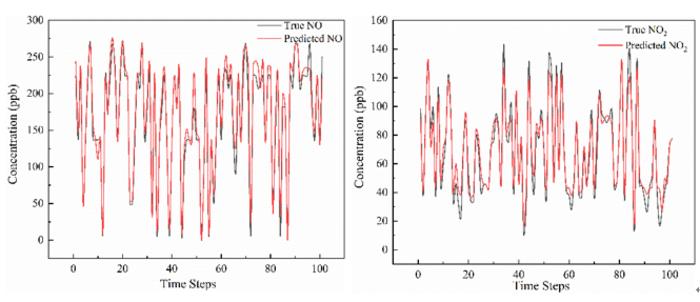
A research team led by Hefei Institutes of Physical Science in China has unveiled a new deep-learning model that significantly improves the forecasting of roadside air pollutants. The model, called DSTMA-BLSTM (Dynamic Shared and Task-specific Multi-head Attention Bidirectional Long Short-Term Memory), achieved an R² above 0.94 on major pollutants and cut prediction errors by about 30% compared with conventional LSTM models.
 
The core innovation lies in how it decomposes the intertwined effects of traffic behavior, meteorology, and emissions: a shared “attention” layer extracts common temporal patterns across pollutants, while task-specific attention heads isolate the unique dynamics of each pollutant.
 
From a supercomputing and big-data standpoint, this matters: urban air pollution is a high-dimensional, non-linear system, subject to rapid shifts in traffic flows, weather, emission regimes, and chemical transformations. Taming this complexity requires serious computing power (for training these deep models) and real-time model inference that can integrate streaming sensor data, traffic flow telemetry, meteorological forecasts, and emissions inventories.
 
In other words, we are entering an era where supercomputing-class workflows (massive data, advanced AI architectures, real-time inference) are not just for cosmology or physics; they’re now essential for everyday environmental management.

Why the urgency? And why the timing is glaring

A high-accuracy pollutant forecasting system is not confined to the lab. In an era of accelerating climate change, urbanization, and increasing regulatory pressure, the ability to predict pollutant spikes (such as traffic-related NO₂, PM₂.₅, and ozone precursors) has direct implications for public health, energy-use strategies, and climate policy.
 
However, we are at a precarious point. The COP30 climate summit in Belém, Brazil (Nov 10-21, 2025), saw world leaders state clearly that the planet has already exceeded the 1.5 °C threshold above pre-industrial levels, a critical point for habitability. The summit agenda focuses not only on mitigation (reducing emissions) but also on adaptation, resilience, and science-based decision-making.
 
This directly relates to the Hefei team's work: one enabler of adaptation is improved forecasting of environmental hazards (including air quality), made possible by computing power and AI. If cities can anticipate problems sooner, they can respond more quickly.
 
But here’s the catch:
  • Better forecasting is necessary, but not sufficient: You can predict pollutant spikes, but if the infrastructure, policies, or finance to act are missing, forecasting becomes an academic exercise.
  • The compute-intensive nature of such models means only organizations with high-performance infrastructure or dedicated cloud investments can deploy them, raising concerns about inequality across cities and nations.
  • At COP30, despite abundant promises, a significant gap persists. According to policy analysts, current national plans (NDCs) still place the world on a warming trajectory of 2.3-2.8 °C, well exceeding the 1.5 °C target.
  • Brazil’s hosting of COP30 is symbolically powerful; the Amazon region is central to global climate dynamics, yet the infrastructure demands of such a summit (and the larger transition) place additional pressure on ecosystems and resources.

What this means for cities

For any firms working at the intersection of big data, real estate, and predictive systems, here’s the play:
  • Integrate supercomputing-grade forecasting models into urban-scale platforms (e.g., neighborhood-level pollutant alerts, real estate risk dashboards, development-planning tools).
  • Recognize that climate risk is now ambient: air-quality shocks, energy-use surges, and infrastructure strain all feed into property value, tenant demand, and regulatory exposure.
  • Position real-estate intelligence tools to reflect the new era: not just “location, condition, comps” but “real-time environmental intelligence, resilience capacity, compute-enabled forecasts”.
  • Advocate for compute equity: if only select cities can afford real-time supercomputing models, the climate justice gap widens. Platforms that democratize access become strategic.

Bottom line

The Hefei team’s advance is a hopeful sign: supercomputing and AI are proving to be potent levers in environmental forecasting and management. But the larger picture remains sobering: at COP30, the world was warned we are already beyond critical thresholds, and cities face accelerating hazards. The compute muscle is necessary now; it must be matched by policy, infrastructure, equity, and action.
 
If we don’t build the “compute infrastructure for resilience” alongside our climate infrastructure, forecasts risk becoming unused tools in a climate-stressed world. Let’s keep these worlds, supercomputing, urban resilience, and climate policy tightly coupled.

Antarctica’s cry, and the supercomputer answers: a grim forecast

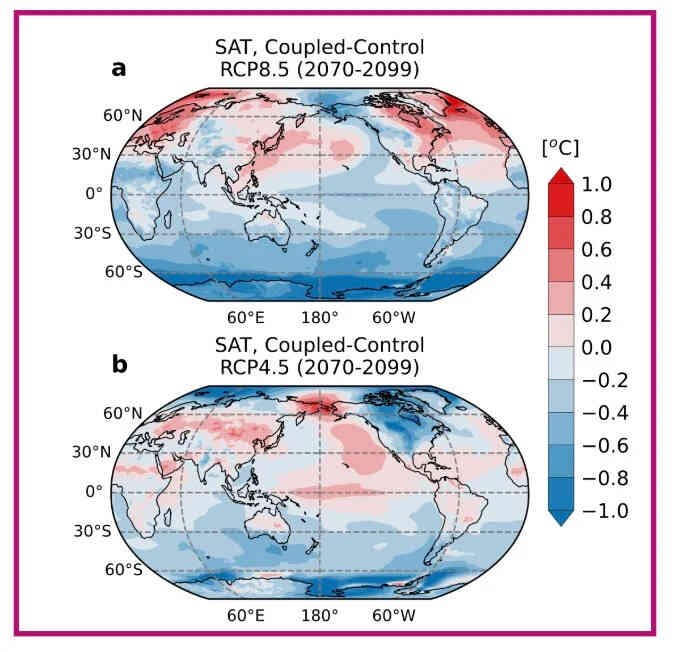
In research resembling a cosmic warning, scientists at the University of Rhode Island (URI) and collaborators used advanced supercomputing to simulate how the melting Antarctic Ice Sheet will reshape our climate and coastlines over the next two centuries. The results are sobering. Dr. Ambarish Karmalkar, assistant professor in URI’s Department of Geosciences and co-author of the study, helped design and run simulations that integrate the ice sheet, ocean, and atmosphere simultaneously.
 
“Simulating ice-sheet–climate interactions … is challenging but critical,” he says. Supercomputing is proving to be the heavy lifter of climate truths. To gain meaningful insight into complex systems like Antarctica’s ice and the global climate, the team relied on high-end supercomputing resources. In their experiment, they ran interactive models on a supercomputer that allowed the meltwater discharge from Antarctica to dynamically affect oceans and atmosphere, rather than just being included as a simple input.

Why does this matter? 

Previous models, lacking real-time feedback from the ice sheet, painted an overly optimistic picture. However, when we fully couple the ice, ocean, and atmosphere, we uncover hidden risks: uneven sea level rise, particularly in the Pacific, Indian Ocean, and Caribbean; unexpected warming in regions far from Antarctica, such as eastern North America; and complex, counter-intuitive dynamics where meltwater cools the Southern Hemisphere but warms the Northern Hemisphere. In short, the supercomputer didn't just predict global sea level rise; it revealed where, how fast, and how unevenly it will occur.

The Forecast: One to Three Meters by 2200, Unless We Act

Under a “very high emissions” scenario, the melting Antarctic sheet alone could contribute over 3 meters (10 feet) of global sea level rise by the year 2200. Under a more moderate scenario, it’s still ~1 meter (3 feet).
 
Meanwhile, some low-lying islands and coastal regions in the Pacific, Indian, and Caribbean zones could see regional rises of up to 1.5 meters (5 feet) due to gravitational and Earth-deformation effects.
 
These are not distant problems. By 2060, more than one billion people will live in low-elevation coastal zones already vulnerable today to storms, erosion, and surge.
 
And the ripple effects from major sea-level rise reach inland: migration pressures, infrastructure costs, economic shifts, all rippling waves.

The Takeaway

The team at URI used cutting-edge supercomputing to reveal a harder truth: melting Antarctica isn't a far-off apocalypse; it's an unfolding structural change with winners, losers, and vast uncertainties. The models show a world where your location and speed of action make a difference. Shrugging won't help. Investing in "knowing the future" via data, modeling, narratives, tools will.