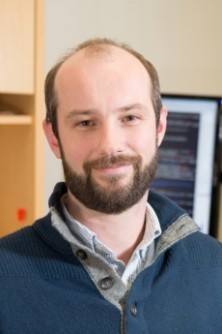
MD Anderson builds ML models that predict adverse outcomes after abdominal hernia surgery

Procedure-specific risk calculator has the potential to encourage changes in patient behaviors before surgery to improve success in abdominal wall reconstruction operations

Machine learning (ML) models developed by surgeons at the University of Texas MD Anderson Cancer Center in Houston have shown a high level of accuracy in predicting which types of patients are most likely to have a hernia recurrence or other complications. Research findings are reported in an academic article published on the website of the Journal of the American College of Surgeons (JACS).

Repair of ventral hernias—hernias that occur when a bulge emerges through the abdominal muscles—is a common operation, with more than 400,000 performed annually in the U.S. However, more than a third of these types of hernias end up happening again or patients experience some other type of post-surgery complication.

“We found that the machine learning algorithm, trained by using our own data, could accurately predict the occurrence of complications after complex abdominal wall repair,” said lead study author Abbas M. Hassan, MD, postdoctoral fellow and Ph.D. candidate, department of plastic surgery, MD Anderson. “It was also able to identify factors associated with poor outcomes.”

Dr. Hassan and colleagues say this is the first study to describe the use of ML to predict postsurgery complications of abdominal wall reconstruction.

Ventral hernias can occur in patients who’ve had an abdominal operation for something other than hernia repair, such as gall bladder removal or, in many cases at MD Anderson, to remove a tumor and nearby tissue, or even part of an organ. The surgeons noted that with more than 4 million abdominal operations performed in the United States annually, the demand for abdominal wall reconstruction is growing.

Accuracy rates and identified risk factors
The ML models achieved average accuracy rates as follows:

  • 85% for predicting hernia recurrence
  • 72% for predicting surgical site occurrence
  • 84% for predicting 30-day hospital readmission

A deeper analysis found that factors that contributed to an increased risk of hernia recurrence were an existing breach of the rectus muscle of the front abdominal wall, obesity, and the bridged repair technique, which uses mesh to span the hernia defect.

Study insights
Dr. Butler explained the rationale for developing the ML models. “It’s really important for surgeons to understand what the risk factors are to abdominal wall reconstruction,” he said. “It is such a common problem that surgeons have to deal with in just about every subspecialty of surgery. It puts tremendous financial, emotional, and physical strains on the healthcare system and on the patients that are affected as well as the surgeons dealing with these problems.”

Many patients experience discomfort and distress if they develop a hernia as well as if their hernia recurs after an operation to repair it fails. “Any information that we can have to help predict some of these adverse outcomes and potentially avoid or mitigate them will be a huge benefit to the patients, their outcomes, and to the financial well-being of the healthcare system,” Dr. Butler said.

Dr. Hassan noted research that has shown that a 1% reduction in the rate of hernia recurrence alone would save the U.S. healthcare system $30 million, according to a 2012 study. “Reduction in complications is really one of the paramount goals of abdominal wall reconstruction,” Dr. Hassan said. “Patients who develop a complication may require readmission or reoperation, and this results in increased morbidity and mortality and healthcare costs, as well as reduced quality of life. So, this becomes a critical concern when we care for patients with cancer who are immunocompromised.”

Reducing risk factors that lead to complications
Dr. Butler said the goal is to incorporate an even broader dataset into the ML models and construct risk calculators that can help surgeons more clearly identify patients who are most susceptible to complications after ventral hernia repair and potential risk factors that can be modified to improve their chances of success. “And then you can have a frank discussion in real-time and set goals with patients,” he said. “For example, you can use the risk calculator to explain to the patient that your chance of hernia recurrence will go down by a certain percent if you lose weight, reduce your HbA1c*, and stop smoking. Also, your risk of having a surgical site occurrence by doing those things will go down by a different tangible percent.” This approach gives patients accurate, tangible goals and provides realistic motivation to actively participate in improving their outcomes of abdominal wall reconstruction.

“We believe the models can be improved and made to be more generalizable in subsequent iterations, and we’re currently embarking on a multicenter study to validate the models and develop a first-of-its-kind integrated tool that uses these models and clinical data and imaging data to provide a robust prediction tool,” Dr. Hassan said. “Our hope is that this tool will be integrated in the future in the electronic medical record and mobile interfaces.”

Study coauthors are Sheng-Chieh Lu, Ph.D., and C. Sidey-Gibbons, Ph.D., of the MD Anderson Center for INSPiRED Cancer Care, Department of Symptom Research; and Malke Asaad, MD, Jun Liu, Ph.D., and Anaeze C. Offodile 2nd, MD, MPH, of the Department of Plastic and Reconstructive Surgery at MD Anderson.

Dr. Offodile is also affiliated with the Institute for Cancer Care Innovation at MD Anderson. Dr. Butler is a consultant for Allergan/AbbVie. Dr. Offodile has received research funding from Blue Cross Blue Shield and the National Academy of Medicine unrelated to the submitted work and reports honorarium from Indiana University.

Surrey academics show how blockchain offers a solution to post-Brexit border digitization to build supply chain trust

As a result of the UK leaving the European Union, logistics firms have faced additional friction at UK borders. Consequently, there have been calls for automated digital borders, but few such systems exist. Surrey researchers have now discovered that a blockchain-based platform can improve supply chain efficiency and trust development at our borders. surrey blockchain links blue media 332c8

Blockchain is a system in which a record of transactions made in bitcoin, or another cryptocurrency, are maintained across several computers that are linked in a peer-to-peer network. The blockchain-based platform studied in this case is known as an RFIT platform; a pilot implementation blockchain system that links data together and ensures that this data is unalterable. This end-to-end visibility of unchangeable data helps to build trust between supply partners.

Professor of Digital Transformation at the University of Surrey and co-author of the study, Glenn Parry, said:

“Since the UK’s withdrawal from the EU Customs Union, businesses have faced increased paperwork, border delays, and higher costs. A digitally managed border system that identifies trusted shipments appears an obvious solution, but we needed to define what trust actually means and how a digital system can help.

“Supply chain participants have long recognized the importance of trust in business relationships. Trust is the primary reason companies cite when supply chain relationships break down, which is especially true at customs borders. Current supply chain friction at UK borders is replicated across the world. Delay is caused by a lack of trust in goods flows, and hence a need to inspect.”

Surrey academics stressed that the introduction of this platform does not remove the need for trust and trust-building processes in established buyer-supplier relationships. Blockchain platform providers must continue to build a position of trust with all participants.

In the case of the import of wine from Australia to the UK, researchers found that the RFIT platform can employ a blockchain layer to make documentation unalterable. The platform facilitates the building of trust across the supply chain by providing a single source of validated data and increasing visibility. Reduced data asymmetry between border agencies and suppliers improves accuracy, timeliness, and integrity.

Through its 2025 UK Border Strategy, the UK Government is seeking to establish technology leadership in reducing friction in cross-border supply chains.

Visiting Fellow at Surrey and co-author of the study, Mike Brookbanks, said:

“The broader findings from the case study are influencing the UK Government on how to address the current challenges with supply chains at UK customs borders. We hope our work will also influence the Government’s current focus on trust ecosystems, as part of the single trade window (STW) initiative. We truly believe that the use of this innovative digital technology will form the Government’s first step in developing a utility trade platform, encouraging broader digitization of our borders.”

Japanese researchers build simulations that explain Greenland’s slower summer warming

Climate changes in the tropical Pacific have temporarily put the brakes on rapid warming and ice melting in Greenland.

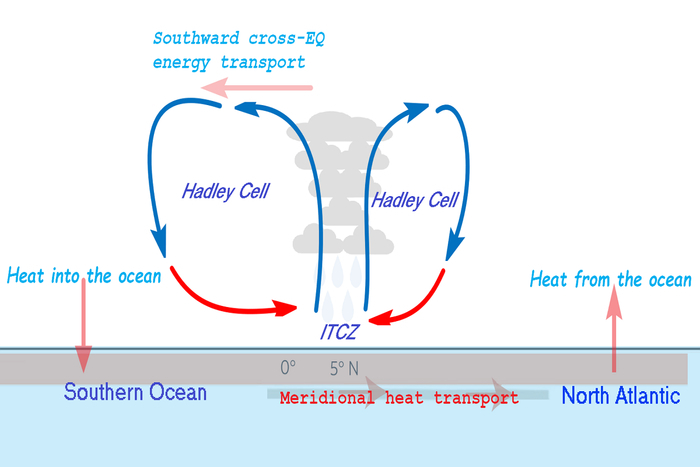
A puzzling, decade-long slowdown in summer warming across Greenland has been explained by researchers at Hokkaido University in Japan. Their observational analysis and supercomputer simulations revealed that changes in sea surface temperature in the tropical Pacific Ocean, thousands of miles to the south, trigger cooler summer temperatures across Greenland. The results, published in the journal Communications Earth & Environment, will help improve future predictions of the Greenland ice sheet and Arctic sea ice melting in the coming decades. A slow-down in summer warming and ice loss in Greenland over the past decade is linked to a shift in El Niño to events over central Pacific, via an atmospheric remote forcing. (Illustration: Shinji Matsumura).

“The Greenland ice sheet is melting in the long run due to global warming associated with greenhouse gas emissions, but the pace of that melting has slowed in the last decade,” says Hokkaido University environmental Earth scientist, Shinji Matsumura. “That slowing was a mystery until our research showed it is connected to changes to the El Niño climate pattern in the Pacific.”

El Niño is a natural, cyclic phenomenon that raises the water temperature in the central and east-central equatorial Pacific Ocean. Scientists know that such large-scale changes alter atmospheric conditions elsewhere due to their association with powerful waves of air pressure called teleconnections. But climate experts struggled to see how the Pacific El Niño could cool Greenland in the summer because easterly summer winds in the tropics usually prevent such teleconnections from forming.

In the new study, the team accounted for recent changes in the Pacific El Niño event, which pushed the warmer sea temperatures further north than usual. This took them beyond the influence of the easterly wind and allowed atmospheric teleconnections that stretch up to Greenland to form.

In turn, these teleconnections disrupt the atmospheric conditions and thus the weather around Greenland in the summertime. Specifically, they drive more intense cyclones, which move colder air over the land. This is enough, the new study shows, to explain the lower-than-expected temperatures and ice melting in the region. Temperatures and rates of ice sheet melting both peaked in 2012.

“The findings, and the slowdown in Greenland’s summertime warming, do not undermine the seriousness of climate change or the need to tackle greenhouse gas emissions,” Matsumura stresses. Rather, they demonstrate how natural changes can act alongside the long-term global warming trend to varying local conditions. The slowdown in warming is local to Greenland. The wider Arctic region remains one of the fastest-warming places on Earth.

El Niño events tend to be followed by similar but different natural climatic shifts called La Niña, in which sea surface temperatures drop. These events tend to bring higher temperatures to Greenland.

“We expect that global warming and ice sheet melting in Greenland and the rest of the Arctic will accelerate even further in the future due to the effects of anthropogenic warming,” Matsumura says.

UAlbany, FIU researchers team up to launch $1.5 million cybersecurity institute

An interdisciplinary group of University at Albany researchers are teaming up with peers at Florida International University to co-lead a new $1.5 million virtual institute that will help train the next generation of cybersecurity professionals for future military and civilian leadership positions.

The Virtual Institute of Cyber Operation and Research (VICOR) aims to advance a U.S. Department of Defense (DoD) VICEROY initiative to establish cyber institutes through higher education partners across the country. It is supported by the Griffiss Institute, a nonprofit talent and technology accelerator for DoD and an international network of academic, government and industry partners. 

Funding for the institute will be used over the next two years to equip students with applied cyber operational skills through hands-on learning and research opportunities. It will also provide scholarships for 60 students selected for the program.

The institute is set to officially launch in June 2022. 

“The United States needs a series of robust STEM programs to prepare today’s students for tomorrow’s cyber jobs,” said Heather Hage, president and CEO of the Griffiss Institute. “The Griffiss Institute is extraordinarily proud to bring VICEROY to life in partnership with the Office of the Undersecretary of Defense and the outstanding academic institutions selected to lead this critical initiative.” 

“We are very excited to be selected for this award and have an opportunity to continue our contributions to the cyber defense of the U.S. through creating the next generation of cybersecurity experts,” said Unal Tatar, the project’s lead principal investigator and an assistant professor at UAlbany’s College of Emergency Preparedness, Homeland Security and Cybersecurity (CEHC). “This award is a remarkable indicator of UAlbany’s excellence in cybersecurity research and education.”

Diversity in Cybersecurity

VICOR forms a new alliance between UAlbany and FIU, both Carnegie-classified R1 institutions with well-established cybersecurity programs.

FIU is a designated Minority Serving Institution, while UAlbany has stood out for its equitable enrollment of Black and Latino students. Most notably, UAlbany has been recognized by the Education Trust as a leader in advancing racial equity among the nation’s most selective public higher education institutions and is regularly ranked as a top institution in advancing social mobility.

Through VICOR, project leaders will recruit a diverse group of students at each institution. This will include ROTC cadets and veteran undergraduate students who have an interest in a wide variety of topics such as cyber defense techniques, digital forensics, security of the Internet of Things, artificial intelligence and data analytics for cybersecurity, electromagnetic spectrum operations, and strategic cybersecurity.

Pipeline for Future Cyber Leaders

To supplement coursework, the institute will organize an annual undergraduate research conference, career fairs and cybersecurity seminars. It will also offer networking and mentorship opportunities with industry partners and access to state-of-the-art labs inside UAlbany’s new $180 million ETEC building.

The approach of the institute is to provide a unique experiential learning environment that is tailored to match the workforce demands of the DoD, Armed Services, and Defense Industrial Base partners.

“We are extremely pleased in achieving this award and recognition, as it enhances FIU’s leadership and commitment to cybersecurity research and education toward the development of a highly-skilled cybersecurity workforce embracing the opportunities offered through the virtual institute’s capacity and alliance with UAlbany,” said Alexander Perez-Pons, principal investigator and an associate professor at FIU’s Department of Electrical & Computer Engineering and a member of the Cybersecurity@FIU program.

Tatar is joined at the institute by UAlbany faculty at CEHC and the School of Business. Co-principal investigators include Sanjay Goel, professor at the School of Business, Benjamin Yankson, assistant professor at CEHC, and Kemal Akkaya of FIU.

How to track sharks using machine learning

New research led by UMass Amherst reveals where, why, and how sharks and game fish overlap; information can help anglers land a trophy fish Webp.net resizeimage 2022 04 05T213356.067 d0b8d

An international team of researchers, led by the University of Massachusetts Amherst, has compiled a massive dataset that overlays years’ worth of information on the position, migration, and interaction of sharks and game fish. This research has immediate relevance for anglers, who have been reporting increased contact with sharks over the years. The research, recently published in Ecological Applications and which relies on innovative use of acoustic telemetry and machine learning, gives us the clearest window yet into complex ecological relationships and promises to be a useful tool in ongoing conservation efforts.UMass Amherst  postdoctoral researcher Lucas Griffin

“It’s so rare to observe multi-species interaction in the ocean,” says Lucas Griffin, the paper’s co-lead author and a postdoctoral researcher in environmental conservation at UMass Amherst. That’s because species such as the ones the researchers focused on – great hammerhead and bull sharks, permit and Atlantic tarpon – can range over hundreds of square miles of open ocean. There has long been anecdotal evidence from the game-fishing community that instances of depredation – when a shark eats a fish that has been hooked – are on the rise, but to date, there’s been no hard data to support whether or not such encounters are indeed increasing and, if so, why. 

For this study, the researchers focused on the coastal regions of the Florida Keys. Over three years, the collaborative team deployed nearly 300 acoustic receivers and tagged 257 fish (including 73 sharks) with transmitters. Every time one of the tagged sharks or fish swam within range of the receiver, its presence was recorded and tagged with the date and time. This approach, called acoustic telemetry, gave the team unprecedented access to the migratory, reproductive, and feeding patterns of sharks and gamefish. The team then ran their raw data through a cutting-edge machine-learning algorithm to model the incredibly complex interplay of environmental factors, such as time of year, lunar cycle, and water depth and temperature.

“Combining acoustic telemetry and machine learning helped us to answer a host of questions about predators and prey,” says Grace Casselberry, the paper’s other co-lead author and a graduate student in the program in marine sciences and technology at UMass Amherst’s Department of Environmental Conservation. It turns out that tarpon and permit are returning to the same spawning grounds, at the same times of the year, every year. Sharks know this: “they seem to remember where and when the tarpon and permit aggregate,” says Casselberry. So do anglers who, through years of word-of-mouth reporting on when the fish are biting where wind up trying to hook the same fish that sharks feed on. Knowing this, fisheries managers can tailor their management strategies to best protect the interests of sharks, game fish, and anglers.

Finally, the team’s research is innovative not just for its methods, but for its cooperation. A wide range of institutions shared data from tagged fish, including research institutions, like the University of Miami and the Bimini Biological Field Station in The Bahamas, to state agencies, like the Florida Fish and Wildlife Conservation Commission, and the nonprofit environmental groups, Bonefish & Tarpon Trust. “We also worked extensively with the local fishing-guide community to help tag game fish and sharks, and figure out where to place the receivers,” says Griffin. “Our lab very much embraces a collaborative and cooperative spirit,” says Andy Danylchuk, professor of fish conservation at UMass Amherst and one of the paper’s senior authors. “We are grateful for our research partners and hope our science will help to hone conservation and management strategies for both game fish and sharks.” UMass Amherst graduate student Grace Casselberry