

 University of Houston researchers aim to prevent poor health outcomes before they occur
More than 37 million people in the United States have diabetes but many don’t receive timely care which can lead to costly, even deadly complications. While effective treatments are available in primary care settings, clinicians lack the tools necessary to identify those at the highest risk. To prevent poor health outcomes before they occur, researchers at the University of Houston are developing Primary Care Forecast. This clinical decision support system uses deep learning to predict which patients are more likely to experience complications.
The first tool to be developed within the innovative AI system is the Diabetes Complication Severity Index (DCSI) Progression Tool, which, in addition to a patient’s health history, considers how their social and environmental circumstances – employment status, living arrangement, education level, food security – could increase their risk for complications. Research shows these societal factors can affect disease progression.
Funded by the American Board of Family Medicine, the tool will provide clinicians with timely, actionable insights so they can intervene early, reduce the percentage of individuals with diabetes who have complications, and lower the number of difficulties affecting each patient.
“Our long-term goal is to help clinicians become more proactive and less reactive when treating diabetes. By leveraging the capabilities of artificial intelligence and machine learning, we can more effectively connect at-risk individuals with interventions before they become sicker,” said Dr. Winston Liaw, the principal investigator of the project and chair of the Department of Health Systems and Population Health Sciences at the Tilman J. Fertitta Family College of Medicine.
For years, insurance companies and researchers have used the DCSI to quantify patients’ complications at a single time. Still, no tools exist to predict which individuals are at the most significant risk for rising DCSI scores.
The tool will be developed in collaboration with the Humana Integrated Health System Sciences Institute at the University of Houston, and leverage unique data sets from Humana Inc. – claims, health records, and individual and community social risk factors. The tool will be tested within the PRIME Registry, a national platform that includes millions of primary care patients nationwide.
“The challenge with existing prediction tools is they provide little explanation and no guidance for subsequent action, limiting trust and implementation. The tool we are developing will inform clinicians why patients are at risk and suggest actions to reduce that risk,” said Ioannis Kakadiaris, Hugh Roy, and Lillie Cranz Cullen University Professor of Computer Science and Health Systems and Population Health Sciences.
“Humana is excited to collaborate with our partners at the University of Houston leveraging their AI and predictive analytic expertise with our extensive diabetes experience using the DCSI and health impactful social determinant solutions. This tool represents a great opportunity to put actionable information into the hands of primary care physicians at the point of service where real change in health happens,” said Dr. Todd Prewitt, corporate medical director, of clinical strategy and analytics at Humana.
Beyond diabetes, the researchers believe the tool could help predict complications associated with other conditions, such as uncontrolled hypertension or worsening depression. The tool will be especially relevant as the healthcare industry shifts to a value-based care model where doctors are rewarded for improving patients’ health instead of being paid for each visit, procedure, or test, regardless of the outcome.
The Fertitta Family College of Medicine, founded in 2019 on a social mission to improve health and health care in underserved urban and rural communities across Texas, emphasizes primary care education and research.
“As primary care doctors, we need an efficient way to leverage the massive amounts of information we receive to improve the quality of life of our patients. The number of complications a patient experiences is strongly associated with death or hospitalization, so developing this AI tool is critical,” said Liaw.
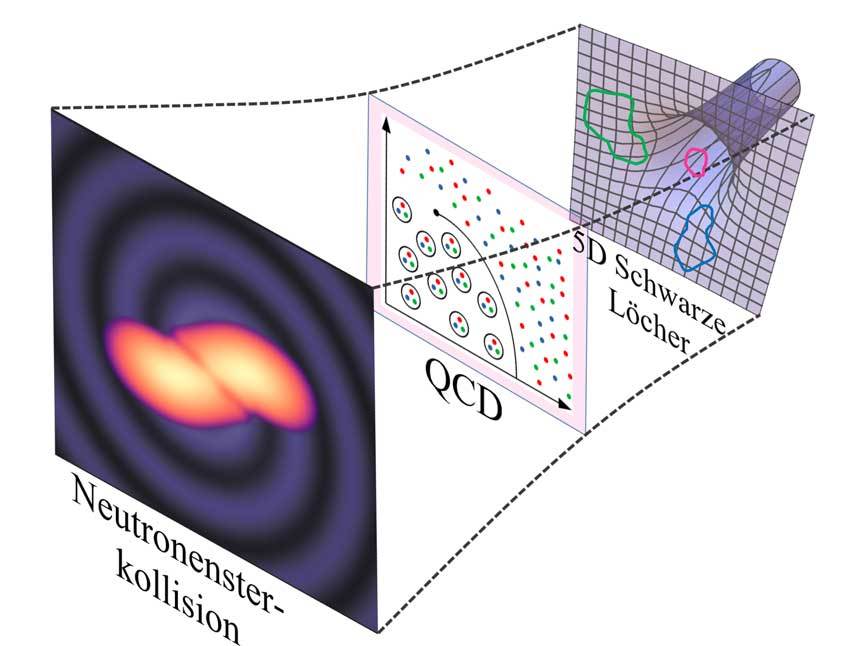 Except for black holes, neutron stars are the densest objects in our universe. As their name suggests, neutron stars are mainly made of neutrons. However, our knowledge of the matter produced during the collision of two neutron stars is still limited. Scientists from Goethe University Frankfurt and the Asia Pacific Center for Theoretical Physics in Pohang have now developed a new model that gives insights into the matter under such extreme conditions.
 RUDN University mathematicians have improved the performance of the blockchain system. The researchers managed to increase the throughput of the system by almost 1.5 times and reduce the delay time. The results are