Germany invests millions to establish quantum materials research group led by Tegenkamp of the TU Chemnitz

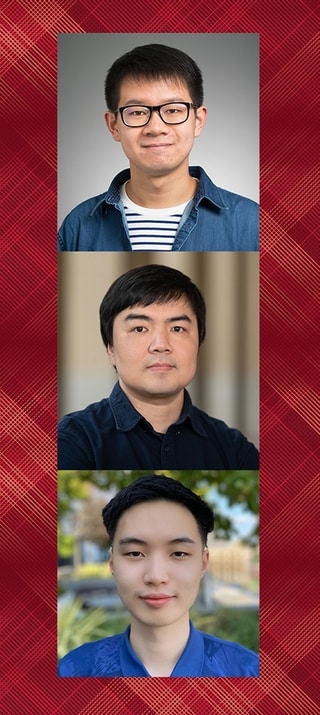
The German Research Foundation (german: Deutsche Forschungsgemeinschaft, DFG) is establishing the new research group "Proximity-induced correlation effects in low-dimensional structures" under the leadership of Chemnitz University of Technology. This was decided by the DFG's Joint Committee on September 23, 2021. According to the DFG, the research group will be funded with approximately 3.2 million euros plus a 22 percent program allowance for indirect costs during the first four-year funding period. The spokesperson is Prof. Dr. Christoph Tegenkamp, head of the professorship of Solid Surface Analysis at the Chemnitz University of Technology.

“I am very pleased about the establishment of the research group under the leadership of the Chemnitz University of Technology. This is an outstanding success for our university, the Faculty of Natural Sciences, and all those involved – whom I congratulate very warmly and thank equally warmly for their great commitment. I am firmly convinced that the research group will contribute significantly to strengthening the core competence Materials and Smart Systems as well as its radiance at and outside the Chemnitz University of Technology," said the President, Prof. Dr. Gerd Strohmeier.

The future research work of the interdisciplinary DFG research group will focus on atomically thin carbon films such as graphene. "These two-dimensional materials and their heterostructures are currently being intensively researched worldwide, as they exhibit unusual and novel electronic properties. The goal of the scientists in our DFG research group is to investigate the correlation effects occurring in a prototypical 2D hetero system and to manipulate them in a targeted manner," Prof. Tegenkamp says. This involves specially fabricated epitaxial graphene layers on the semiconductor material silicon carbide. "These research should provide further foundations for novel quantum materials with tailored properties and their application, for example in spintronics or electronics," says the spokesman for the DFG research group.

The research group includes scientists from the Professorship of Analysis of Solid Surfaces (Head: Prof. Dr. Christoph Tegenkamp), the Professorship of Experimental Physics with a focus on Technical Physics (Head: Prof. Dr. Thomas Seyller), and the Professorship of Theoretical Physics of Quantum Mechanical Processes and Systems (Head: Prof. Dr. Sibylle Gemming). They cooperate with researchers from the Physikalisch-Technische Bundesanstalt Braunschweig, the Max Planck Institute for Solid State Research in Stuttgart, and researchers from the Universities of Göttingen, Hamburg, and Regensburg.

Woods Hole Oceanographic Institution leads ocean currents research toward modeling our climate future

Woods Hole Oceanographic Institution (WHOI) senior scientist of physical oceanography, Dr. Young-Oh Kwon, and WHOI adjunct scientist, Dr. Claude Frankignoul, have received a new research grant from the National Oceanic and Atmospheric Administration (NOAA) Modeling, Analysis, Predictions and Projections (MAPP) Program, funding their research project focusing on western boundary ocean currents and their correspondence with the atmosphere concerning the modern-day climate. 

Western boundary currents (WBCs), such as the Kuroshio-Oyashio Extension in the North Pacific Ocean and the Gulf Stream in the North Atlantic Ocean, are the regions of largest ocean variability and intense air-sea interaction. This WBC variability generates strong ocean-to-atmosphere heat transfer, resulting in warming that can impact large-scale atmospheric circulation and heat transport toward the poles in both the ocean and atmosphere.  Swirling parcels of water, called ocean eddies, a spin-off from the warm Gulf Stream, the powerful northward-flowing current that hugs the U.S. East Coast before veering east across the Atlantic Ocean. This visualization was generated by a numerical model that simulates ocean circulation. WHOI researchers are studying western boundary ocean currents, like the Gulf Stream, and how its behavior can be associated with the climate. Credit: NASA/Goddard Space Flight Center Scientific Visualization © NASA, Goddard Space Flight Center

The project suggests that this WBC behavior and its associated air-sea interaction play fundamental roles in regulating our climate, as well as have a significant impact on extreme weather, coastal ecosystem, and sea level. However, their representation in climate models needs to be improved. This study looks to investigate the nature and impacts of the WBC variability in state-of-the-art climate models based on a set of model diagnostics. Kwon and his team will develop the diagnostics for this study based on various observational datasets. Then, they will be used to determine the differences between observations and the climate model simulations (or model biases) at standard and higher resolutions. 

According to Kwon, the findings would lead to a system of quantifying the oceanic and atmospheric variability in the WBCs resulting from air-sea interactions, and an improved understanding of the links between the model biases in simulating WBCs and the simulated large-scale atmospheric and oceanic circulations. 

“The recent Intergovernmental Panel on Climate Change report was very clear: climate change is widespread, rapid, and intensifying, hence the research to improve our physical understanding of the climate system and model biases are needed more than ever,” said Kwon.

“Our overall goals are to advance scientific understanding, monitoring, and prediction of climate and its impacts, enable effective decisions, especially since the improvement in the climate model processes related to the WBC variability and associated air-sea interaction has significant implications for the prediction of our climate and its impacts,” Kwon added. 

Purdue researchers develop 'self-aware' algorithm to ward off hacking attempts

It sounds like a scene from a spy thriller. An attacker gets through the IT defenses of a nuclear power plant and feeds it fake, realistic data, tricking its computer systems and personnel into thinking operations are normal. The attacker then disrupts the function of key plant machinery, causing it to misperform or break down. By the time system, operators realize they’ve been duped, it’s too late, with catastrophic results.

The scenario isn’t fictional; it happened in 2010 when the Stuxnet virus was used to damage nuclear centrifuges in Iran. And as ransomware and other cyberattacks around the world increase, system operators worry more about these sophisticated “false data injection” strikes. In the wrong hands, the computer models and data analytics – based on artificial intelligence – that ensure the smooth operation of today’s electric grids, manufacturing facilities, and power plants could be turned against themselves. Equipping computer models with “covert cognizance” could protect electric grids, manufacturing facilities and nuclear power plants from hackers, says Hany Abdel-Khalik, a Purdue associate professor of nuclear engineering. (Purdue University photo/Vincent Walter)

Purdue University’s Hany Abdel-Khalik has come up with a powerful response: to make the computer models that run these cyber-physical systems both self-aware and self-healing. Using the background noise within these systems’ data streams, Abdel-Khalik and his students embed invisible, ever-changing, one-time-use signals that turn passive components into active watchers. Even if an attacker is armed with a perfect duplicate of a system’s model, any attempt to introduce falsified data will be immediately detected and rejected by the system itself, requiring no human response.

“We call it covert cognizance,” said Abdel-Khalik, an associate professor of nuclear engineering and researcher with Purdue’s Center for Education and Research in Information Assurance and Security (CERIAS). “Imagine having a bunch of bees hovering around you. Once you move a little bit, the whole network of bees responds, so it has that butterfly effect. Here, if someone sticks their finger in the data, the whole system will know that there was an intrusion, and it will be able to correct the modified data.”

Trust through self-awareness

Abdel-Khalik will be the first to say that he is a nuclear engineer, not a computer scientist. But today, critical infrastructure systems in energy, water, and manufacturing all use advanced computational techniques, including machine learning, predictive analytics, and artificial intelligence. Employees use these models to monitor readings from their machinery and verify that they are within normal ranges. From studying the efficiency of reactor systems and how they respond to equipment failures and other disruptions, Abdel-Khalik grew familiar with the “digital twins” employed by these facilities: duplicate simulations of data-monitoring models that help system operators determine when true errors arise.

But gradually he became interested in intentional, rather than accidental, failures, particularly what could happen when a malicious attacker has a digital twin of their own to work with. It’s not a far-fetched situation, as the simulators used to control nuclear reactors and other critical infrastructure can be easily acquired. There’s also the perennial risk that someone inside a system, with access to the control model and its digital twin, could attempt a sneak attack.

“Traditionally, your defense is as good as your knowledge of the model. If they know your model pretty well, then your defense can be breached,” said Yeni Li, a recent graduate from the group, whose Ph.D. research focused on the detection of such attacks using model-based methods.

Abdel-Khalik said, “Any type of system right now that is based on the control looking at information and making a decision is vulnerable to these types of attacks. If you have access to the data, and then you change the information, then whoever's making the decision is going to be basing their decision on fake data.”

To thwart this strategy, Abdel-Khalik and Arvind Sundaram, a third-year graduate student in nuclear engineering, found a way to hide signals in the unobservable “noise space” of the system. Control models juggle thousands of different data variables, but only a fraction of them are used in the core calculations that affect the model’s outputs and predictions. By slightly altering these nonessential variables, their algorithm produces a signal so that individual components of a system can verify the authenticity of the data coming in and react accordingly.

“When you have components that are loosely coupled with each other, the system really isn't aware of the other components or even of itself,” Sundaram said. “It just responds to its inputs. When you're making it self-aware, you build an anomaly detection model within itself. If something is wrong, it needs to not just detect that, but also operate in a way that doesn't respect the malicious input that's come in.”

For added security, these signals are generated by the random noise of the system hardware, for example, fluctuations in temperature or power consumption. An attacker holding a digital twin of a facility’s model could not anticipate or re-create these perpetually shifting data signatures, and even someone with internal access would not be able to crack the code.

“Anytime you develop a security solution, you can trust it, but you still have to give somebody the keys,” Abdel-Khalik said. “If that person turns on you, then all bets are off. Here, we're saying that the added perturbations are based on the noise of the system itself. So there's no way I would know what the noise of the system is, even as an insider. It's being recorded automatically and added to the signal.”

Though the papers published by the team members so far have focused on using their paradigm in nuclear reactors, the researchers see the potential for applications across industries — any system that uses a control loop and sensors, Sundaram said. The same methods could be used also for objectives beyond cybersecurity, such as self-healing anomaly detection that could prevent costly shutdowns and a new form of cryptography that would enable the secure sharing of data from critical systems with outside researchers. 

Cyber gets physical

As nuclear engineers, Abdel-Khalik and Sundaram benefit from the expertise and resources of CERIAS to find entry points into the worlds of cybersecurity and computer science. Abdel-Khalik credits Elisa Bertino, the Samuel D. Conte Professor of Computer Science and CERIAS research director, with the original spark that led to creating the covert cognizance algorithm, and thanks to the center for exposing him to new partnerships and opportunities.

Founded in 1998, CERIAS is one of the oldest and largest research centers in the world concentrating on cybersecurity. Its mission, says managing director Joel Rasmus, has always been interdisciplinary, and today the center works with researchers from 18 departments and eight colleges at Purdue. Abdel-Khalik’s research is a perfect example of this diverse network.

“When most people think about cybersecurity, they only think about computer science,” Rasmus said. “Here's a nuclear engineering faculty member who's doing unbelievably great cyber and cyber-physical security work. We've been able to link him with computer scientists at Purdue who understand this problem, but yet don't understand anything about nuclear engineering or the power grid, so they're able to collaborate with him.”

Abdel-Khalik and Sundaram have begun to explore the commercial possibilities of covert cognizance through a startup company. That startup, Covert Defenses LLC, has recently engaged with Entanglement Inc., an early-stage deep tech company, to develop a go-to-market strategy.

In parallel, the team will be working to develop a software toolkit that can be integrated with the cyber-physical testbeds at CERIAS and the Pacific Northwest National Laboratory, where sensors and actuators coupled to software provide a simulation of large-scale industrial systems.

“We can provide additional applications for the technologies that he’s developing, since this is an idea that can help nearly every cyberphysical domain, such as advanced manufacturing or transportation,” Rasmus said. “We want to make sure that the research that we're doing actually helps move the world forward, that it helps solve actual real-world problems.”

Cybersecurity is a critical topic under Purdue’s Next Moves, the ongoing strategic initiatives that will advance the university’s competitive advantage. Purdue’s cybersecurity research and educational initiatives are centered under CERIAS, which includes 135 affiliated faculty members.