

Yale physicists build simulations that show hurricanes will roam over more of the Earth

A new, Yale-led study suggests the 21st century will see an expansion of hurricanes and typhoons into mid-latitude regions, which includes major cities such as New York, Boston, Beijing, and Tokyo. © stock.adobe.com
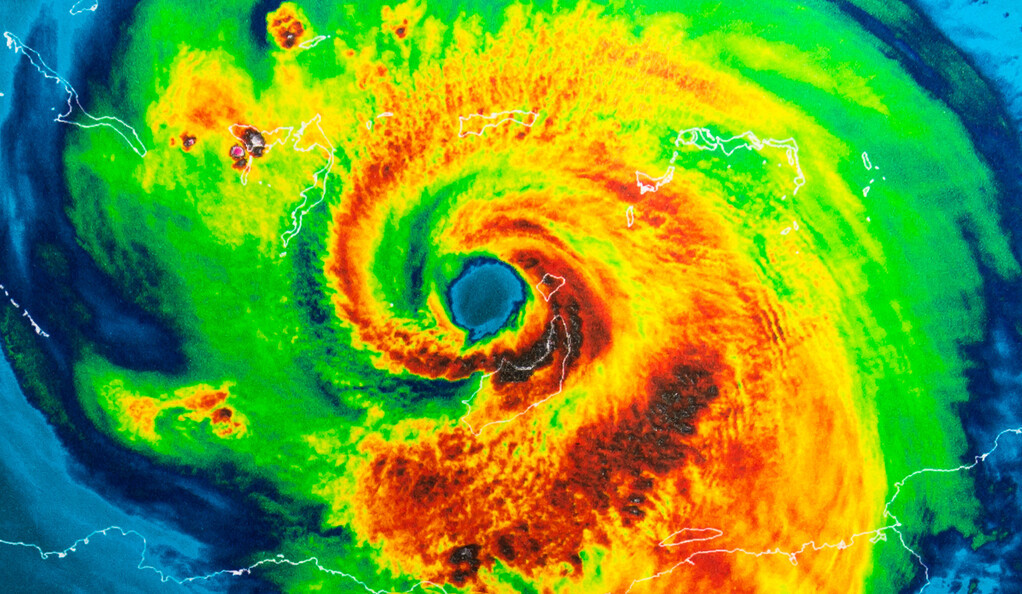
The researchers said tropical cyclones, hurricanes and typhoons, could migrate northward and southward in their respective hemispheres, as the planet warms as a result of anthropogenic greenhouse gas emissions. 2020’s subtropical storm Alpha, the first tropical cyclone observed making landfall in Portugal, and this year’s Hurricane Henri, which made landfall in Connecticut, maybe harbingers of such storms.

“This represents an important, under-estimated risk of climate change,” said first researcher Joshua Studholme, a physicist in Yale’s Department of Earth and Planetary Sciences in the Faculty of Arts and Sciences, and a contributing author on the United Nations’ Intergovernmental Panel on Climate Change sixth assessment report published earlier this year.

“This research predicts that the 21st century’s tropical cyclones will likely occur over a wider range of latitudes than has been the case on Earth for the last 3 million years,” Studholme said.

Co-authors of the study are Alexey Fedorov, a professor of oceanic and atmospheric sciences at Yale, Sergey Gulev of the Shirshov Institute of Oceanology, Kerry Emanuel of the Massachusetts Institute of Technology, and Kevin Hodges of the University of Reading.

While an increase in tropical cyclones is commonly cited as a harbinger of climate change, much remains unclear about how sensitive they are to the planet’s average temperature. In the 1980s, study co-author Emanuel used concepts from classical thermodynamics to predict that global warming would result in more intense storms — a prediction that has been validated in the observational record.

Yet other aspects of the relationship between tropical cyclones and climate still lack physically based theory. For example, there is no agreement among scientists about whether the total number of storms will increase or decrease as the climate warms, or why the planet experiences roughly 90 such events each year.

“There are large uncertainties in how tropical cyclones will change in the future,” said Fedorov. “However, multiple lines of evidence indicate that we could see more tropical cyclones in mid-latitudes, even if the total frequency of tropical cyclones does not increase, which is still actively debated. Compounded by the expected increase in average tropical cyclone intensity, this finding implies higher risks due to tropical cyclones in Earth’s warming climate.”

Typically, tropical cyclones form at low latitudes that have access to warm waters from tropical oceans and away from the shearing impact of the jet streams — the west-to-east bands of wind that circle the planet. Earth’s rotation causes clusters of thunderstorms to aggregate and spins up to form the vortices that become tropical cyclones. Other mechanisms of hurricane formation also exist.

As the climate warms, temperature differences between the Equator and the poles will decrease, the researchers say. In the summer months, this may cause weakening or even a split in the jet stream, opening a window in the mid-latitudes for tropical cyclones to form and intensify.

For the study, Studholme, Fedorov, and their colleagues analyzed numerical simulations of warm climates from Earth’s distant past, recent satellite observations, and a variety of weather and climate projections, as well as the fundamental physics governing atmospheric convection and planetary-scale winds. For example, they noted that supercomputer simulations of warmer climates during the Eocene (56 to 34 million years ago) and Pliocene (5.3 to 2.6 million years ago) epochs saw tropical cyclones form and intensify at higher latitudes.

“The core problem when making future hurricane predictions is that models used for climate projections do not have sufficient resolution to simulate realistic tropical cyclones,” said Studholme, who is a postdoctoral fellow at Yale. “Instead, several different, indirect approaches are typically used. However, those methods seem to distort the underlying physics of how tropical cyclones form and develop. A number of these methods also provide predictions that contradict each other.”

The new study derives its conclusions by examining connections between hurricane physics on scales too small to be represented in current climate models and the better-simulated dynamics of Earth’s jet streams and north-south air circulation, known as the Hadley cells.
Natural History Museum combines supercomputer modeling, paleontology to study Earth's first giant

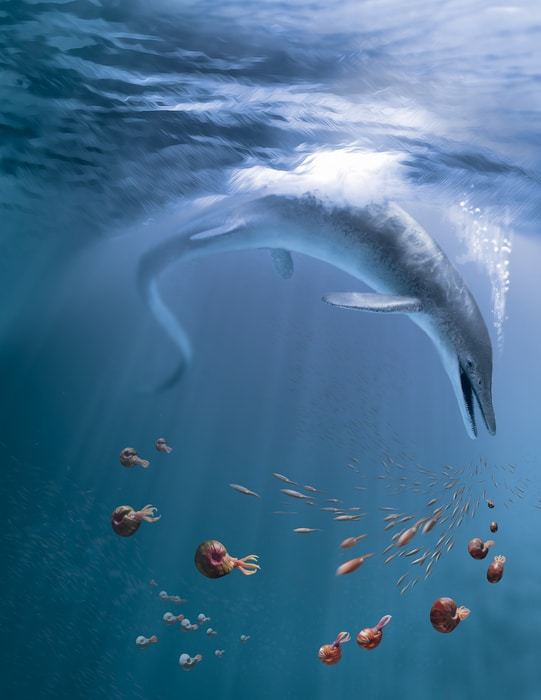
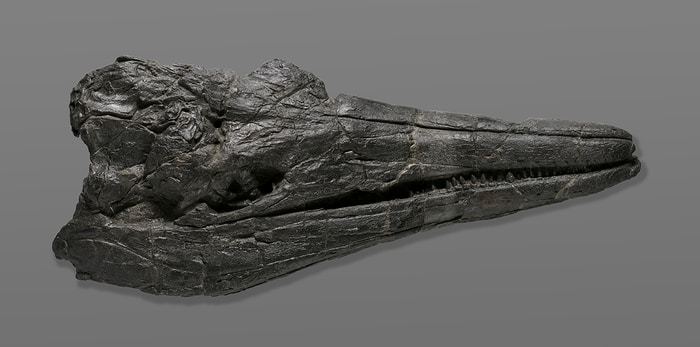
The two-meter skull of a newly discovered species of giant ichthyosaur, the earliest known, is shedding new light on the marine reptiles’ rapid growth into behemoths of the Dinosaurian oceans, and helping us better understand the journey of modern cetaceans (whales and dolphins) to becoming the largest animals to ever inhabit the Earth. A life recreation of "C. youngorum" stalking the Nevadan oceans of the Late Triassic 246 million years ago.  CREDIT Illustration by Stephanie Abramowicz, courtesy of the Natural History Museum of Los Angeles County (NHM).

While dinosaurs ruled the land, ichthyosaurs and other aquatic reptiles (that were emphatically not dinosaurs) ruled the waves, reaching similarly gargantuan sizes and species diversity. Evolving fins and hydrodynamic body-shapes seen in both fish and whales, ichthyosaurs swam the ancient oceans for nearly the entirety of the Age of Dinosaurs. 

“Ichthyosaurs derive from an as yet unknown group of land-living reptiles and were air-breathing themselves,” says lead author Dr. Martin Sander, a paleontologist at the University of Bonn and Research Associate with the Dinosaur Institute at the Natural History Museum of Los Angeles County (NHM). “From the first skeleton discoveries in southern England and Germany over 250 years ago, these ‘fish-saurians’ were among the first large fossil reptiles known to science, long before the dinosaurs, and they have captured the popular imagination ever since.”

Excavated from a rock unit called the Fossil Hill Member in the Augusta Mountains of Nevada, the well-preserved skull, along with part of the backbone, shoulder, and fore fin, date back to the Middle Triassic (247.2-237 million years ago), representing the earliest case of an ichthyosaur reaching epic proportions. As big as a large sperm whale at more than 17 meters (55.78 feet) long, the newly named Cymbospondylus youngorum is the largest animal yet discovered from that time, on land or in the sea. It was the first giant creature to ever inhabit the Earth that we know of.

The importance of the find was not immediately apparent,” notes Dr. Sander, ”because only a few vertebrae were exposed on the side of the canyon. However, the anatomy of the vertebrae suggested that the front end of the animal might still be hidden in the rocks. Then, one cold September day in 2011, the crew needed a warm-up and tested this suggestion by excavation, finding the skull, forelimbs, and chest region.”

The new name for the species, Cyoungorum, honors a happy coincidence, the sponsoring of the fieldwork by Great Basin Brewery of Reno, owned and operated by Tom and Bonda Young, the inventors of the locally famous Icky beer which features an ichthyosaur on its label.

In other mountain ranges of Nevada, paleontologists have been recovering fossils from the Fossil Hill Member’s limestone, shale, and siltstone since 1902, opening a window into the Triassic. The mountains connect our present to ancient oceans and have produced many species of ammonites, shelled ancestors of modern cephalopods like cuttlefish and octopuses, as well as marine reptiles. All these animal specimens are collectively known as the Fossil Hill Fauna, representing many of C. youngorum’s prey and competitors.

C. youngorum stalked the oceans some 246 million years ago, or only about three million years after the first ichthyosaurs got their fins wet, an amazingly short time to get this big. The elongated snout and conical teeth suggest that C. youngorum preyed on squid and fish, but its size meant that it could have hunted smaller and juvenile marine reptiles as well. 

The giant predator probably had some hefty competition. Through sophisticated super computational modeling, the authors examined the likely energy running through the Fossil Hill Fauna’s food web, recreating the ancient environment through data, finding that marine food webs were able to support a few more colossal meat-eating ichthyosaurs. Ichthyosaurs of different sizes and survival strategies proliferated, comparable to modern cetaceans’— from relatively small dolphins to massive filter-feeding baleen whales, and giant squid-hunting sperm whales.

Co-author and ecological modeler Dr. Eva Maria Griebeler from the University of Mainz in Germany notes, “due to their large size and resulting energy demands, the densities of the largest ichthyosaurs from the Fossil Hill Fauna including C. youngourum must have been substantially lower than suggested by our field census. The ecological functioning of this food web from ecological modeling was very exciting as modern highly productive primary producers were absent in Mesozoic food webs and were an important driver in the size evolution of whales.”

Whales and ichthyosaurs share more than a size range. They have similar body plans, and both initially arose after mass extinctions. These similarities make them scientifically valuable for comparative study. The authors' combined supercomputer modeling and traditional paleontology show how these marine animals reached record-setting sizes independently. The skull of the first giant creature to ever inhabit the Earth, the ichthyosaur "Cymbospondylus youngorum" currently on display at the Natural History Museum of Los Angeles County (NHM).  CREDIT Photo by Natalja Kent, courtesy of the Natural History Museum of Los Angeles County (NHM).

“One rather unique aspect of this project is the integrative nature of our approach. We first had to describe the anatomy of the giant skull in detail and determine how this animal is related to other ichthyosaurs,” says senior author Dr. Lars Schmitz, Associate Professor of Biology at Scripps College and Dinosaur Institute Research Associate. “We did not stop there, as we wanted to understand the significance of the discovery in the context of the large-scale evolutionary pattern of ichthyosaur and whale body sizes, and how the fossil ecosystem of the Fossil Hill Fauna may have functioned. Both the evolutionary and ecological analyses required a substantial amount of computation, ultimately leading to a confluence of modeling with traditional paleontology.”

They found that while both cetaceans and ichthyosaurs evolved very large body sizes, their respective evolutionary trajectories toward gigantism were different. Ichthyosaurs had an initial boom in size, becoming giants early on in their evolutionary history, while whales took much longer to reach the outer limits of huge. They found a connection between large size and raptorial hunting—think of a sperm whale diving down to hunt giant squid—and a connection between large size and a loss of teeth—think of the giant filter-feeding whales that are the largest animals ever to live on Earth.

Ichthyosaurs' initial foray into gigantism was likely thanks to the boom in ammonites and jawless eel-like conodonts filling the ecological void following the end-Permian mass extinction. While their evolutionary routes were different, both whales and ichthyosaurs relied on exploiting niches in the food chain to make it big.

“As researchers, we often talk about similarities between ichthyosaurs and cetaceans, but rarely dive into the details. That’s one way this study stands out, as it allowed us to explore and gain some additional insight into body size evolution within these groups of marine tetrapods,” says NHM’s Associate Curator of Mammalogy (Marine Mammals), Dr. Jorge Velez-Juarbe. “Another interesting aspect is that Cymbospondylus youngorum and the rest of the Fossil Hill Fauna are a testament to the resilience of life in the oceans after the worst mass extinction in Earth's history. You can say this is the first big splash for tetrapods in the oceans.”

C. youngorum will be permanently housed at the Natural History Museum of Los Angeles County, where it is currently on view. Visit NHM.ORG/ichthyosaur to learn more.

The researchers published their findings in Science.

New data will help predict shaking experienced in earthquakes

The findings of a new paper published this week will help predict the shaking Wellington, New Zealand, can expect to experience in earthquakes and shed light on why the city saw so much damage from the 2016 Kaikoura quake.

The paper, by Master of Science student Alistair Stronach and Professor Tim Stern from the School of Geography, Environment, and Earth Sciences at Te Herenga Waka—Victoria University of Wellington, New Zealand, shows the thickness of soft sediments beneath Wellington city is up to two times greater than previously thought.

“When earthquake waves pass through layers of sediment—as opposed to basement rock—they increase in intensity and lead to more shaking. This can have a devastating effect on cities, even when earthquakes are located several hundred kilometers away,” Professor Stern said.

In the 2016 Kaikoura earthquake, strong waves were produced that got “trapped” in the sediment basin beneath Wellington and caused unexpected damage in the Pipitea and CentrePort area of the city, he said.

“Fortunately, no lives were lost but several high-rise buildings had to be demolished and the wharf at CentrePort was so badly damaged it was out of commission for months.”

The vulnerability of this area to seismic waves stems from both the depth of the sediment and the fact it is mostly reclaimed land.

Data from the research will be used in future supercomputer simulations to predict the shaking that may be expected in different areas of Wellington city.

“These simulations are vital in planning for building design and identifying parts of the city most vulnerable to intense shaking from both local and distant earthquakes,” Mr. Stronach said.

The research, funded by the Earthquake Commission and published in the New Zealand Journal of Geology and Geophysics, used high-precision measurements of the Earth’s gravity field to make a map of the sedimentary thickness beneath Wellington city.

Measurements were made with a state-of-the-art gravity meter, which can pinpoint gravity differences to one part in 100 million.

“We took measurements throughout Wellington’s central business district and along the outer hills of the city. We identified a maximum thickness of about 540m near the Wellington Regional Stadium, which is twice previous estimates,” Mr. Stronach said.

The research also mapped an extension of the recently discovered Aotea Fault as it passes from the harbor near Clyde Quay Wharf to under Waitangi Park, before heading south, roughly along the line of Kent Terrace.

“Based on our modeling, this fault has several splays—or limbs—across the lower slopes of Mt Victoria and shows up as a steep step in the basement rock beneath the Te Aro part of downtown Wellington,” Mr. Stronach said.