

3D fault information improves alert accuracy for earthquake early warning

Three-dimensional fault models are generally more accurate than two-dimensional line models at sending ground shaking alerts to the correct areas as part of an earthquake early warning system, according to a new study.

The benefits of 3D fault models vary depending on the fault style (a strike-slip versus a reverse fault, for instance), whether the event is subduction or crustal earthquake, and the level of shaking that triggers the alert, according to Jessica Murray and colleagues at the U.S. Geological Survey.

They suggest 3D models would be an improvement over 2D models for an alert threshold of MMI 4.5, meaning that the alert would be triggered for shaking exceeding the “light” intensity category, where most people indoors would feel some shaking. In their study, 3D models also substantially improved alert accuracy for all subduction zone earthquakes at MMI 4.5 and MMI 2.5 (weak motion felt only by a few people) thresholds.

The study’s findings could be useful for earthquake early warning systems like the U.S. West Coast’s ShakeAlert, the researchers note in the Bulletin of the Seismological Society of America.

For now, ShakeAlert’s algorithms use seismic data to characterize an earthquake source as a point or line. But researchers are already looking at ways to incorporate 3D source information, gleaned from fault displacement data collected by Global Navigation Satellite Systems (GNSS), into ShakeAlert.

“The expectation has been that such information would improve alerting because it would offer a better characterization of large earthquake sources compared to a point source,” Murray explained. “This assumption has not been explored in terms of how a more realistic source characterization would translate to ground motion estimates, so that is one thing we set out to do.”

The researchers used synthetic data generated from hypothetical 3D and line sources in their study. While 3D source models were generally more accurate overall than line sources for alerting the correct regions, the improvement provided by 3D models was most pronounced for subduction interface earthquakes.  The researchers also uncovered some interesting outcomes within the more detailed set of findings. For instance, at the MMI 2.5 alert threshold, the outcomes for a strike-slip or reverse crustal earthquake are similar whether 3D or point source representations are used, as long as the location, magnitude, and depth to the top of the seismic rupture are well-known.

In this case, adding a 3D representation would not offer much of an advantage over a point source representation, the researchers say, although GNSS data could be useful in places with poor seismic station coverage or seismic data outages, as in the 2019 California Ridgecrest earthquake sequence.

Murray and colleagues also noted that if a line source representation is used, and the earthquake’s magnitude is calculated from the estimated length, an incorrect length can significantly diminish the alert region accuracy.

“Estimated ground motion depends both on earthquake magnitude and a user’s distance to the source, so it’s not too surprising that simultaneously changing both those parameters would have a strong influence on the alert outcomes,” said Murray.

When magnitude estimates made from line source models in ShakeAlert don’t match earthquake catalog magnitude, however, it might be reflecting “actual variations in stress drop, which would, in turn, affect shaking,” she added. “It is especially important to explore this topic further using data from real events, which is one focus of our ongoing work.”
New ice-sheet modeling provides critical insights into ice mass loss in Antarctica

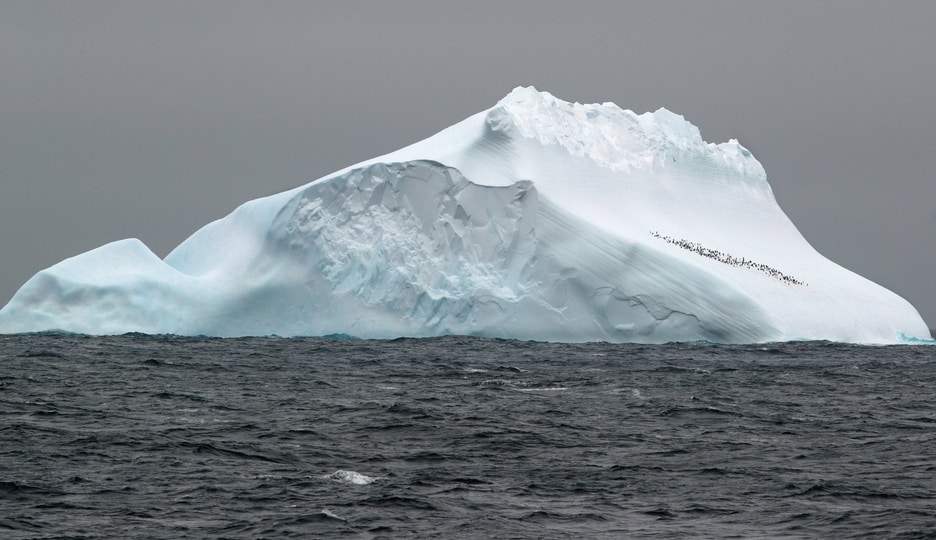
After the natural warming that followed the last Ice Age, there were repeated periods when masses of icebergs broke off from Antarctica into the Southern Ocean. A new data-model study led by the University of Bonn (Germany) now shows that it took only a decade to initiate this tipping point in the climate system, and that ice mass loss then continued for many centuries. Accompanying modeling studies suggest that today's accelerating Antarctic ice mass loss also represents such a tipping point, which could lead to irreversible and long-lasting ice retreat and global sea-level rise.  Iceberg - Iceberg in Antarctica © Uni Bonn/ Michael Weber

To understand what the consequences of current and future human-induced climate warming may be, it helps to take a look at the past: how did sea-level changes look like during times of natural climate warming? In a recent study, an international research team led by Dr. Michael Weber from the Institute of Geosciences at the University of Bonn investigated this question. In doing so, they focused on the Antarctic Ice Sheet as the largest remaining ice sheet on Earth.

There, they searched for evidence of icebergs that broke off the Antarctic continent, floated in the surrounding ocean, and melted down in the major gateway to lower latitudes called “Iceberg Alley”. In the process, the icebergs released encapsulated debris that accumulated on the ocean floor. The team took sediment cores from the deep ocean in 3.5 km water depth from the area, dated the natural climate archive, and counted the ice-rafted debris.

The scientists identified eight phases with high amounts of debris which they interpret as retreat phases of the Antarctic Ice Sheet after the Last Glacial Maximum about 19,000 to 9,000 years ago when the climate warmed and Antarctica shed masses of icebergs repeatedly into the ocean. The result of the new data-model study: each such phase destabilized the ice sheet within a decade and contributed to global sea-level rise for centuries to a millennium. The subsequent re-stabilization was equally rapidly within a decade.

The research team found three other independent pieces of evidence for such post-glacial tipping points: Model experiments showing the melting of the entire Antarctic ice sheet, a West Antarctic ice core documenting ice-sheet elevation draw-down, and drill cores revealing a step-wise ice-sheet retreat across the Ross Sea shelf.

Today's ice mass loss could be the start of a long-lasting period

The results are also relevant for ice retreat observed today: “Our findings are consistent with a growing body of evidence suggesting the acceleration of Antarctic ice-mass loss in recent decades may mark the begin of a self-sustaining and irreversible period of ice sheet retreat and substantial global sea-level rise”, says study leader Dr. Michael Weber from the University of Bonn.

Combining the sediment record with supercomputer models of ice sheet behavior the team showed that each episode of increased iceberg calving reflected an increased loss of ice from the interior of the ice sheet, not just changes in the already-floating ice shelves. “We found that iceberg calving events on multi-year time scales were synchronous with discharge of grounded ice from the Antarctic Ice Sheet”, said Prof. Nick Golledge from the University of Wellington (New Zealand), who led the ice-sheet supercomputer modeling.

Dr. Zoë Thomas, a co-author of the study from the University of New South Wales in Sydney, Australia, then applied statistical methods to the model outputs to see if early warning signs could be detected for tipping points in the ice sheet system. Her analyses confirmed that tipping points did indeed exist. “If it just takes one decade to tip a system like this, that’s actually quite scary because if the Antarctic Ice Sheet behaves in the future like it did in the past, we must be experiencing the tipping right now”, Thomas said.

According to Weber, “Our findings are consistent with a growing body of evidence suggesting the acceleration of Antarctic ice-mass loss in recent decades may mark the begin of a self-sustaining and irreversible period of ice sheet retreat and substantial global sea-level rise”. When we might see the eventual stabilization of the ice sheet is unknown because it will depend significantly on how much future climate warming occurs.

NASA software benefits Earth, available for business, public use

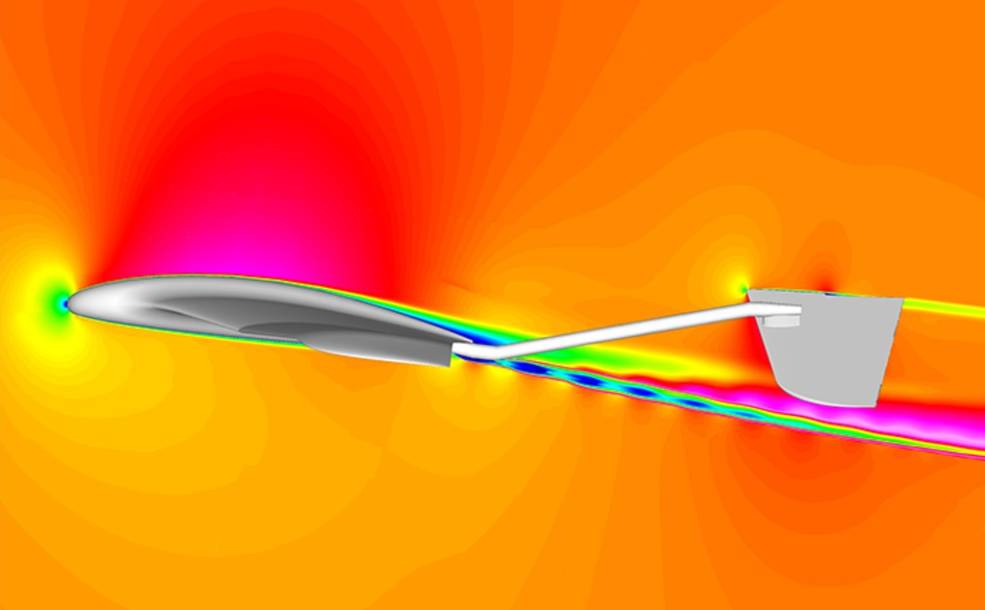
Many of NASA's computational innovations were developed to help explore space, but the public can download them for applications that benefit us right here on Earth. The agency’s latest software catalog has hundreds of popular programs, as well as more than 180 new ones, all available for free download. One of NASA’s most downloaded software codes, TetrUSS is a suite of computer programs used for fluid dynamics and aerodynamics analysis and design Credits: NASA

“From operations here on Earth to missions to the Moon and Mars, the software is integral to all that NASA does,” said NASA Administrator Bill Nelson. “The good news is this technology is available to the public for free. The software suited for satellites, astronauts, engineers, and scientists as it is applied and adapted across industries and businesses is a testament to the extensive value NASA brings to the United States – and the world."

NASA programs adapted and used by entrepreneurs, other government agencies, researchers, and others include:

  • TetrUSS: Aircraft emissions contribute significantly to humanity’s carbon footprint. Computational fluid dynamics programs developed at NASA allow engineers to design an aircraft’s shape to minimize drag, allowing for maximal fuel efficiency. Available in the United States, TetrUSS is one of NASA’s most downloaded applications of all time. The program has enabled users to improve designs for aircraft, automobiles, and boats, as well as gauge architectural aerodynamics and even assist in plane crash investigations.
  • WorldWind: The sheer volume of data captured by NASA’s many satellites can make it unwieldy for everyday use. WorldWind visualizes NASA data using a video game-like virtual globe of Earth, allowing users to zoom from satellite altitude down to any point on the planet’s surface. This software helps decision-makers worldwide manage scarce resources. It supports the Coast Guard by generating a map from live feeds of satellite and maritime data. And it helps researchers understand climate impacts on freshwater resources.

“In the race to mitigate the effects of human-made climate change, human-made technology can be a key advantage,” said Technology Transfer Program Executive Dan Lockney. “By making our repository of software widely accessible, NASA helps entrepreneurs, business owners, academia, and other government agencies solve real problems."

Dozens of other environmental science software programs are also ready for download. Highlights include:

  • tool to calculate a solar power system's size and power requirements using fuel cells, solar cells, and batteries. 
  • Code to analyze solar aircraft concepts by evaluating flight worthiness and providing design feedback. 
  • Computational fluid dynamics software that can improve the efficiency of wind turbines for power generation.

Containing more than 800 programs, the NASA software catalog features categories such as system testing, aeronautics, data and image processing, autonomous systems, and more. The software is also continuously updated in a searchable repository online.

The agency will host a webinar on July 13, 2021, to allow the public to learn more about the download process and ask questions about available NASA software. Visit the information page to learn more and register:

https://go.nasa.gov/3iPFX7l

The software catalog is a product of NASA’s Technology Transfer program, managed for the agency by the Space Technology Mission Directorate. The program ensures technologies developed by and for NASA are broadly available to the public, maximizing the benefit to American taxpayers. For more information about NASA's Technology Transfer Program, visit:

https://technology.nasa.gov