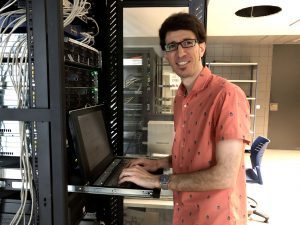
Grimaldo's model shows that preventing extortion is more efficient than fighting it

Francisco Grimaldo, professor at the Department of Computer Science at the University of Valencia (UV), has developed together with Mexican researchers a supercomputer model that allows simulating the effect of extortion on companies and analyzing aspects such as GDP, the unemployment rate, or the inflation. Research shows that the negative effects of extortion are milder when the population does not commit this crime than when it stands trial.

The project developed by Francisco Grimaldo, in collaboration with the Artificial Intelligence Research Centre of the Universidad Veracruzana (Mexico), measures the socioeconomic impact of extortion, a type of crime which it is difficult to obtain data on because the number of complaints is low for fear of retaliation.

“The analysis of in silico data, generated through large-scale simulation computational models, allows us to scrutinize the behavior of complex systems such as criminal networks anonymously and securely”, Francisco Grimaldo highlighted. Francisco Grimaldo

The supercomputer model includes the different economic actors that intervene in the goods market, the labor market, and the credit market; thus, the micro and macroeconomic indicators of this simulated society are calculated adjusting parameters such as the propensity to make use of extortion, the limit that companies will be willing to pay, or the probability that these criminals will be imprisoned.

The data analyzed shows how a greater number of extortionists increases the unemployment rate and inequalities, in addition to having a negative effect on GDP.

The results obtained by the study through the two main variables of the model, which are the probability that the population will become extortionists (which will depend on the authorities’ ability to prevent it) and the probability that the extortionists are imprisoned (which will depend on the effectiveness with which the justice system punishes this crime), present better socioeconomic data in a scenario where the appearance of extortionate attitudes can be prevented as much as possible.

The authors highlight that a possible way to prevent extortion would be to make this activity less profitable for criminals since, according to the research data, the wealth of extortionists is strongly related to the propensity to report companies. An effective justice system that builds trust in citizens would also help in this prevention.

Warwick scientists discover future targets for Covid-19 treatments rapidly with new supercomputer simulations

Researchers have detailed a mechanism in the distinctive corona of Covid-19 that could help scientists rapidly find new treatments for the virus, and quickly test whether existing treatments are likely to work with mutated versions as they develop

  • University of Warwick scientists model movements of nearly 300 protein structures in Covid-19
  • Scientists can use the simulations to identify potential targets to test with existing drugs, and even check effectiveness with future Covid variants
  • Simulation of virus spike protein, part of the virus's corona', shows a promising mechanism that could potentially be blocked
  • Researchers have publicly released data on all protein structures to aid efforts to find potential drug targets: https://warwick.ac.uk/flex-covid19-data
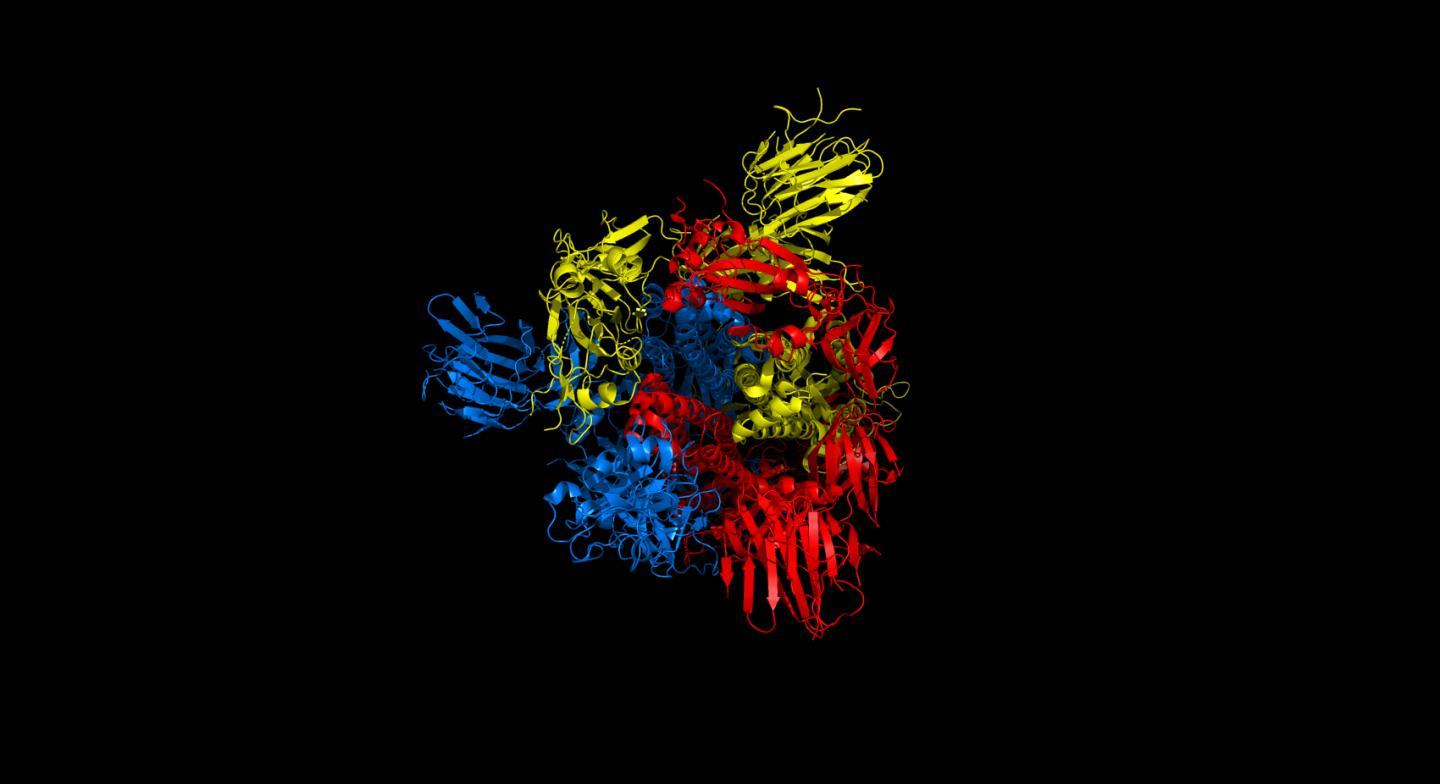
Top view of spike protein structure 6vyb. Colors blue, red and yellow denote the 3 sub-parts of the homodimer.{module INSIDE STORY} Researchers have detailed a mechanism in the distinctive corona of Covid-19 that could help scientists rapidly find new treatments for the virus, and quickly test whether existing treatments are likely to work with mutated versions as they develop.

The team, led by the University of Warwick as part of the EUTOPIA community of European universities, have simulated movements in nearly 300 protein structures of the Covid-19 virus spike protein by using computational modeling techniques, to help identify promising drug targets for the virus.

In a new paper published today (19 February) in the journal Scientific Reports, the team of physicists and life scientists detail the methods they used to model the flexibility and dynamics of all 287 protein structures for the Covid-19 virus, also known as SARS-CoV-2, identified so far. Just like organisms, viruses are composed of proteins, large biomolecules that perform a variety of functions. The scientists believe that one method for treating the virus could be interfering with the mobility of those proteins.

They have made their data, movies, and structural information, detailing how the proteins move and how they deform, for all 287 protein structures for Covid-19 that were available at the time of the study, publicly accessible to allow others to investigate potential avenues for treatments.

The researchers focused particular efforts on a part of the virus known as the spike protein, also called the Covid-19 echo domain structure, which forms the extended corona that gives coronaviruses their name. This spike is what allows the virus to attach itself to the ACE2 enzyme in human cell membranes, through which it causes the symptoms of Covid-19.

The spike protein is in fact a homotrimer or three of the same type of protein combined. By modeling the movements of the proteins in the spike, the researchers identified a 'hinge' mechanism that allows the spike to hook onto a cell, and also opens up a tunnel in the virus that is a likely means of delivering the infection to the hooked cell. The scientists suggest that by finding a suitable molecule to block the mechanism - literally, by inserting a suitably sized and shaped molecule - pharmaceutical scientists will be able to quickly identify existing drugs that could be effective against the virus.

Lead author Professor Rudolf Roemer from the Department of Physics at the University of Warwick, who conducted the work while on a sabbatical at CY Cergy-Paris Université, said: "Knowing how this mechanism works is one way in which you can stop the virus, and in our study, we are the first to see the detailed movement of opening. Now that you know what the range of this movement is, you can figure out what can block it.

"All those people who are interested in checking whether the protein structures in the virus could be drug targets should be able to examine this and see if the dynamics that we compute are useful to them.

"We couldn't look closely at all the 287 proteins though in the time available. People should use the motion that we observe as a starting point for their own development of drug targets. If you find an interesting motion for a particular protein structure in our data, you can use that as the basis for further modeling or experimental studies."

To investigate the proteins' movements, the scientists used a protein flexibility modeling approach. This involves recreating the protein structure as a computer model then simulating how that structure would move by treating the protein as a material consisting of solid and elastic subunits, with the possible movement of these subunits defined by chemical bonds. The method is particularly efficient and accurate when applied to large proteins such as the coronavirus's spike protein. This can allow scientists to swiftly identify promising targets for drugs for further investigation.

The protein structures that the researchers based their modeling on are all contained in the Protein Data Bank. Anyone who publishes a biological structure has to submit it to the protein databank so that it is freely available in a standard format for others to download and study further. Since the start of the Covid-19 pandemic, scientists all over the world have already submitted thousands of protein structures of Covid-19-related proteins to the Protein Data Bank.

Professor Roemer adds: "The gold standard in modeling protein dynamics computationally is a method called molecular dynamics. Unfortunately, this method can become very time-consuming particularly for large proteins such as the Covid-19 spike, which has nearly 3000 residues - the basic building blocks of all proteins. Our method is much quicker, but naturally, we have to make more stringent simplifying assumptions. Nevertheless, we can rapidly simulate structures that are much larger than what alternative methods can do.

"At the moment, no-one has published experiments that identify protein crystal structures for the new variants of Covid-19. If new structures come out for the mutations in the virus then scientists could quickly test existing treatments and see if the new mechanics have an impact on their effectiveness using our method."


Northwestern builds new technology that enables predictive design of engineered human cells

The capability could accelerate the development of new treatments for diseases

Northwestern University synthetic biologist Joshua Leonard used to build devices when he was a child using electronic kits. Now he and his team have developed a design-driven process that uses parts from a very different kind of toolkit to build complex genetic circuits for cellular engineering.

One of the most exciting frontiers in medicine is the use of living cells as therapies. Using this approach to treat cancer, for example, many patients have been cured of previously untreatable diseases. These advances employ the approaches of synthetic biology, a growing field that blends tools and concepts from biology and engineering.

The new Northwestern technology uses computational modeling to more efficiently identify useful genetic designs before building them in the lab. Faced with myriad possibilities, modeling points researchers to designs that offer real opportunities. Synthetic biologists achieve a breakthrough in the design of living cells  CREDIT Justin Muir{module INSIDE STORY}

"To engineer a cell, we first encode a desired biological function in a piece of DNA, and that DNA program is then delivered to a human cell to guide its execution of the desired function, such as activating a gene only in response to certain signals in the cell's environment," Leonard said. He led a team of researchers from Northwestern in collaboration with Neda Bagheri from the University of Washington for this study.

Leonard is an associate professor of chemical and biological engineering in the McCormick School of Engineering and a leading faculty member within Northwestern's Center for Synthetic Biology. His lab is focused on using this kind of programming capability to build therapies such as engineered cells that activate the immune system, to treat cancer.

Bagheri is an associate professor of biology and chemical engineering and a Washington Research Foundation Investigator at the University of Washington Seattle. Her lab uses computational models to better understand -- and subsequently control -- cell decisions. Leonard and Bagheri co-advised Joseph Muldoon, a recent doctoral student and the paper's first author.

"Model-guided design has been explored in cell types such as bacteria and yeast, but this approach is relatively new in mammalian cells," Muldoon said.

The study, in which dozens of genetic circuits were designed and tested, will be published today in the journal Science Advances. Like other synthetic biology technologies, a key feature of this approach is that it is intended to be readily adopted by other bioengineering groups.

To date, it remains difficult and time-consuming to develop genetic programs when relying upon trial and error. It is also challenging to implement biological functions beyond relatively simple ones. The research team used a "toolkit" of genetic parts invented in Leonard's lab and paired these parts with computational tools for simulating many potential genetic programs before conducting experiments. They found that a wide variety of genetic programs, each of which carries out a desired and useful function in a human cell, can be constructed such that each program works as predicted. Not only that, but the designs worked the first time.

"In my experience, nothing works like that in science; nothing works the first time. We usually spend a lot of time debugging and refining any new genetic design before it works as desired," Leonard said. "If each design works as expected, we are no longer limited to the building by trial and error. Instead, we can spend our time evaluating ideas that might be useful in order to hone in on the really great ideas."

"Robust representative models can have a disruptive scientific and translational impact," Bagheri added. "This development is just the tip of the iceberg."

The genetic circuits developed and implemented in this study are also more complex than the previous state of the art. This advance creates the opportunity to engineer cells to perform more sophisticated functions and to make therapies safer and more effective.

"With this new capability, we have taken a big step in being able to truly engineer biology," Leonard said.