

Sussex informatics methods model the massive data generated from firing neurons

Scientists have achieved a breakthrough in predicting the behavior of neurons in large networks operating at the mysterious edge of chaos.

New research from the University of Sussex and Kyoto University outlines a new method capable of analyzing the masses of data generated by thousands of individual neurons.

The new framework outperforms previous models in predicting and assessing network properties by more accurately estimating a system's fluctuations with greater sensitivity to parameter changes.

As new technologies allow the recording of thousands of neurons from living animals, there is a pressing demand for mathematical tools to study the non-equilibrium, complex dynamics of the high-dimensional data sets they generate. In this endeavor, the researchers hope to help answer key questions about how animals process information and adapt to environmental changes. Dr Miguel Aguilera, Marie Sklodowska-Curie research fellow in the School of Engineering and Informatics at the University of Sussex.{module INSIDE STORY}

The researchers also believe their work could be effective in reducing the massive computational cost and carbon footprint of training large AI models - making such models much more widely available to smaller research labs or companies.

Dr. Miguel Aguilera, Marie Sklodowska-Curie research fellow in the School of Engineering and Informatics at the University of Sussex, said: "Only very recently have we had the technology to record thousands of individual neurons in animals while they interact with their environment, which is a tremendous stride forward from studying networks of neurons isolated in laboratory cultures or in immobilized or anesthetized animals.

"This is a very exciting advancement but we don't have the methods yet to analyze and understand the massive amount of data created by non-equilibrium behavior. Our contribution offers the possibility to advance the technology forward to find models that explain how neurons process information and generate behavior."

The paper, published today in an academic journal, develops methods to quickly approximate the complex dynamics of neural network models that capture how real neurons observed in the lab behave, how they are connected, and how they process information.

In a significant step forward, the research team has created a method that works in significantly fluctuating, non-equilibrium situations that animals operate in when interacting with their environment in the real world.

Dr. Aguilera said: "The most efficient manner of learning how large systems work is using statistical models and approximations, and the most common of these are mean-field methods, where the effect of all interactions in a network is approximated by a simplified average effect.

"But these techniques often just work in very idealized conditions. Brains are in constant change, development, and adaptation, displaying complex fluctuating patterns and interacting with rapidly changing environments. Our model aims to capture precisely the fluctuations in these non-equilibrium situations that we expect from freely behaving animals in their natural surroundings."

The statistical method captures the dynamics of large networks specifically in the region at the edge of chaos, a special region of behavior between chaotic and ordered activity, where intense fluctuations in neuronal activity, known as neuronal avalanches, take place.

As opposed to previous mathematical models, the researchers applied an information geometric approach to better capture network correlations which allowed them to create simplified maps approximating the trajectory of neural activity which in reality travel extremely complex routes that are difficult to compute directly.

Dr. S. Amin Moosavi, a research fellow in the Graduate School of Informatics at Kyoto University, said: "Information geometry provides us a clear path to systematically advance our methods and suggest novel approaches, resulting in more accurate data analysis tools."

Prof Hideaki Shimazaki, Associate Professor in the Graduate School of Informatics at Kyoto University, said: "In addition to providing advanced calculation methods for large systems, the framework unifies many existing approaches from which we can further advance neuroscience and machine learning. We are glad to offer such a unifying view that expresses a hallmark of scientific progress as a product of this intense international collaboration."

Dr. Aguilera will next apply these methods to model thousands of neurons of zebrafish in the lab interacting with a virtual reality setup as part of the EU-funded DIMENSIVE project, which aims to develop generative models of large-scale behavior and provide important insights into how behavior arises from the dynamical interaction of an organism's nervous system, body, and environment.
Penn State develops deep learning model that helps doctors choose better lung cancer treatments

Doctors and healthcare workers may one day use a machine learning model, called deep learning, to guide their treatment decisions for lung cancer patients, according to a team of Penn State Great Valley researchers.

In a study, the researchers report that they developed a deep learning model that, in certain conditions, was more than 71 percent accurate in predicting survival expectancy of lung cancer patients, significantly better than traditional machine learning models that the team tested. The other machine learning models the team tested had about a 61 percent accuracy rate.

Information on a patient's survival expectancy could help guide doctors and caregivers in making better decisions on using medicines, allocating resources, and determining the intensity of care for patients, according to Youakim Badr, associate professor of data analytics.

"This is a high-performance system that is highly accurate and is aimed at helping doctors make these important decisions about providing care to their patients," said Badr. "Of course, this tool can't be used as a substitute for a doctor in making decisions on lung cancer treatments."

According to Robin G. Qiu, professor of information science and engineering and an affiliate of the Institute for Computational and Data Sciences, the model can analyze a large amount of data, typically called features in machine learning, that describe the patients and the disease to understand how a combination of factors affect lung cancer survival periods. Features can include information such as types of cancer, size of tumors, the speed of tumor growth, and demographic data.

Deep learning may be uniquely suited to tackle lung cancer prognosis because the model can provide the robust analysis necessary in cancer research, according to the researchers, who report their findings in the International Journal of Medical Informatics. Deep learning is a type of machine learning that is based on artificial neural networks, which are generally modeled on how the human brain's own neural network functions.

In deep learning, however, developers apply a sophisticated structure of multiple layers of these artificial neurons, which is why the model is referred to as "deep." The learning aspect of deep learning comes from how the system learns from connections between data and labels, said Badr.

"Deep learning is a machine-learning algorithm that makes associations between the data, itself, and the labels that we use to describe the data examples," said Badr. "By making these associations, it learns from the data."

Qiu added that deep learning's structure offers several advantages for many data science tasks, especially when confronted with data sets that have a large number of records -- in this case, patients -- as well as a large number of features.

"It improves performance tremendously," said Qiu. "In deep learning, we can go deeper, which is why they call it that. In traditional machine learning, you have a simple structure of layers of neural networks. In each layer, you have a group of cells. In deep learning, there are many layers of these cells that can be architected into a sophisticated structure to perform better feature transformation and extraction, which gives you the ability to further improve the accuracy of any model."

In the future, the researchers would like to improve the model and test its ability to analyze other types of cancers and medical conditions.

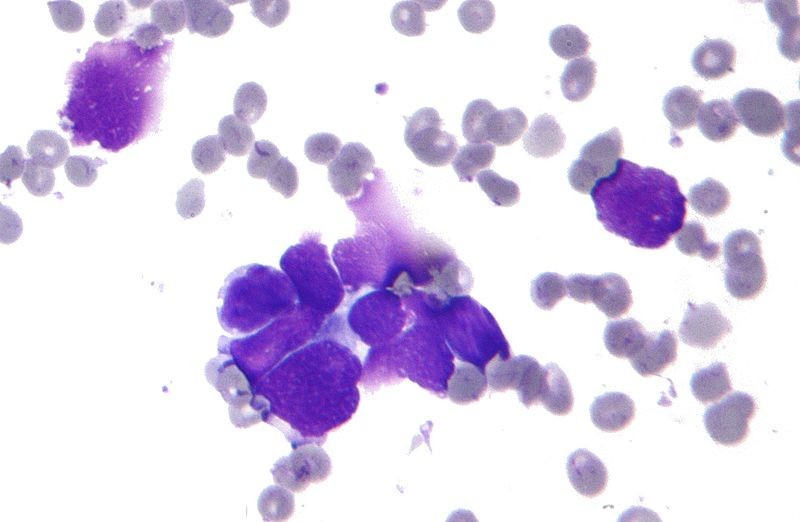
"The accuracy rate is good so far -- but it's not perfect, so part of our future work is to improve the model," said Qiu. Deep learning, a powerful machine learning model, could guide doctors and healthcare workers in weighing treatment and care options, according to a team of Great Valley researchers. IMAGE: WIKIMEDIA{module INSIDE STORY}

To further improve their deep learning model, the researchers would also need to connect with domain experts, who are people who have specific knowledge. In this case, the researchers would like to connect with experts on specific cancers and medical conditions.

"In a lot of cases, we might not know a lot of features that should go into the model," said Qiu. "But, by collaborating with domain experts, they could help us collect important features about patients that we might not be aware of and that would further improve the model."

The researchers analyzed data from the Surveillance, Epidemiology, and End Results (SEER) program. The SEER dataset is one of the biggest and most comprehensive databases on the early diagnosis information for cancer patients in the United States, according to Shreyesh Doppalapudi, a graduate student research assistant and first author of the paper. The program's cancer registries cover almost 35 percent of U.S. cancer patients.

"One of the really good things about this data is that it covers a large section of the population and it's really diverse," said Doppalapudi. "Another good thing is that it covers a lot of different features, which you can use for many different purposes. This becomes very valuable, especially when using machine learning approaches."

Doppalapudi added that the team compared several deep learning approaches, including artificial neural networks, convolutional neural networks, and recurrent neural networks, to traditional machine learning models. The deep learning approaches performed much better than the traditional machine learning methods, he said.

Deep learning architecture is better suited to processing such large, diverse datasets, such as the SEER program, according to Doppalapudi. Working on these types of datasets requires robust computational capacity. In this study, the researchers relied on ICDS's Roar supercomputer.

With about 800,000 to 900,000 entries in the SEER dataset, the researchers said that manually finding these associations in the data with an entire team of medical researchers would be extremely difficult without assistance from machine learning.

"If it were just three fields, I would say it would be impossible, but, we had about 150 fields," said Doppalapudi. "Understanding all of those different fields and then reading and learning from that information, would just be near impossible."

Toshiba launches 18TB HDDs for pennies per GB

3rd-generation 9-disk Helium-sealed design and innovations in energy-assisted recording help customers achieve new levels of storage density and power efficiency

Toshiba has launched the 18TB MG09 Series HDD, Toshiba’s first HDD models with energy-assisted magnetic recording. The MG09 Series features Toshiba’s third-generation, 9-disk Helium-sealed design and Toshiba’s innovative Flux Control – Microwave-Assisted Magnetic Recording (FC-MAMR) technology, to advance Conventional Magnetic Recording (CMR) density to 2TB per disk, achieving a total capacity of 18TB. Sample shipments of 18TB MG09 Series HDD to customers are expected to start sequentially at the end of March 2021.

With 12.5% more capacity than prior 16TB models, 18TB MG09 CMR drives are compatible with the widest range of applications and operating systems. The MG09 is adapted to mixed random and sequential read and write workloads in both cloud-scale and traditional data center use cases. The MG09 features 7,200rpm performance, a 550TB per year workload rating, and a choice of SATA and SAS interfaces—all in a power-efficient Helium-sealed industry-standard, 3.5-inch form factor.

The MG09 Series further illustrates Toshiba’s commitment to advancing HDD design to meet the evolving needs for storage devices in cloud-scale servers and Object and File storage infrastructure. With its improved power efficiency and 18TB capacity, the MG09 Series helps cloud-scale infrastructure advance storage density to reduce CAPEX and improve TCO (total cost of ownership). As data growth continues at an explosive pace, advanced 18TB MG09 with FC-MAMR technology will help cloud-scale service providers and storage solution designers achieve higher storage densities for cloud, hybrid-cloud, and on-premises rack-scale storage.  {module INSIDE STORY}

“Toshiba’s new 18TB MG09 Series delivers new levels of storage density and power efficiency to our cost-conscious cloud-scale and storage solutions customers. Our HDD technology can achieve our customers’ critical TCO objectives at a cost of pennies per GB,” said Shuji Takaoka, General Manager of the Storage Products Sales & Marketing Division at Toshiba Electronic Devices & Storage Corporation. Our 3rd generation 9-disk Helium-sealed design provides a field-tested foundation for achieving a massive 18TB capacity. The addition of Toshiba’s innovative FC-MAMR technology advances CMR capacity to 18TB, delivering compatibility with the widest range of applications and operating environments.”

For more information on the new products, please visit: https://toshiba.semicon-storage.com/ap-en/storage/product/data-center-enterprise/cloud-scale-capacity/articles/mg09-series.html