


Lifting our eyes to the cosmos: The story of Amaris McCarver's discovery

Amidst a world that can often feel small and constrictive, the universe continues to amaze us. Recently, astronomer Amaris McCarver and her team at the U.S. Naval Research Laboratory (NRL) made a groundbreaking discovery buried within a mountain of data. Their hard work and dedication led to the discovery of the first-millisecond pulsar in the stellar cluster Glimpse-CO1.

A pulsar is a highly magnetized, rotating neutron star that emits beams of electromagnetic radiation from its magnetic poles. This latest discovery represents a significant breakthrough in our understanding of these celestial objects.

McCarver's discovery came early in her career as an NRL Remote Sensing Division intern. She and her team used images from the Karl G. Jansky Very Large Array (VLA) Low-band Ionosphere and Transient Experiment (VLITE) to search for new pulsars in 97 stellar clusters. The success of their work was thrilling, and McCarver was overjoyed to see the results of her speculative project come to fruition.

“This scientific discovery was made possible thanks to the collaboration between NRL and the National Radio Astronomy Observatory, enabling the constant dual-frequency capability on the VLA,” said Tracy E. Clarke, Ph.D., NRL Remote Sensing Division astronomer. “This research demonstrates how we can efficiently use measures of radio brightness at different frequencies to find new pulsars. This opens the door to a new era of searches for highly dispersed and highly accelerated pulsars.”

The discovery of the millisecond pulsar GLIMPSE-C01A represents a chance to explore the frontiers of natural laboratories. Pulsars enable us to study the behavior of matter under extreme gravitational and magnetic fields, function as natural timekeepers and can help detect gravitational waves propagating through space's inner workings.

Emil Polisensky, Ph.D., an NRL Remote Sensing Division astronomer, shares the promise of this discovery, "Millisecond pulsars offer a promising method for autonomously navigating spacecraft from low Earth orbit to interstellar space, independent of ground contact and GPS availability. The confirmation of a new pulsar identified by Amaris highlights the exciting potential for discovery with NRL’s VLITE data and the key role student interns play in cutting-edge research."

McCarver's accomplishment has not gone unnoticed. She recently received the Robert S. Hyer Research Award from the Texas Section of the American Physical Society (APS) for her work on millisecond pulsars as part of the Naval Research Enterprise Internship Program (NREIP). McCarver was one of sixteen summer 2023 interns in the Radio, Infrared, Optical Sensors Branch at NRL DC, and her outstanding achievement shines a light on the significant contributions that students can make in fields of cutting-edge research.

The universe is full of mysteries waiting to be discovered, and Amaris McCarver has provided us with one more piece of the puzzle with her groundbreaking discovery of the millisecond pulsar in the Glimpse-CO1 stellar cluster. Her dedication and passion show us that the limits of what we can explore and understand are far from within our reach. Let us lift our eyes to the cosmos, embrace the unknown, and dare to dream of what can be. Congratulations, Amaris, on your remarkable achievement!

ATLAS releases 65 TB of open data

The recent findings at the Large Hadron Collider have raised questions about future discoveries. Despite the groundbreaking discovery of the Higgs particle in 2012, the latest results from CERN indicate that there may not be significant discoveries on the horizon. However, there is a possibility of unexpected developments in the future. So far, their efforts have yielded little additional insight.

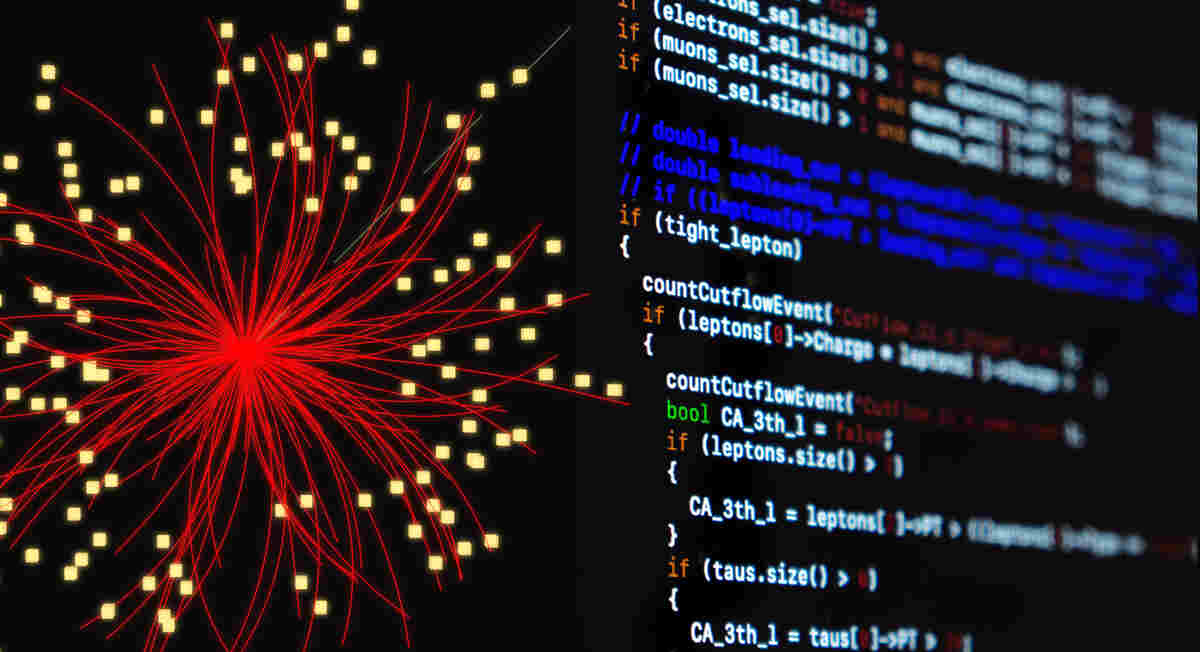
The ATLAS Experiment, conducted at CERN, has taken a step forward in open data utilization in high-energy physics. It has made a 65 TB dataset available to the public, containing over 7 billion LHC collision events from proton-proton operations at an energy level of 13 TeV from 2015 to 2016.

The decision to release this vast amount of data reflects a commitment to the core value of open access. Andreas Hoecker, the ATLAS Spokesperson, has emphasized that "open access is a core value of CERN and the ATLAS Collaboration." This initiative not only offers data for educational purposes but also invites the public and researchers to explore and conduct further research using the data that has contributed to ATLAS' groundbreaking discoveries.

This release demonstrates the ATLAS Collaboration's steadfast dedication to open-access principles, aiming to promote dialogue, collaboration, and comprehensive scientific research. The data, accessible to external researchers and the wider scientific community, are accompanied by detailed documentation of various analyses, providing a full understanding of the research process. This approach aims to allow firsthand experience with ATLAS results and their associated tools, facilitating critical evaluation and testing of the data across different scientific domains.

In line with previous efforts, the ATLAS open data release aims to enhance accessibility and inclusivity and serve individuals at various academic levels, from high school students to seasoned particle physics researchers. Additionally, the software used to create the education-use open data has also been made available, enabling engagement with documented tutorials and the latest updates on the Higgs-boson discovery.

The release of this dataset not only exemplifies data accessibility but also underscores a commitment to future transparency, with the imminent release of lead-lead-nuclei collision data. This demonstrates an ongoing effort to promote accessibility, reproducibility, and scientific excellence within the high-energy physics community.

In summary, the release of this extensive dataset by ATLAS advocates for an academic landscape marked by openness, inclusivity, and the collaborative pursuit of scientific inquiry through transparent and accessible data. This initiative provides a valuable opportunity for researchers at all levels to engage in the field of high-energy physics, fostering a culture of open data utilization in academic research.

For more information and to explore the ATLAS Open Data Portal, please visit the ATLAS Open Data Portal.

Photo by Shutterstock

Artificial intelligence shows promise in osteoporosis risk prediction

In the field of healthcare, timely and accurate diagnosis holds great importance, especially in conditions like osteoporosis, which can be difficult to detect in its early stages. A recent advancement in artificial intelligence (AI) has shown promise in predicting osteoporosis risk levels before a patient visits a doctor.

Researchers at Tulane University have developed a deep learning algorithm that demonstrates exceptional performance in predicting osteoporosis risk. This breakthrough could revolutionize early detection and improve outcomes for individuals at risk of bone-loss disease.

The study highlighted the powerful capabilities of deep learning models in analyzing large datasets and identifying subtle trends without explicit programming. By comparing their deep neural network (DNN) model with four standard machine learning algorithms and a traditional regression model, the research team found that the DNN outperformed its counterparts in predictive accuracy.

Chuan Qiu, the lead author and a research assistant professor at the Tulane School of Medicine Center for Biomedical Informatics and Genomics, emphasized the importance of early identification of osteoporosis risk in enabling proactive preventive measures. He expressed satisfaction with the DNN model's ability to detect osteoporosis risk in an aging population.

In their investigation, the research team identified the ten most important factors influencing osteoporosis risk prediction, including demographics and lifestyle habits. Notably, factors such as weight, age, grip strength, and alcohol consumption were found to be significant. Additionally, a simplified DNN model utilizing the top 10 risk factors demonstrated accuracy comparable to the comprehensive model, highlighting the efficiency of the streamlined approach.

While further refinement is needed before the A.I. platform can be widely used for osteoporosis risk assessment, Qiu remains optimistic about the future of this technological advancement. He envisions a future where individuals can input their essential information to receive precise osteoporosis risk scores, allowing them to seek timely treatment to improve their bone health and prevent potential deterioration.

The groundbreaking research from Tulane University showcases the potential of cutting-edge technology in healthcare, offering a promising future where AI may serve as a valuable tool in strengthening public health initiatives and promoting proactive wellness practices. As efforts continue towards realizing this vision, the recognition of artificial intelligence's potential in osteoporosis risk assessment illuminates a path toward personalized, efficient, and anticipatory healthcare practices.