University of Maryland's simulations reveal interplay between scent marking, disease spread

Accounting for individual animal movement could boost understanding of emerging infectious diseases

In a new mathematical model that bridges animal movement and disease spread, territorial behaviors decreased the severity of potential disease outbreaks--but at the cost of increased disease persistence. Lauren White of the University of Maryland's National Socio-Environmental Synthesis Center, Annapolis, MD, and colleagues present these findings in PLOS Computational Biology.

Disease research often addresses direct social contact without considering individual animals' movement. Individual movement can be shaped by indirect social cues; for instance, a puma might mark its territory with a scent. While territorial behaviors could, in theory, inhibit diseases that require direct transmission, pathogens able to persist in the environment could still spread. CAPTION Scent marking plays a key role in social communication for many species. For example, cheetahs rely on scent mark signals for establishing territories and commonly scent mark elevated places on the landscape like termite mounds or trees.  CREDIT Martyn Smith, Flickr{module INSIDE STORY}

To better understand the interplay between indirect communication and disease spread, White and colleagues developed a mathematical model in which infected animals can indirectly infect others by leaving behind pathogens whenever they deposit scent marks. The researchers used the model to simulate the territorial movement of animals over a landscape, as well as the resulting disease spread.

In simulated outbreak-prone conditions with high animal density and slow disease-recovery rates, territorial movement decreased the number of animals infected, but at the cost of longer disease persistence within the population. These results suggest that indirect communication could play a more important role in disease transmission than previously thought.

"It was exciting to be able to incorporate a movement-ecology perspective into a disease-modeling framework," White says. "Our findings support the possibility that pathogens could evolve to co-opt indirect communication systems to overcome social barriers in territorial species."

This study demonstrates that accounting for movement behavior in disease models could improve understanding of how infectious diseases spread. Moving forward, the researchers hope to strengthen their models with additional dynamics, such as varying habitat quality and prey kill sites.

Pitt ECE professor wins $300K NSF Award to develop 2D synapse for deep neural networks

The world runs on data. Self-driving cars, security, healthcare, and automated manufacturing all are part of a "big data revolution," which has created a critical need for a way to more efficiently sift through vast datasets and extract valuable insights.

When it comes to the level of efficiency needed for these tasks, however, the human brain is unparalleled. Taking inspiration from the brain, Feng Xiong, assistant professor of electrical and computer engineering at the University of Pittsburgh's Swanson School of Engineering, is collaborating with Duke University's Yiran Chen to develop a two-dimensional synaptic array that will allow computers to do this work with less power and greater speed. Xiong has received a $300,000 award from the National Science Foundation for this project. 234366 web c8883{module INSIDE STORY}

"Deep neural networks (DNN) work by training a neural network with massive datasets for applications like pattern recognition, image reconstruction or video and language processing," said Xiong. "For example, if airport security wanted to create a program that could identify firearms, they would need to input thousands of pictures of different firearms in different situations to teach the program what it should look for. It's not unlike how we as humans learn to identify different objects."

To do this, supercomputing systems transfer data back and forth constantly from the computation and memory units, making DNNs computationally intensive and power-hungry. Their inefficiency makes it impractical for them to be scaled up to the level of the complexity needed for true artificial intelligence (AI). In contrast, computation and memory in the human brain uses a network of neurons and synapses that are closely and densely connected, resulting in the brain's extremely low power consumption, about 20W.

"The way our brains learn is gradual. For example, say you're learning what an apple is. Each time you see the apple, it might be in a different context: on the ground, on a table, in a hand. Your brain learns to recognize that it's still an apple," said Xiong. "Each time you see it, the neural connection changes a bit. In computing we want this high-precision synapse to mimic that so that over time, the connections strengthen. The finer the adjustments we can make, the more powerful the program can be, and the more memory it can have."

With existing consumer electronic devices, the kind of gradual, slight adjustment needed is difficult to attain because they rely on binary, meaning their states are essentially limited to on or off, yes or no. The artificial synapse will instead allow the precision of 1,000 states, with precision and control in navigating between each.

Additionally, smaller devices, like sensors and other embedded systems, need to communicate their data to a larger computer to process it. The proposed device's small size, flexibility, and low power usage could make it able to run those calculations in much smaller devices, allowing sensors to process information on-site.

"What we're proposing is that, theoretically, we could lower the energy needed to run these algorithms, hopefully by 1,000 times or more. This way, it can make power requirement more reasonable, so a flexible or wearable electronic device could run it with a very small power supply," said Xiong.

The project, titled "Collaborative Research: Two-dimensional Synaptic Array for Advanced Hardware Acceleration of Deep Neural Networks," is expected to last three years, beginning on Sept. 1, 2020.

Pitt research predicts unpredictable reactions

Research from Pitt and Politecnico di Milano paves the way for simulating catalysts under reaction conditions

Computational catalysis, a field that simulates and accelerates the discovery of catalysts for chemical production, has largely been limited to simulations of idealized catalyst structures that do not necessarily represent structures under realistic reaction conditions.

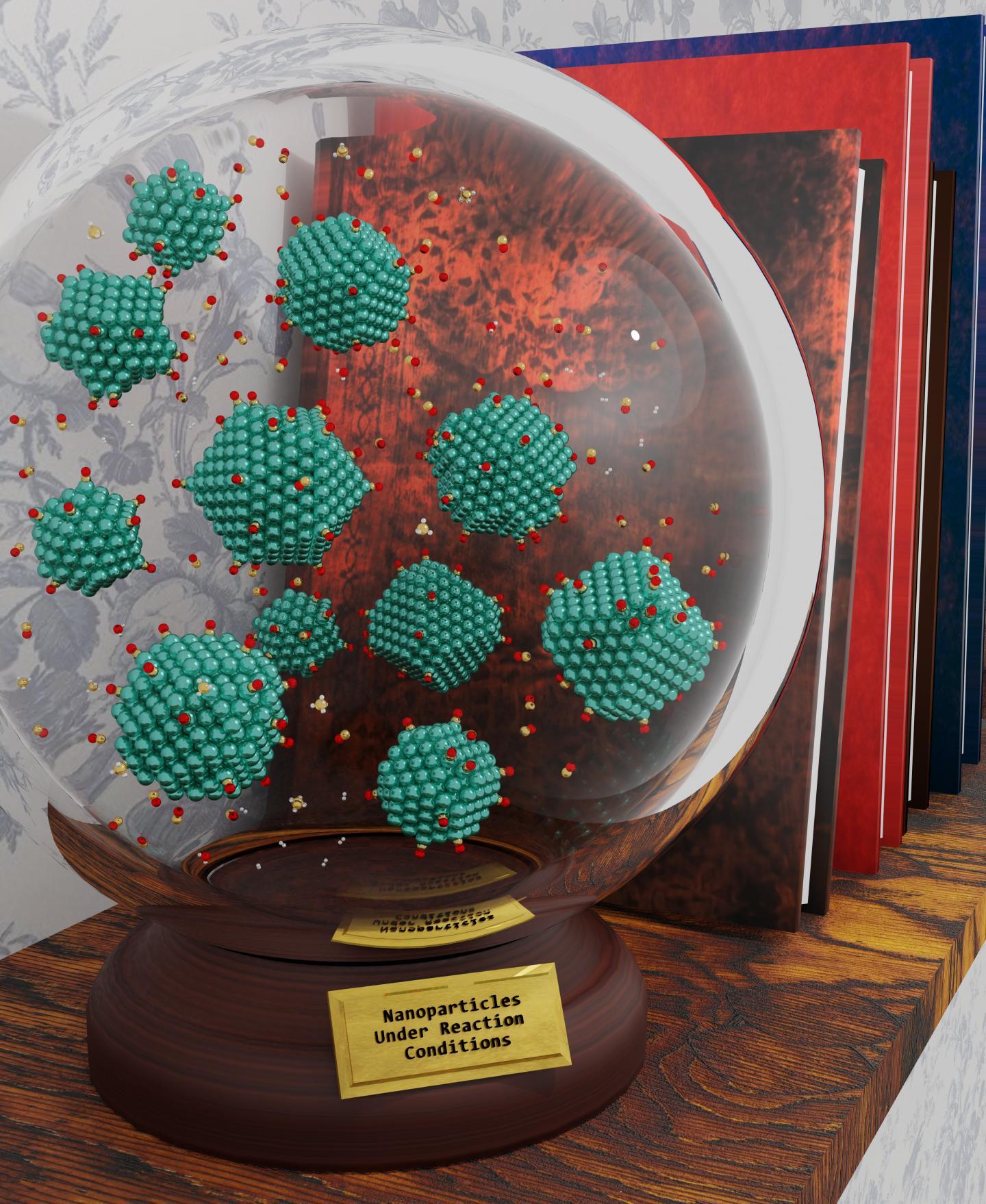
New research from the University of Pittsburgh's Swanson School of Engineering, in collaboration with the Laboratory of Catalysis and Catalytic Processes (Department of Energy) at Politecnico di Milano in Milan, Italy, advances the field of computational catalysis by paving the way for the simulation of realistic catalysts under reaction conditions. The work, published in ACS Catalysis, was authored by Raffaele Cheula, a Ph.D. student in the Maestri group; Matteo Maestri, a full professor of chemical engineering at Politecnico di Milano; and Giannis "Yanni" Mpourmpakis, Bicentennial Alumni Faculty Fellow and associate professor of chemical engineering at Pitt. CAPTION An illustration of nanoparticles under reaction conditions was featured on the cover of ACS Catalysis.  CREDIT Raffaele Cheula{module INSIDE STORY}

"With our work, one can see, for example, how metal nanoparticles that are commonly used as catalysts can change morphology in a reactive environment and affect catalytic behavior. As a result, we can now simulate nanoparticle ensembles, which can advance any field of nanoparticle application, like nanomedicine, energy, the environment, and more," says Mpourmpakis. "Although our application is focused on catalysis, it has the potential to advance nanoscale simulations as a whole."

In order to model catalysts in reaction conditions, the researchers had to account for the dynamic character of the catalyst, which is likely to change throughout the reaction. To accomplish this, the researchers simulated how the catalysts change the structure, how probable this change is, and how that probability affects the reactions taking place on the surface of the catalysts.

"Catalysis is behind most of the important processes in our daily lives: from the production of chemicals and fuels to the abatement of pollutants," says Maestri. "Our work paves the way towards the fundamental analysis of the structure-activity relation in catalysis. This is paramount in any effort in the quest of engineering chemical transformation at the molecular level by achieving a detailed mechanistic understanding of the catalyst functionality. Thanks to Raffaele's stay at Pitt, we were able to combine the expertise in microkinetic and multiscale modeling of my group with the expertise in nanomaterials simulations and computational catalysis of Yanni's group."

Lead author Raffaele Cheula, a PhD student in the Maestri Lab, worked for a year in the Mpourmpakis Lab at Pitt on this research.

"It has been very nice to be involved in this collaboration between Yanni and Matteo," says Cheula. "The combination of my research experiences at Pitt and at PoliMi has been very important for the finalization of this work. It was a challenging topic and I am very happy with this result."