Crusoe Energy Systems donates supercomputing resources to coronavirus vaccine research, discovery efforts

Wasted natural gas to power the fight against COVID-19

Crusoe Energy Systems has deployed more than twenty energy-intensive computing modules throughout America’s oil and gas fields as part of its Digital Flare Mitigation system, which captures otherwise flared or wasted natural gas to power computing processes at the wellhead. Today the company announces that it has begun allocating a portion of its computing systems to the search for a coronavirus vaccine.

Crusoe is working with the Folding@Home Consortium, a distributed supercomputing system for life-science research launched out of Stanford University. The Consortium allows researchers to remotely utilize Crusoe’s computational resources for the vaccine search and discovery process and recently launched a new protein folding simulation project specifically targeting vaccines and therapeutic antibodies for COVID-19.

Crusoe has configured eight of its most advanced graphic processing units to support the Consortium’s vaccine development project and commenced work units for COVID-19 research in Crusoe’s field operations center in North Dakota earlier this week. Crusoe is now one of the largest contributors of computing power to the protein folding Consortium, ranking in the top 10% of computational power providers for the vaccine research system. Crusoe ultimately plans to deploy protein folding servers to multiple flare gas-powered computing modules in the oilfield after expanding network bandwidth at selected sites.

COVID-19 is closely related to the SARS coronavirus. Both coronaviruses infect the lungs when viral proteins bind to receptor proteins in lung cells. A SARS therapeutic antibody, which is a protein that can prevent the SARS coronavirus from binding to lung receptors, has been developed previously. To develop a similar antibody for COVID-19, researchers need to better evaluate how the COVID-19 spike protein binds to receptors in the human body. The Consortium’s new protein folding project simulates antibody proteins and how they might prevent COVID-19 viral infection, however, the simulation process is very computationally intensive and therefore energy-intensive.

Crusoe can support this vaccine research using its distributed computing resources deployed at natural gas flaring sites in Montana, North Dakota, Wyoming, and Colorado. Today, Crusoe consumes millions of cubic feet of natural gas per day that would have otherwise been wasted by burning in the air, or “flared.” Instead, that waste gas powers Crusoe’s mobile, modular computing systems, which are deployed directly to the wellhead to mitigate flaring. Crusoe’s initial computational use case was blockchain processing. More recently the company has been developing high performance and general-purpose cloud computing solutions, which are used in a variety of applications including machine learning, artificial intelligence, and protein folding.

“At this time of growing global concern around the coronavirus, we are grateful to have the opportunity to support the Folding@Home Consortium’s search for a vaccine,” said Chase Lochmiller, CEO and co-founder of Crusoe. “We’ve configured very powerful computing hardware that is typically used for machine learning and artificial intelligence research to search for helpful therapies against coronavirus. This is very much in keeping with Crusoe’s vision that distributed computing resources have an important role to play in solving real-world problems.”

Crusoe began processing work units for COVID-19 on March 15th. In addition to COVID-19, the Company has previously completed work units related to cancer research.
Scientists from Lyon, São Paulo present technologies that enable light in quantum supercomputing systems at FAPESP Week France

The researchers covered integrated photonics, nanotechnology, and quantum entanglement, among other fields that have broadened the research possibilities in optical communication systems and could support the development of quantum supercomputers.

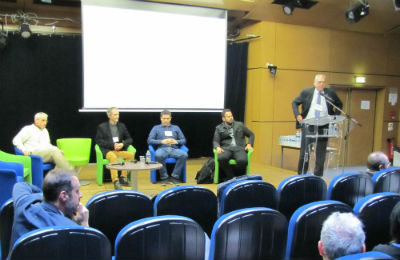
“Quantum characteristics inspire new concepts in information science, in a context in which efficiencies in computing, storage, and information transport can be increased,” said Paulo Nussenzveig, a full professor at the University of São Paulo’s Physics Institute (IFUSP), at the symposium held in Lyon and Paris until November 27th of 2019.

Nussenzveig spoke about quantum information with multiple modes of light and highlighted that quantum light is suitable not only for communication but also for supercomputing. IMG 1072 baixa 62d85{module INSIDE STORY}

The researcher also spoke about another highly important concept in studies for developing quantum information transmission devices: entanglement.  

Quantum entanglement is a phenomenon of quantum mechanics according to which two or more objects (which can be waves or particles) are so interlinked that one object cannot be correctly described without the other being mentioned, even if they are separated by millions of kilometers. This leads to very strong correlations between the observable physical properties of various subatomic particles.

Nussenzveig remembered what Einstein, Podolsky and Rosen Due wrote when they introduced the concept of quantum entanglement, “measures in one particle provide information about the state of another particle. Since, at the time of measuring, the systems are not interacting, no change can occur in the second system as a consequence of something that occurs in the first system,” said Nussenzveig.

In an experiment carried out by Marcelo Martinelli’s and Nussenzveig’s group at IFUSP, the researchers managed to obtain an entanglement of six light waves, generated by a laser beam source developed by the scientists, called an Optical Parametric Oscillator (OPO). 

The results of the research – conducted within the scope of the Thematic Project Exploring quantum information with atoms, crystals, and chips,” with FAPESP’s support, conducted by Martinelli – were published in the journal Physical Review Letters, in 2018.

Previously, in 2009, the group at IFUSP obtained the entanglement of three light waves. The research was published in Science.

Integrated quantum photonics

Felippe Alexandre Silva Barbosa, of the Gleb Wataghin Institute of Physics of the University of Campinas (UNICAMP), spoke about integrated quantum photonics in the same session at FAPESP Week France.

“In integrated photonics, the main objective is to develop technologies that enable information to be codified, transmitted, and processed using light,” said Barbosa, who is also carrying out research with the Optical Parametric Oscillator together with Nussenzveig and Martinelli – all three are authors of the 2018 article in Physical Review Letters.

“The area of integrated photonics has been at the front line of scientific and technological research for more than a decade. More recently, developments in integrated photonics platforms have led to progress in other fields, such as non-linear optics, microfluidics, machine learning, and quantum information,” he said.

According to Barbosa, many advances in the areas of quantum information and integrated photonics have helped to “push the limits both in fundamental scientific research and in cutting-edge technology.”

“In the last few years, there has been a growing intersection between these two areas of research, resulting in the emerging field of integrated quantum photonics,” he said. With FAPESP’s support, Barbosa is carrying out a research project whose main objective is to study this new field.

“The research is focused on preparing compressed and entangled states of individual photons, using thin films of silicon nitride and lithium niobate, two scalable and integrated photonic platforms,” he said.

Nanotechnology in Lyon

“The Lyon Institute of Nanotechnology is a collaborative structure with a presence in various campuses of the University of Lyon. We are around 200 people working in materials science and on new concepts of devices and systems integration,” said Christian Seassal, assistant director of the Lyon Institute of Nanotechnology, to Agência FAPESP.

One of the speakers at FAPESP Week France, Seassal mentioned that the Lyon Institute of Nanotechnology has research in four main areas: Functional Materials; Electronics; Photonics and Photovoltaic Energy; and Biotechnology and Materials Engineering.  

“Since 2007, we have worked with dedicated technologies in terms of functional oxides, semiconductor materials, nanomaterials including nanowires, for example, and on new concepts in information processing, energy generation, biotechnology, and health, among others,” he said. 

Photonic crystals, nanotechnological systems integration, silicon photovoltaic devices, biomedical sensors, intelligent clothing, and nanofluids are other research topics at the Lyon Institute of Technology.

Green light for CASUS, the institute for data intensive systems research

Germany's Federal Government and the Free State of Saxony invest in shaping structural change on the German-Polish border

With CASUS - the Center for Advanced Systems Understanding, the East German city of Goerlitz receives a new science center. Its vision is to develop a systematic understanding of the complex phenomena of our environment using new digital methods. Experts from disciplines as diverse as climate and environmental research, systems biology and astrophysics are to work together on comprehensive digital solutions - thereby CASUS will play a pioneering role in Germany. Germany's Federal Ministry of Education and Research (BMBF) recently approved funding of around ten million euros for the next three years; the Free State of Saxony will provide an additional million euros as part of this project. 

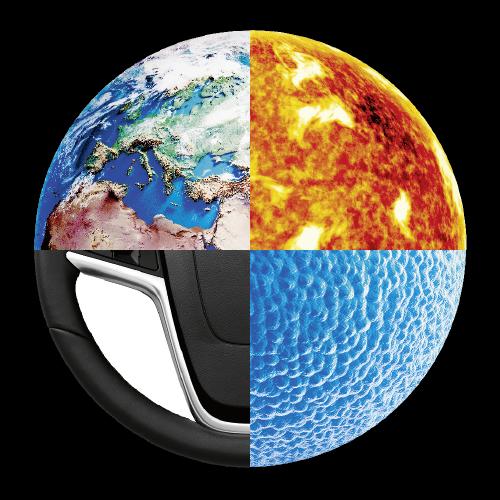
Like many research groups worldwide, CASUS researchers will focus on the use of high-performance supercomputers and on methods of machine learning and artificial intelligence (AI) to cope with high volumes of data. However, important questions, such as those from climate and environmental research, cannot yet be answered satisfactorily with the existing methods, especially when enormous amounts of complex data are generated. CASUS wants to close this gap. Environmental and climate research, matter under extreme conditions, autonomous driving and sytems biology (from upper left to lower right).{module In-article}

Complex systems: more than the sum of the individual parts

CASUS is to develop into an internationally visible institute for data-intensive systems research. Teams of scientists from different disciplines as well as mathematicians, high-performance computing experts, and AI experts will work together to map and understand the complexity of the real world. This can be achieved by the teams considering previously isolated phenomena as part of larger systems. Furthermore, the newly developed methods will provide the basis for making reliable predictions for complex systems. In this way, concrete figures could be used to investigate the socio-economic impact of global climate change on Germany or on Saxony, for example.

"We support structural change in the region. This is why we - together with the Free State of Saxony - are founding the research institution CASUS in the city of Goerlitz. It is to become a beacon of interdisciplinary research in the field of digitization. Using new digital methods, questions on complex topics such as the transformation of energy systems or climate change will be solved. Only if we understand the complex interrelationships better can we develop sustainable solutions? Goerlitz should thus become a magnet for scientists from all over the world," said Germany's Federal Research Minister Anja Karliczek.

The shaping of the future of Germany's coal mining regions is a central concern for the German Federal Government. This is reflected in the key points adopted by the Federal Cabinet on May 22, 2019, for structural support of the coal mining regions. One building block of this structural funding is the research initiatives in the Immediate Program, which includes the CASUS project.

Launch of the start-up Phase

The official launch of the three-year start-up phase of CASUS is scheduled for August 27, 2019. The institute was initiated by the four Saxon research institutions Helmholtz Centre for Environmental Research - UFZ in Leipzig, Helmholtz-Zentrum Dresden-Rossendorf (HZDR), Max Planck Institute of Molecular Cell Biology and Genetics (MPI-CBG) and the Technische Universität Dresden [Technical University Dresden]. One of the most important partners on the Polish side is the University of Wrocław. Dr. Michael Bussmann, head of the "CASUS" department at HZDR, is confident that "with their expertise, these institutions will make a major contribution to the research priorities of the start-up phase".

This includes research into the effects of climatic changes on the environment. Using large simulators and data science methods, scientists at UFZ analyze the overall diversity of event chains and possible feedback in environmental systems, including overall economic costs and ecological consequences. This is the only way to develop and optimize suitable avoidance and adaptation measures for the coming years and decades, taking into account the systemic uncertainties.

HZDR contributes a second focus: the behavior of matter under extreme conditions, which plasma physicists and astrophysicists are especially studying. They are interested in the exotic states of matter that are assumed to occur in the interior of distant planets and stars or that are generated by the acceleration of particles with the aid of high-power lasers at HZDR. Plasma-physical questions are also relevant to energy research.

The MPI-CBG in Dresden brings the topic of systems biology into CASUS. Even today, it is possible to follow the development of an entire organism from a single cell with the highest spatial and temporal resolution and, at the same time, to relate it to the elementary biochemical processes that take place. When nerve, muscle, and sensory cells come together, functional tissues and organs have formed that form the living organism in their interaction. "In this way, the organism as an overall system can be investigated on many different levels on the basis of the interactions of its components," Dr. Bussmann explains.

Finally, the University of Wrocław wants to investigate the interaction of autonomous vehicles with their environment at CASUS, for example, networking of the vehicle with the environment or predicting the behavior of other road users. New algorithms and AI methods will help in this respect.

Understanding our complex world with digital twins

The aim of the CASUS researchers is to create digital twins of complex environments, more comprehensively and realistically than has previously been possible. The digital twins can then be used to look deep into the systems and investigate their structure and the interaction of different areas of the overall system. At the same time, the scientists can record and investigate the temporal development of the systems - the digital twin becomes dynamic and allows predictions of the future to be made.

Digital twins consist of observation data of the real systems and their simulations. Therefore, the creation of digital twins involves extremely large amounts of data and enormous demand for computing power. Dr. Bussmann explains: "With conventional computational methods and the available computing capacities, these amounts of data can barely be handled at present. CASUS will bring together methods from data-intensive high-performance computing and machine learning and also combine the potential of different disciplines to develop efficient solutions that can be applied in practice". Last but not least, CASUS aims to make the newly created methods and technologies available to society and industry as directly as possible.

During the three-year start-up phase, CASUS will be financed 90 percent by funds from the German Federal Ministry of Education and Research (BMBF) and 10 percent by funds from the Saxon Ministry of Science, Research and the Arts (SMWK). To date, a total funding amount of around eleven million euros has been allocated for the start-up phase. With the recently approved early start of activities by the BMBF and the SMWK, the first research groups can now be set up in a specially rented building in Goerlitz (Untermarkt 20).