Auburn's 'quantum crystals': Breakthrough or hype?

A recent claim from researchers at Auburn University, highlighted in a press release, announces the development of a new class of materials called "surface-immobilized electrides." These materials reportedly can host electrons free from atomic constraints, potentially providing advancements in quantum computing and catalytic technologies.

The announcement is ambitious, suggesting the possibility of free-electron "islands" functioning as quantum bits, and "electron seas" aiding in catalysis, along with a tunable platform for future materials. However, as with many striking scientific press releases, a healthy dose of skepticism is warranted.

What the Researchers Claim

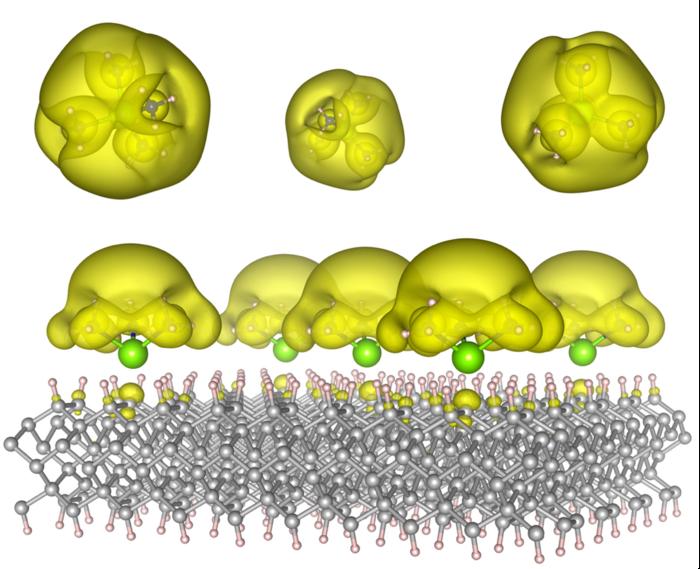
The Auburn team, publishing in ACS Materials Letters, describes a theoretical design for materials in which solvated-electron precursor molecules are anchored on rigid surfaces, such as diamond or silicon carbide.

By altering the molecular arrangement, they suggest that the electrons can adopt different states: localized "islands" that act as quantum bits, or extended metallic states that facilitate catalytic behavior.

The researchers frame this advancement as a solution to longstanding challenges with electrides (materials where electrons are loosely bound) by combining stability (through anchoring) with tunability.

The ultimate claim is bold: these materials could "change the way we compute and the way we manufacture." 

Gaps, Uncertainties, and Cautionary Flags

A closer inspection raises several red flags and caveats that temper the excitement about this work:

1. No Experimental Validation Yet
   The research is purely computational. There are no lab-grown samples, no spectroscopy data, no transport measurements, and no demonstration of the claimed states in real materials. All effects are predicted but not observed.

   While simulations can guide experiments, they often overlook real-world complications such as defects, thermal fluctuations, interface issues, impurities, and fabrication challenges.

2. Stability and Scalability Remain Speculative
   The press release emphasizes that anchoring helps improve stability compared to previous electrides, which have been notoriously fragile and sensitive to their environment. However, actually achieving a stable, air-tolerant, and scalable version in a real device is a significant leap.

   Moreover, the practicality of anchoring such molecules uniformly across device-scale surfaces, along with adequate yields and reproducibility, has yet to be tested.

3. Tuning Electrons Is Harder Than It Seems  
   Electron-electron interactions, screening, disorder, coupling to phonons, electron leakage, and decoherence can all degrade theoretical predictions when applied to actual materials. The press release glosses over these complex details.

   In quantum computing especially, coherence times and error correction thresholds are demanding. A material that theoretically supports a localized “island” electron does not guarantee it will behave reliably in a real qubit environment.

4. Broad Claims, Loosely Connected Applications  
   The press release shifts between quantum computing and catalysis, suggesting that a single class of materials could serve both purposes. This all-encompassing narrative is appealing but also indicates a lack of focus. The real-world constraints in catalysis (surface chemistry, stability in reactive conditions) differ significantly from those in a quantum processor (low noise, ultralow temperature, isolation).

   Additionally, many material proposals tend to overpromise. The idea of “one platform to rule them all” has misled numerous prior claims in materials science and quantum technology.

5. Media Framing vs. Scientific Modesty
   The press release is highly promotional, using phrases like “Imagine … supercomputers that learn ….” Such language raises concerns that what is being sold is hype or, at the very least, aspirational marketing rather than solid, near-term deliverables.

Why the Work Might Still Matter, But With Caution

Despite these concerns, the computational modeling presented is nontrivial, and exploring new electron-anchoring schemes is a legitimate direction in materials science. The concept of tuning delocalization versus localization of electrons is critical to many functional materials, including superconductors, topological insulators, and 2D materials.

If the theoretical groundwork is sound, it could inspire experimentalists to undertake synthesis trials, surface chemistry approaches, or thin-film growth strategies. In this regard, the paper may serve as a generative idea rather than a fully realized technology.

Bottom Line

The claim by the Auburn team that "quantum crystals" could serve as a blueprint for future computing and chemistry is an intriguing hypothesis but is not yet a proven advancement. Without experimental validation and with many unknowns regarding stability, scalability, and real-world performance, it is advisable for readers and funders to consider this as speculative frontier research promising, but far from certain.

Ultimately, enthusiasm should be tempered with prudent scientific caution. Time and experimentation will reveal whether these innovative electron designs can withstand the challenges presented by real-world materials.

Celestial frontiers unveiled: Supercomputers illuminate the secrets of eccentric warm Jupiters

In the vast theater of the cosmos, new actors are emerging strange, looping giants whose orbits defy expectations. These eccentric warm Jupiters orbit their stars in elongated, off-kilter paths, challenging classical models of planetary formation and evolution. However, thanks to modern supercomputers and the curiosity of astrophysicists, we are beginning to gain a deeper understanding of them.
 
At Northern Arizona University, Assistant Professor Diego Muñoz leads a three-year investigation, supported by the National Science Foundation, to decipher the formation of these celestial objects. His research not only sheds light on distant planets but also promises to reveal deeper truths about the origins of our own solar system.

From Data to Discovery: The Role of Supercomputing

Envision simulating billions of particles within a sprawling, evolving gas cloud, all interacting with multiple planets and a star across millions of years. This is the intricate challenge faced by Muñoz and his team. To make significant advancements, they rely on high-performance computing powerful clusters capable of rapidly analyzing equations, exploring scenarios, and testing hypotheses at a speed unattainable by humans.
 
Supercomputers enable researchers to:
*   Generate and compare complex dynamical simulations to understand how gravitational interactions, disk turbulence, and internal stellar processes can shape unusual orbits.
*   Explore parameter space at scale, varying masses, distances, eccentricities, and internal structures to identify combinations that replicate the characteristics of warm Jupiters.
*   Refine theoretical models by feeding simulated data back into computational frameworks, eliminating unsuccessful models and prioritizing viable ones for in-depth analysis.
 
Muñoz's work exemplifies the convergence of theory, observation, and computation in contemporary astrophysics. As he states, "I'm a theorist, so I work on models using heavy-duty computers, pencil-and-paper calculations, and everything in between."

The Puzzle of Eccentric Warm Jupiters

Warm Jupiters exist in a unique zone. Unlike their hotter counterparts, which orbit very close to their stars, warm Jupiters are found at greater distances, yet they still exhibit surprising alignment with their stars’ equators. What's even more intriguing is that the more oval (eccentric) their orbits, the more aligned they seem to be. Current planet formation models struggle to explain how a planet can be pulled into an eccentric orbit without tilting away from its star’s equatorial plane.
 
Muñoz’s team is investigating three main possibilities:
*   Planetary companions subtly influencing the orbit without causing misalignment.
*   Unusual interactions with the original gas disk, potentially leading to overlooked dynamic effects.
*   Internal stellar waves, where the star itself, as a fluid body, could extract or redistribute orbital energy in unexpected ways.
 
This is Muñoz’s preferred hypothesis, as it could naturally explain alignment while creating eccentricity. 
 
Each of these ideas requires thorough numerical testing. Only by conducting thousands of simulations, comparing them with observational data (e.g., from NASA’s TESS mission), and refining the models can the team hope to identify a valid explanation.

Inspiration from the Stars

Beyond its scientific intrigue, this effort serves as a beacon for what curiosity, combined with technology, can achieve. We live in an era where human imagination is augmented by supercomputers, allowing us to test cosmic scenarios in silico long before, or sometimes without, physical experimentation. To observe distant planetary systems and use bits and bytes to infer their hidden histories is nothing short of poetic.
 
Muñoz hopes to recruit a graduate student next year someone with a mind that thrives on creative puzzles to join the mission. Together, they will push the frontier of planetary science, shedding light on whether eccentric warm Jupiters are rare outliers or keys to a broader cosmic narrative.
 
As we await the results in 2028, one truth remains: the universe still harbors many surprises. But with the synergy of human curiosity, bold hypotheses, and supercomputing power, we now possess new tools to unlock them. In the vastness of space, these eccentric warm Jupiters whisper a story one that challenges our models, enriches our understanding, and reminds us of how far we’ve come in our journey to know the cosmos.

UMass engineers build the artificial neurons that ‘whisper’ to living cells: A dawn for bio-electronic fusion

In a lab buzzing with microscopes and circuits, engineers at the University of Massachusetts Amherst have achieved something extraordinary: they’ve built artificial neurons that can communicate directly with living cells, using the same quiet, low-voltage language of biology. This is not science fiction; it’s reality, and it’s here now.

How It Works: Biology Meets Engineering

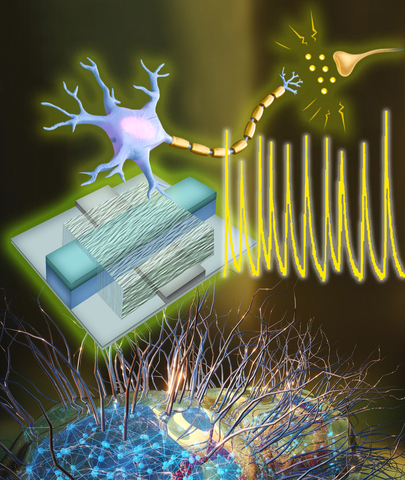
At the heart of the breakthrough is a clever trick: The team used protein nanowires, grown by bacteria (specifically Geobacter sulfurreducens), to create circuits that mimic biological neurons. 
 
These nanowires serve as bridges for electrical and ionic signals in wet, biological environments where ordinary electronics typically fail.
 
Ordinary artificial neurons tend to "shout" – they use voltages ten times higher and consume 100 times more power than real neurons. The UMass design, by contrast, "speaks" in subtler terms: It operates at just ~0.1 volts, the same ballpark as biological neurons, enabling direct cell-to-device communication without overwhelming living cells.
 
They wrapped this around a memristor (a resistor with memory) architecture: When a signal from a biological cell grows strong enough, ions in the nanowire filament bridge a gap, triggering an electrical response; afterward, the filament dissolves, resetting the device, much like the refractory period of a neuron.
 
In experiments, the team connected their synthetic neuron to heart-tissue cells. When the cells were stimulated chemically to increase their contractions, the artificial neuron fired only in response to that change, proving it can sense and respond to living electrical signals.

Why This Matters: Toward Bio-Inspired Computing & Seamless Interfaces

This is more than a novelty. This engineering feat opens doors into new tech frontiers:
  • Energy efficiency: The human brain is astoundingly efficient; it can process vast data with only ~20 watts of power. The new artificial neuron begins to approach that regime, whereas conventional electronics operate far less efficiently.
  • Wearables & implants without amplification: Most bioelectronic devices need bulky amplifiers to “listen” to biological signals. These amplifiers consume power and complicate design. A neuron that naturally operates at biological voltages sidesteps that need.
  • Future neural interfaces, including prosthetics, brain–machine interfaces, and sensory devices, may all benefit if electronics can truly “speak” the language of cells.
  • Greener, biodegradable electronics: Because the core materials are microbial and biologically compatible, disposal or integration into living environments become more plausible and less toxic.

Challenges Ahead & What’s Next

No revolution is without hurdles:
  • Scaling material production: Currently, the lab produces only micrograms of nanowire material far from what’s needed for mass manufacturing.
  • Uniform fabrication: Making consistent nanowire films over large silicon wafers is technically demanding. Variations in thickness or coverage could break functionality.
  • Long-term stability: Biological environments are messy, moisture, ions, proteins, enzymes. The synthetic neurons need to endure and remain functional over time. Future work will test durability.
  • Ethics & safety: As we edge closer to electronics merging with living systems, questions of privacy, control, neurological side effects, and unintended consequences arise.
Jun Yao, one of the lead researchers, acknowledges these challenges but remains optimistic: he envisions hybrid chips combining biological adaptability with electronic precision not to replace silicon, but to complement it.

A Vision: Merging Life With Logic

Imagine a future where implanted devices gently monitor brain activity without the need for cumbersome wires or energy-intensive amplifiers. Envision wearable sensors powered by your own bioelectrical currents. Picture biohybrid computers that can grow, adapt, and heal. This UMass breakthrough represents a significant step forward. It demonstrates that electronics and life can communicate not through forceful signals, but through subtle ones. The boundary between biology and technology has shifted, and a new language is emerging.