Forest loss across the Amazon

ESA deploys a data cube to monitor forest loss in the Amazon

Forests hold a vast amount of Earth’s terrestrial carbon and play an important role in offsetting anthropogenic emissions of fossil fuels. Since 2015, the world’s tropical forests can be observed regularly at unprecedented 6 to 12-day intervals thanks to the Copernicus Sentinel-1 mission.

Millions of gigabytes of synthetic aperture radar (SAR) data are acquired both day and night, regardless of cloud cover, haze, smoke, or aerosols, allowing deforestation and forest degradation to be monitored at least biweekly.

The challenge, however, lies in finding adequate methods to extract meaningful indicators of forest loss from the vast amounts of incoming radar data, such that anomalies in the time series can be regularly and consistently detected across tropical forests.

Such forest-monitoring methods should be transparent and easily understandable to the wider public, enabling confidence in their use across various public and private sectors.

The Sentinel-1 for Science: Amazonas project presents a simple and transparent approach to using Sentinel-1 satellite radar imagery to estimate forest loss. The project uses a space-time data cube design (also known as StatCubes), where statistical information relevant to identify deforestation is extracted at each point in the radar time series. Forest loss of 'Tile 20LMQ'

With this approach, the project demonstrates the use of Sentinel-1 data to create a dynamic deforestation analysis over the Amazon basin. The team was able to detect forest loss of over 5.2 million hectares from 2017 to 2021, which is roughly the size of Costa Rica.

Neha Hunka, Remote Sensing Expert at Gisat, commented, “What we are seeing from space is over a million hectares of tropical moist forests disappearing each year in the Amazon basin, with the worst year being 2021 in Brazil. We can track these losses and report on them transparently and consistently every 12 days henceforth.”

Billions of pixels from the Sentinel-1 satellites from early-2015 to December 2021, each representing a 20 x 20 m of the forest, are harmonized under the StatCubes design, and a simple thresholding approach to detect forest loss is demonstrated in the first version of the results.

The largest challenge in the project was the vast amount of data handling and processing. The team used several user-friendly software tools to access the data efficiently – processing over 450 TB of data to create the forest loss maps.

Anca Anghelea, Open Science Platform Engineer at ESA, added, “By providing open access data and code through ESA’s Open Science Data Catalogue, and openEO Platform, we aim to enable researchers around the world to collaborate and contribute to the advancement of knowledge about our global forests and the carbon cycle.

"Thus, in the last phase of the project, a key focus will be on Open Science, reproducibility, long-term maintenance, and evolution of the results achieved in the Sentinel-1 for Science: Amazonas Project.”    

Following on from the project, the next goal is to achieve a product of carbon loss from land cover changes, working together with ESA’s Climate Change Initiative team – a goal that will contribute to ESA’s Carbon Science Cluster.

The current results of the project are now available by clicking here. Sentinel-1 for Science Amazonas is implemented by a consortium of four partners - GisatAgresta, the Norwegian University of Life Sciences, and the Finnish Geospatial Research Institute. The team uniquely combines complementary and strong backgrounds in forestry and carbon assessments, multi-temporal SAR analysis and data fusion, and large-data processing capabilities.

Job van Rijn | Photo University of Groningen

Dutch prof creates complex oxides that can be used beyond CMOS; shows the way toward novel supercomputing architectures

As the evolution of standard microchips is coming to an end, scientists are looking for a revolution. The big challenges are to design chips that are more energy efficient and to design devices that combine memory and logic (memristors). Materials scientists from the University of Groningen, the Netherlands, described in two papers how complex oxides can be used to create very energy-efficient magneto-electric spin-orbit (MESO) devices and memristive devices with reduced dimensions. 

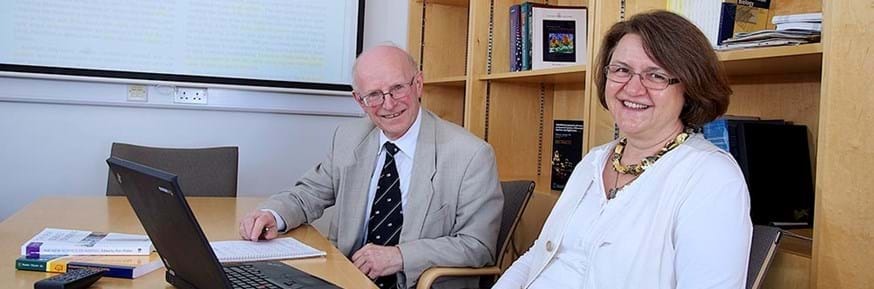
The development of classic silicon-based computers is approaching its limits. To achieve further miniaturization and to reduce energy consumption, different types of materials and architectures are required. Tamalika Banerjee, Professor of Spintronics of Functional Materials at the Zernike Institute for Advanced Materials, University of Groningen, is looking at a range of quantum materials to create these new devices. "Our approach is to study these materials and their interfaces, but always with an eye on applications, such as memory or the combination of memory and logic." The devices 'beyond CMOS' created by Job van Rijn (top) and Anouk Goossens | Illustrations Banerjee group, University of Groningen

More efficient

The Banerjee group previously demonstrated how doped strontium titanate can be used to create memristors, which combine memory and logic. They have recently published two papers on devices "beyond CMOS," the complementary metal oxide semiconductors which are the building blocks of present-day computer chips.

One candidate to replace CMOS is the magneto-electric spin-orbit (MESO) device, which could be 10 to 30 times more efficient. Several materials have been investigated for their suitability in creating such a device. Job van Rijn, a Ph.D. student in the Banerjee group, is the first author of a paper in Physical Review B published in December 2022, describing how strontium manganate (SrMnO3 or SMO for short) might be a good candidate for MESO devices. ‘It is a multiferroic material that couples spintronics and charge-based effects,’ explains van Rijn. Spintronics is based on the spin (the magnetic moment) of electrons.

Banerjee: "The magnetic and charge orderings are coupled in this material, so we can switch magnetism with an electric field and polarization with a magnetic field." And, importantly, these effects are present at temperatures close to room temperature. Van Rijn is investigating the strong coupling between the two effects. "We know that ferromagnetism and ferroelectricity are tuneable by straining a thin SMO film. This straining was done by growing the films on different substrates."

Strain

Van Rijn studies how strain induces ferroelectricity in the material and how it impacts the magnetic order. He analyzed the domains in the strained films and noticed that magnetic interactions are greatly dependent on the crystal structure and, in particular, on oxygen vacancies, which modify the preferred direction of the magnetic order. ‘Spin transport experiments lead us to the conclusion that the magnetic domains play an active role in the devices that are made of this material. Therefore, this study is the first step in establishing the potential use of strontium manganate for novel computing architectures.’

On 14 February, the Banerjee group published a second paper on devices ‘beyond CMOS’, in the journal Advanced Electronic Materials. Ph.D. student Anouk Goossens is the first author of this paper on the miniaturization of memristors based on niobium-doped strontium titanate (SrTiO3 or STO). ‘The number of devices per unit surface area is important,’ says Goossens. "But some memristor types are difficult to downscale." Anouk Goossens | Photo University of Groningen

Goossens previously showed that it was possible to create ‘logic-in-memory’ devices using STO. Her latest paper shows that it is possible to downscale these devices. A common problem with memristors is that their performance is negatively impacted by miniaturization. Surprisingly, making smaller memristors from STO increases the difference between the high and the low resistance ratio. ‘We studied the material using scanning transmission electron microscopy and noticed the presence of a large number of oxygen vacancies at the interface between the substrate and the device’s electrode’, says Goossens. "After we applied an electric voltage, we noticed oxygen vacancy movement, which is a key factor in controlling the resistance states."

New design

The conclusion is that the enhanced performance results from edge effects, which can be bad for normal memory. But in STO, the increased electric field at the edges supports the function of the memristor. "In our case, the edge is the device," concludes Goossens. ‘In addition, the exact properties depend on the amount of niobium doping, so the material is tuneable for different purposes."

In conclusion, both papers published by the group show the way toward novel supercomputing architectures. Indeed, the STO memristors have inspired colleagues of Goossens and Banerjee at the University of Groningen Bernoulli Institute for Mathematics, Computer Science and Artificial Intelligence and CogniGron (Groningen Cognitive Systems and Materials Center), who have already come up with a new design for memory architecture.

"This is exactly what we are working for," says Banerjee. We want to understand the physics of materials and how our devices work and then develop applications.’ Goosens: ‘We envision several applications and the one we are looking at is a random number generator that works without an algorithm and is therefore impossible to predict."

Much of Dr. Sanjay Madria’s research at Missouri S&T focuses on cybersecurity initiatives for the U.S. military. Madria works to develop secure pathways for transmitting information and eliminating interference from malicious parties. Graphic courtesy of rawpixel.com.

Madria’s millions: S&T cybersecurity expert wins large federal research grants

The United States military could one day more quickly identify and assess the threat of objects in the sky, such as the Chinese balloon that was recently in the news or other unmanned aerial vehicles (UAVs), thanks to research being conducted at Missouri University of Science and Technology.

Dr. Sanjay Madria, Curators’ Distinguished Professor of computer science at Missouri S&T, has been awarded millions of dollars in federal grants in recent years to research this and other methods to keep members of the United States military safe and improve the country’s cybersecurity. 

“I am working on a variety of cybersecurity projects to increase the security of different cloud and internet of things (IoT) applications in the battlefield, for transportation, and for the supply chain,” Madria says. “Some of the projects focus more on the U.S. armed forces, while others are broader projects with the federal government.”

Countering UAV swarms
With a $500,000 grant from the Army Research Office, Madria is looking for ways to counteract groups of unmanned aerial vehicles using machine learning.

“For this project, our goal is to have early detection of swarms of UAVs,” Madria says. “We are developing software that will use machine learning and other techniques to analyze different images of objects taken by aircraft, ground vehicles, or any other cameras.”

With this program, the military could more quickly determine the size and type of UAVs in the sky and distinguish them from similar objects, such as balloons, birds, or kites. The program will be tailored to detect potential swarms, or groups, of UAVs, that operate as one unit.

“Whatever the objects are, our machine learning will help distinguish UAVs from similar-looking distant objects so the military can then determine the appropriate course of action,” he says.

Madria is working with Dr. Maciej Zawodniok, an associate professor of electrical and computer engineering at S&T, to ensure the program can also be used to detect radio frequency and electromagnetic emissions, which could provide signs about what is lurking in the clouds above.

Concealing locations
Madria is also helping military groups maneuver on the battlefield without the aid of GPS with $215,000 from the U.S. Army Research Office. This project is expected to continue through March 2024.

Madria says the military has an urgent need to detect and track chemical, biological, radiological and nuclear defense (CBRN) materials being transported in combat zones without using GPS. Jamming of signals can make GPS unavailable, and those signals can be spoofed by the enemy to disorient forces. Other parties may also be able to track GPS signals using active sensors and radio communication between sensors.

“This adds another layer of security and is a big deal for the Army,” Madria says. “With the program, people will be able to take photos of landmarks and measure their exact locations. Other nodes can then approximate their locations with the new mobile anchor nodes and make secure connections.”

Securing information on the battlefield
In May 2022, Madria delivered software for a secure information-sharing platform to the Air Force Research Laboratory. The program, which was funded by a $500,000 grant, combined machine learning with a secure platform that allows members of the military to quickly share photos and highly accurate captions with authorized viewers.

The platform sets specific roles and missions for members of the military and can gauge who in the chain of command is most likely to need shared information. Photos can also be set by category based on what the machine learning platform determines they include.

“An important part of this program is that it allows users to quickly determine who they want to see the photos, as the photos are encrypted for specific users with their attribute-based keys,” Madria says. “Then, if their access needs to be revoked, specific photos can be re-encrypted with the touch of a button dynamically in the battlefield without affecting others.”

Madria says this technology will also help battlefield leaders more quickly understand events as they unfold and disseminate them to allow leaders to make more informed decisions securely. Its attribute-based security policy will also allow mission interests to be updated for personnel as battlefield situations change, ensuring the transmitted data is as up-to-date as possible.

Large, non-military projects
To go along with his projects for the U.S. military, Madria also has several grant projects in the works for other federal agencies.

A project that uses a blockchain as access control for information sharing has been funded at $125,000 annually for the past four years

“We are working to track the provenance of files as effectively as possible,” Madria says. “With the blockchain, we will see any time transmitted files are altered in any way. This could be for design and supply-chain purposes or for a variety of other documents in which one seemingly small change can make a significant difference for a project.”

With a $462,000 grant from the National Science Foundation, Madria is studying workforce development in the areas of cybersecurity, data analytics, and blockchains.

One aim of this project will be to increase the size and diversity of people in the computer science industry, as there is a special focus on working with underrepresented groups and women college students. The project will help undergraduate students build computer science skills while learning about future employment options in the field and in academics.

Madria is also directing a project for the Graduate Assistance in Areas of National Need (GAANN) program. Over the past five years, he has received about $800,000 in funding for a doctoral fellowship program that focuses on analytics, big data and machine learning for cybersecurity. This program involves multiple hands-on components for students to complete, such as internships, mentorships, supervised teaching, and international experiences.

“We appreciate how the federal government has sought Missouri S&T’s expertise on cybersecurity and machine learning on a variety of projects,” Madria says. “We have a strong partnership with several federal agencies, and the university has traditionally delivered strong products and programs that can often have world-changing implications.” 

Composite of (a) 300-hPa geopotential height anomalies [shading, shading interval (SI) = 10 gpm] and (b) 2-m air temperature anomalies (shading, SI = 0.5°C) during the extreme heat summers over Western North America (WNA) in ERA5 data set. (c, d) are the same as (a, b), but for the MME from 15 CMIP6 models. The blue rectangles represent the region over WNA (40°–60°N, 128°–110°W). The anomalies are relative to 1981–2010.

Chinese prof Lin uses climate models in CMIP6 to show how a warmer world will make heatwaves more frequent

From late June to early July 2021, an unprecedented heatwave swept across Western North America (WNA), causing considerable regional societal and economic hazards. Many new records on maximum temperatures were broken, including 46.7°C in Portland, Oregon, and 49.6°C in Lytton, British Columbia, the latter representing the highest temperature ever observed in Canada. In addition, more than 1,000 deaths were believed to have been linked to the extreme heatwave. Such an extreme event raises questions about how the likelihood of a similar heatwave will change under global warming.

Recently, in a paper published in Earth's Future, Prof. WANG Lin from the Center for Monsoon System Research, Institute of Atmospheric Physics (IAP) at the Chinese Academy of Sciences, in collaboration with scientists from Yunnan University, revealed that heatwaves similar to the unprecedented WNA one in summer 2021 are projected to become more frequent in a warmer world based on the multi-model simulations from the Coupled Model Intercomparison Project, which began in 1995 under the auspices of the World Climate Research Programme (WCRP) and is now in its sixth phase(CMIP6).

They found that the likelihood of a similar heatwave to the 2021 WNA one will increase in the future if the global warming level continues to rise. Such a heatwave is projected to occur more frequently with increased extreme temperature and shortened return period, making a rare event in the current climate a common event in warmer weather, especially under a high-emission scenario like the Shared Socioeconomic Pathways 585 (SSP5-8.5). They also found a significant expansion of areas over WNA that will break the 2021 record in the future with an increasing emission scenario. However, some heat records west of the Rocky Mountains are still difficult to break even at the end of the 21st century, highlighting the specific extremity of the observed 2021 WNA heatwave. Spatial-temporal evolutions of the 2021 Western North America (WNA) heatwave in the observation. (a) Temporal variations of the spatial extent (shading, SI = 100 × 103 km2) of land areas over WNA that experience record-breaking temperature anomalies at different time scales. The purple dot indicates the date and time scale with the maximum record-breaking areas (i.e., June 29 at the 5-day time scale). (b) 2-m air temperature anomalies (shading, unit: °C; relative to 1981–2010) at the 5-day time scale centered on 29 June 2021. Contour lines [contour interval (CI) = 1 SD] indicate the normalized 2-m temperature, defined as the anomalies divided by the corresponding standard deviation among all summer days in 1981–2010. The black points highlight the record-breaking grids. The blue rectangle represents the region over WNA (40°–60°N, 128°–110°W), and the purple lines represent the Canadian and U.S. states' boundaries. (c) The daily evolution of the area-mean 2-m temperature anomalies (orange line) over WNA at the 5-day time scale in the June-August of 2021. The pink shading indicates the historical maximum temperature anomalies at the 5-day time scale on each summer day from 1950 to 2020. The black dot represents the temperature anomaly on 29 June 2021.

"Our study indicates that the unprecedented heatwave will become more common in most areas of Western North America if we do not take adequate climate mitigation measures", said Dr. DONG Zizhen, the first author of the paper.

"We use multiple climate models that participate in CMIP6 and consider different emission scenarios and warming levels for the future heatwave projections over WNA, which may provide more information for decision-makers to plan their development routes and adaptation measures", said Prof. WANG, the corresponding author of the paper.

Figure 1: Illustration of a strike-slip fault at a tectonic plate boundary. The tectonic plates move parallel to each other, leading to so-called strike-slip earthquakes with relatively little deformation. RIKEN researchers have used artificial neural networks to accurately predict the behavior of the Earth’s crust at a strike-slip fault. © 2023 RIKEN

RIKEN researcher Ueda demos PINN for modeling earthquakes

Machine-learning method could offer a more reliable way to predict deformations in the Earth’s crust

An artificial neural network has taken its first steps toward predicting the timing and size of future destructive earthquakes, according to RIKEN researchers.

Earthquakes typically occur when parts of the Earth’s crust suddenly move around a fracture, or fault, in the rock. This releases a huge amount of strain energy that shakes the surrounding region, sometimes unleashing enormous destruction, such as in the case of the February earthquake in Turkey and Syria. 

Predicting an earthquake before it hits could give people enough time to evacuate threatened areas, potentially saving many thousands of lives. But earthquake prediction is notoriously difficult.

To create mathematical models of earthquakes, researchers often draw an analogy to defects within the structures of crystals—cracks within crystals resemble faults in the Earth’s crust. When applied to the motion of crustal faults, these ‘dislocation models’ describe the movement and deformation of the Earth’s crust during earthquakes.

In contrast, a team led by Naonori Ueda of the RIKEN Center for Advanced Intelligence Project (AIP) considered applying a neural network that learns physical laws, called a physics-informed neural network (PINN). Conventional neural networks learn functional relationships between inputs and outputs, whereas PINNs differ in that they learn to satisfy a physical model described by partial differential equations. Naonori Ueda Deputy Director, RIKEN Center for Advanced Intelligence Project

However, the team found that a PINN, which learns continuous functions, would be difficult to directly apply to cases such as crustal deformation models, where the displacement is discontinuous across a fault line.

Ueda and his co-workers have overcome this difficulty by using a specially designed coordinate system to deal with the discontinuity across faults. This allowed them to accurately model the deformation of the Earth’s crust, even in regions close to faults.

“The proposed modeling has the potential to realize a high-precision prediction,” says Ueda.

The researchers trained their neural networks using physical laws rather than data, which is ideal for applications where data acquisition can be difficult.

To demonstrate the effectiveness of the approach, the researchers applied their physics-informed neural networks to model strike-slip faults, in which two blocks of the Earth’s crust move horizontally about a vertical fracture (Fig. 1). The network could turn information about a particular location inside the Earth into a prediction of the amount of crustal displacement at that point.

“This work demonstrated PINN’s ability to accurately model crustal deformation on complex structures,” says Tomohisa Okazaki, also of AIP.

PINNs represent a relatively new form of machine learning, and the researchers hope that their approach could be applied to many other problems involving crustal deformation.