Australian scientists build model to aid patient-doctor discussions on bone fracture risk

Researchers at the Garvan Institute of Medical Research have developed a computational model to calculate 'skeletal age', a personalised estimate of an individual's risk of bone fracture and premature death.

The skeletal age calculator, which will be accessible to doctors and health professionals, aims to better identify those at risk of a first bone fracture and subsequent fractures, and also estimates how fractures impact life expectancy.

Osteoporosis, a disease which reduces bone strength and increases bone fracture risk, is a major national health issue and estimated to affect over 900,000 Australians. The cost of osteoporosis and fracture in Australia is $3.4 billion annually.

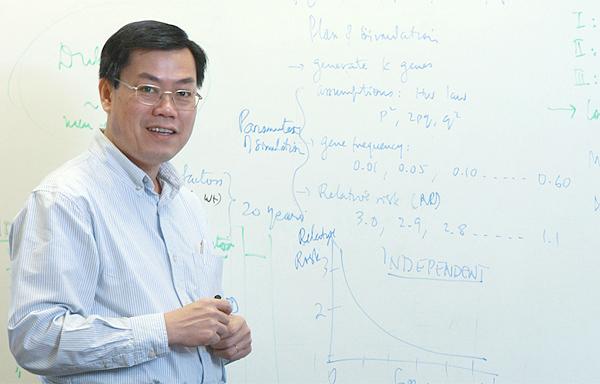
"A fracture shortens life expectancy, even more so in men than in women. But there is a lot of complacency in the community when it comes to bone health - only 20% of those with fragility fractures are taking approved treatments for osteoporosis, which could significantly reduce their risk of further fractures," says Professor Tuan Nguyen, Head of the Genetic Epidemiology of Osteoporosis Lab at Garvan, Professor of Predictive Medicine at the University of Technology Sydney and senior author of the research published in eLifeProfessor Tuan Nguyen

"We hope that calculating a person's skeletal age, which may be much higher than their actual age, will identify those who are at higher risk of fractures and encourage them to speak to their doctor about how to better manage their condition." {module INSIDE STORY}

Predicting fracture risk

From age 50, bone fractures affect one in two women and one in three men. For women, the lifetime risk of a hip fracture is equal to or higher than the risk of developing an invasive breast cancer.

With each fracture, the risk of future fracture increases two-fold and studies have shown that pre-existing fractures increase the risk of premature death by about 50% in both men and women. One in three adults over 50 dies within 12 months of sustaining a hip fracture.

"There are existing models to predict the risk of an initial fracture, such as the Garvan Fracture Risk Calculator that is already available to doctors. But it remains unclear why some individuals do well after an initial fracture, while others go on to sustain further fractures and have a higher risk of mortality," says first author Dr Thao Ho-Le.

"We set out to develop a model to complement existing tools, which could simultaneously predict an individual's risk of subsequent fractures and consequently, their chance of premature death."

To develop their sophisticated computational model, the team led by Professor Nguyen used data from Garvan's Dubbo Osteoporosis Epidemiology Study, which was started in 1989 and is the world's longest-running large-scale study of osteoporosis in men and women.

Their model incorporates an individual's age, bone density, history of previous fractures and other health conditions to calculate a personalised estimate of 'skeletal age'.

"In our new model, we quantified the intricate transitions between fracture, re-fracture and mortality. We define skeletal age as the age of an individual's skeleton that results from their risk factors for fracture," explains Professor Nguyen.

"Using this definition, we for instance estimated that a typical 70 year old man who had sustained a fracture had a skeletal age of 75 years. But when the man had a second fracture his skeletal age rose to 87 years. This means the individual now has the same fracture risk profile as an 87 year old man who has a healthy risk profile."

Improving bone health

The team is now developing an online calculator, which doctors will be able to use to calculate their patients' skeletal age.

The researchers hope it will be a valuable tool for initiating discussions between health professionals and their patients on how to improve bone health, which may involve medication, exercise, increasing dietary calcium and getting enough vitamin D.

"The key message of this study is that it's never too early to think about your bone health," says Professor Nguyen. "Do not wait until a fracture has occurred to take preventive action. If your skeletal age is higher than your actual age, you should seek medical advice from your doctor on how to manage the higher risk."
'Multiplying' light could be key to ultra-powerful optical computers

An important class of challenging computational problems, with applications in graph theory, neural networks, artificial intelligence and error-correcting codes can be solved by multiplying light signals, according to researchers from the University of Cambridge and Skolkovo Institute of Science and Technology in Russia.

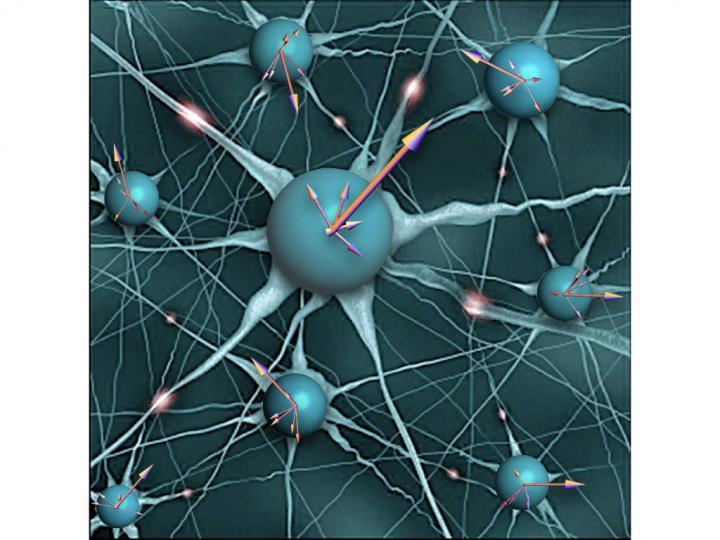
In a paper published in the journal Physical Review Letters, they propose a new type of computation that could revolutionise analogue computing by dramatically reducing the number of light signals needed while simplifying the search for the best mathematical solutions, allowing for ultra-fast optical computers. Schematic of light pulse interactions as the proposed optical computer solves higher order binary optimisation problems. The light phases coming from several light pulses combine to change the phases of each light pulse until the solution is found.  CREDIT Gleb Berloff

Optical or photonic computing uses photons produced by lasers or diodes for computation, as opposed to classical computers which use electrons. Since photons are essentially without mass and can travel faster than electrons, an optical computer would be superfast, energy-efficient and able to process information simultaneously through multiple temporal or spatial optical channels.

The computing element in an optical computer - an alternative to the ones and zeroes of a digital computer - is represented by the continuous phase of the light signal, and the computation is normally achieved by adding two light waves coming from two different sources and then projecting the result onto '0' or '1' states.

However, real life presents highly nonlinear problems, where multiple unknowns simultaneously change the values of other unknowns while interacting multiplicatively. In this case, the traditional approach to optical computing that combines light waves in a linear manner fails. {module INSIDE STORY}

Now, Professor Natalia Berloff from Cambridge's Department of Applied Mathematics and Theoretical Physics and PhD student Nikita Stroev from Skolkovo Institute of Science and Technology have found that optical systems can combine light by multiplying the wave functions describing the light waves instead of adding them and may represent a different type of connections between the light waves.

They illustrated this phenomenon with quasi-particles called polaritons - which are half-light and half-matter - while extending the idea to a larger class of optical systems such as light pulses in a fibre. Tiny pulses or blobs of coherent, superfast-moving polaritons can be created in space and overlap with one another in a nonlinear way, due to the matter component of polaritons.

"We found the key ingredient is how you couple the pulses with each other," said Stroev. "If you get the coupling and light intensity right, the light multiplies, affecting the phases of the individual pulses, giving away the answer to the problem. This makes it possible to use light to solve nonlinear problems."

The multiplication of the wave functions to determine the phase of the light signal in each element of these optical systems comes from the nonlinearity that occurs naturally or is externally introduced into the system.

"What came as a surprise is that there is no need to project the continuous light phases onto '0' and '1' states necessary for solving problems in binary variables," said Stroev. "Instead, the system tends to bring about these states at the end of its search for the minimum energy configuration. This is the property that comes from multiplying the light signals. On the contrary, previous optical machines require resonant excitation that fixes the phases to binary values externally."

The authors have also suggested and implemented a way to guide the system trajectories towards the solution by temporarily changing the coupling strengths of the signals.

"We should start identifying different classes of problems that can be solved directly by a dedicated physical processor," said Berloff. "Higher-order binary optimisation problems are one such class, and optical systems can be made very efficient in solving them."

There are still many challenges to be met before optical computing can demonstrate its superiority in solving hard problems in comparison with modern electronic computers: noise reduction, error correction, improved scalability, guiding the system to the true best solution are among them.

"Changing our framework to directly address different types of problems may bring optical computing machines closer to solving real-world problems that cannot be solved by classical computers," said Berloff.

Columbia researchers discover a new way to program light on an ultra-small scale

A team of researchers led by Columbia University has developed a unique platform to program a layered crystal, producing imaging capabilities beyond common limits on demand.

The discovery is an important step toward control of nanolight, which is light that can access the smallest length scales imaginable. The work also provides insights for the field of optical quantum information processing, which aims to solve difficult problems in supercomputing and communications.  

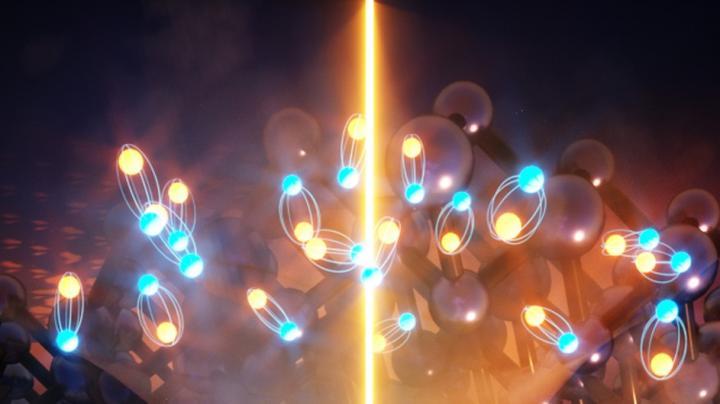
"We were able to use ultrafast nano-scale microscopy to discover a new way to control our crystals with light, turning elusive photonic properties on and off at will," said Aaron Sternbach, postdoctoral researcher at Columbia who is lead investigator on the study. "The effects are short-lived, only lasting for trillionths of one second, yet we are now able to observe these phenomena clearly."   An optically excited gas of electronic carriers confined to the planes of the layered van-der Waals semiconductor tungsten diselenide is shown. The consequent hyperbolic response permits passage of nanolight.  CREDIT Ella Maru Studio{module INSIDE STORY}

The research appears Feb. 4 in the journal Science.

Nature sets a limit on how tightly light can be focused. Even in microscopes, two different objects that are closer than this limit would appear to be one.  But within a special class of layered crystalline materials--known as van de Waals crystals--these rules can, sometimes, be broken. In these special cases, light can be confined without any limit in these materials, making it possible to see even the smallest objects clearly.

In their experiments, the Columbia researchers studied the van der Waals crystal called tungsten diselenide, which is of high interest for its potential integration in electronic and photonic technologies because its unique structure and strong interactions with light. 

When the scientists illuminated the crystal with a pulse of light, they were able to change the crystal's electronic structure. The new structure, created by the optical-switching event, allowed something very uncommon to occur: Super-fine details, on the nanoscale, could be transported through the crystal and imaged on its surface.

The report demonstrates a new method to control the flow of light of nanolight. Optical manipulation on the nanoscale, or nanophotonics, has become a critical area of interest as researchers seek ways to meet the increasing demand for technologies that go well beyond what is possible with conventional photonics and electronics.

Dmitri Basov, Higgins professor of physics at Columbia University, and senior author on the paper, believes the team's findings will spark new areas of research in quantum matter.

"Laser pulses allowed us to create a new electronic state in this prototypical semiconductor, if only for a few pico-seconds," he said. "This discovery puts us on track toward optically programmable quantum phases in new materials. "