

Stewart Blusson Quantum Matter Institute researchers investigate intricacies in superconductors

Ryan Day studies superconductors. Materials that conduct electricity perfectly, losing no energy to heat and resistance. Specifically, the University of California, Berkeley scientist studies how superconductors can coexist with their opposites; insulating materials that stop the flow of electrons. Dr. Ryan Day

The materials that combine these two opposed states, called topological superconductors, are understandably weird, and hard to characterize and engineer, but if one could design them properly, they could play an important role in quantum supercomputing.

“Every computer is prone to error, and that is no different when you move to quantum computing— it just gets a lot harder to manage. Topological quantum computing is one of the platforms thought to be able to circumvent many of the most common sources of error,” says Day, “but topological quantum computing requires that we fabricate a particle which has never been seen before in nature.”

Day came to the Canadian Light Source at the University of Saskatchewan to use the QMSC beamline, a facility built to explore exactly these types of questions in quantum materials. The capabilities were developed under the leadership of Andrea Damascelli, Scientific Director of the Stewart Blusson Quantum Matter Institute at UBC, with whom Day was a doctoral student at the time of this research.

“QMSC was developed to have very fine control over a very wide range of energies, so you can really get exceptionally precise information about the electrons as they move in all possible directions,” said Day.

His experiment, performed at temperatures around 20 degrees above absolute zero, aimed to resolve conflicting results in the existing research on superconductors with topological states.

“The experiments that had been done before ours were really good, but there were some contradictions in the literature that needed to be understood better,” he explained. The relative newness of the field, combined with the unusual properties that materials display in the energy ranges used for this research, meant it was difficult to disentangle what was going on with the topological states.

In his experiments, Day observed that the topological states were embedded in a large number of other electronic states which inhibit lithium iron arsenide — the superconducting material he’s studying — from exhibiting topological superconductivity. Based on his measurements at the CLS, he has proposed that this problem can be circumvented by simply stretching the material.

The results of this work, published in Physical Review B, provide further evidence that lithium iron arsenide does support topological states on its surface, key to potentially using the material in quantum computing. It also reveals potential challenges to engineering materials for these applications, an area for future research.

“By doing these experiments, we can understand this material in a much better way and begin to think about how we can actually make use of it, and then hopefully someone builds a quantum computer with it and everyone wins.”
DTU discovers the potential of bacterial compounds, genes linked to colon cancer-related toxin

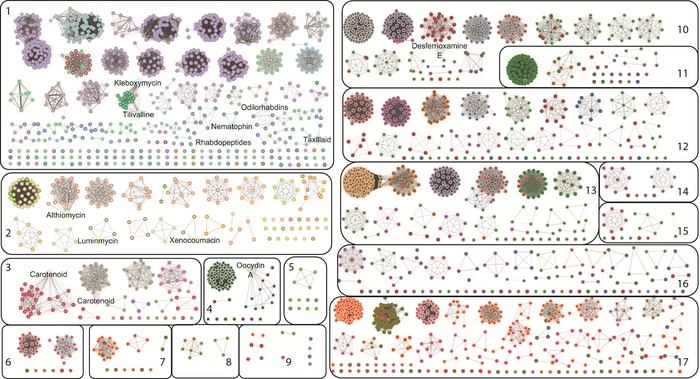
The last two decades have seen the development of sophisticated computational tools that explore the DNA of bacteria. These tools are on the lookout for interesting metabolites (metabolism-related molecules) that elicit a strong biological reaction. Their impact might be toxic, or it might be life-enhancing; for example, informing the development of new antibiotics, anti-cancer drugs, or bio-based insecticides for use in agriculture. PREDICTED POTENTIAL OF ENTEROBACTERIA TO PRODUCE NOVEL COMPOUNDS THAT MAY HAVE PATHOGENIC AS WELL AS INDUSTRIALLY-RELEVANT PROPERTIES  CREDIT OMKAR S. MOHITE.

The computational tools mine for specific genetic signatures in the neighborhood of DNA that are responsible for producing various compounds of clinical, agricultural, and industrial interest. However, how these genetic regions are linked to global parts of the bacterial systems remains a mystery.

A team of scientists from the Technical University of Denmark (DTU) and the University of California San Diego has developed a novel computational approach for analyzing the DNA sequences of thousands of bacteria. The results of their study have been published in the KeAi journal Synthetic and Systems Biotechnology.

Tilmann Weber is Associate Director of the Natural Product Genome Mining group at the Novo Nordisk Foundation Center for Biosustainability at DTU (DTU Biosustain) and is one of the study authors. According to Weber, their goal was to unravel which genomic parts work in unison to produce compounds of great interest.

He explains: “Enterobacteriaceae is a large family of bacteria that includes common infectious pathogens, such as Salmonella and E-coli, as well as harmless bacteria that live in symbiosis with other living beings. Surprisingly, the computational analysis conducted for this study identified a large number of gene clusters responsible for metabolites of potential interest that were previously unknown. We still need to figure out the functions of these compounds in the production of bacteria, as well as their function when they interact with human hosts or other environments.”

Research has shown that several gut microbes produce a molecule called colibactin that can be associated with colon cancer. In this study, the team established a variety of genetic elements that are always present in colibactin-containing bacteria. Omkar Mohite, a postdoctoral researcher at DTU Biosustain and the first author of the study, notes: “Such associated signatures could help in predicting a list of biological parts that come together to support the production of the genotoxin that can cause colon cancer – valuable information that might help to improve treatment options in the future.”

He adds: “The drive to understand how biological systems are made up of several parts interacting together is what got me into science. I believe that this puzzle can be solved with new approaches to the integration and investigation of large numbers of datasets, like the approach we’ve used in this study.”

Supercomputer models show how crop production increases soil nitrous oxide emissions

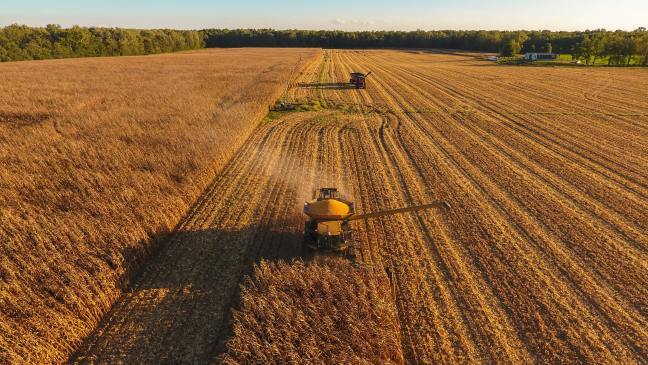
A recent ecosystem modeling study conducted by Iowa State University scientists shows how crop production in the United States has led to an increase in the emissions of nitrous oxide, a potent greenhouse gas, throughout the last century. Expansion of agricultural land and the application of nitrogen fertilizers have driven an increase in nitrous oxide emissions from U.S. soils, according to a new study from ISU researchers. Photo by Loren King.

The researchers drew on massive amounts of data on everything from weather patterns to soil conditions to land use and agricultural management practices to feed the model and quantify changes in nitrous oxide emissions from soils in the United States. The research, published in the peer-reviewed academic journal Global Change Biology, breaks soil emissions down by ecosystem types and major crops and found that the expansion of land devoted to agriculture since 1900 and intensive fertilizer inputs have predominantly driven an overall increase in nitrous oxide emissions.

The use of such ecosystem models to assess the sources of nitrous oxide emissions could help guide policymakers as they enact conservation plans and responses to climate change said Chaoqun Lu, associate professor of ecology, evolution, and organismal biology and corresponding author of the study.

“The model we are using is a process-based ecosystem model,” Lu said. “It’s similar to mimicking the patterns and processes of an ecosystem in our computer. We divide the land into thousands of pixels at a uniform size and run algorithms that simulate how ecological processes respond to changes in climate, air composition, and human activities.”

Results show emissions tripled

The study found nitrous oxide emissions from U.S. soil have more than tripled since 1900, from 133 million metric tons of carbon dioxide equivalent (MMT CO2 eq) per year at the beginning of the 20th century to 404 MMT CO2 eq per year in the 2010s. Nearly three-quarters of that rise in emissions originate from agricultural soils with corn and soybean production driving over 90% of the ag-related emissions increase, according to the study.

“Our study suggests a large [nitrous oxide] mitigation potential in cropland and the importance of exploring crop-specific mitigation strategies and prioritizing management alternatives for targeted crop types,” the study authors wrote in their paper.

The rise in emissions corresponds to an expansion of cropland in the United States, Lu said. The computer models found land devoted to agricultural production emits more nitrous oxide than natural landscapes. That’s largely due to the widespread application of nitrogen fertilizers to agricultural land and legume crop production, Lu said. The added nitrogen is partially used by crops, and the remainder either stays in soils or is lost to the environment. During this process, microorganisms living in soils consume nitrogen-containing compounds and give off nitrous oxide as a byproduct. Better understanding the dynamics of which crops lead to the greatest emissions can help shape climate mitigation policy, Lu said. Because more nitrogen fertilizer is applied in corn production on average than other crops, the study found soils, where corn is grown, tend to emit more nitrous oxide per unit of fertilizer used, Lu said.

The researchers designed mathematical models that mimic ecological processes. The models rely on mountains of data gathered and developed over years, Lu said. The researchers compiled government data on crops, land use, weather, and other variables. They also factored in historic and survey data from farmers and other landowners.

The research team also compared the results from their model with real-world data to validate their results. For instance, the scientists showed their model’s yield predictions tracked with national yield records dating back to 1925 for major crops such as corn, soybean, wheat, rice, and others. That shows the model simulation could track the long-term trajectory of nitrogen uptake that supports increasing crop yield over the past century. They also compared their model’s nitrous oxide emission predictions to real-world data collected from multiple natural and managed soils across the nation, as well as time-series measurements from a central Iowa corn-soybean rotation site over seven years.

“Our group has spent lots of time improving model performance and developing the driving force history, including natural and human disturbances, for the model simulations,” Lu said. “Behind the scenes, there are thousands of lines of algorithms to guide the computer model to make predictions. It takes decades of efforts, and more to come, to reduce modeling uncertainties and incorporate better ecological process understanding resulting from the hard work of field scientists.”