

Arctic could be iceless in September if temps increase 2 degrees

University of Cincinnati math professor Won Chang predicts the Arctic Ocean could have no September sea ice if global average temperatures increase by as little as 2 degrees

Arctic sea ice could disappear completely through September each summer if average global temperatures increase by as little as 2 degrees, according to a new study by the University of Cincinnati.

The study by an international team of researchers was published in Nature Communications.

"The target is the sensitivity of sea ice to temperature," said Won Chang, a study co-author and UC assistant professor of mathematics.

"What is the minimum global temperature change that eliminates all arctic sea ice in September? What's the tipping point?"

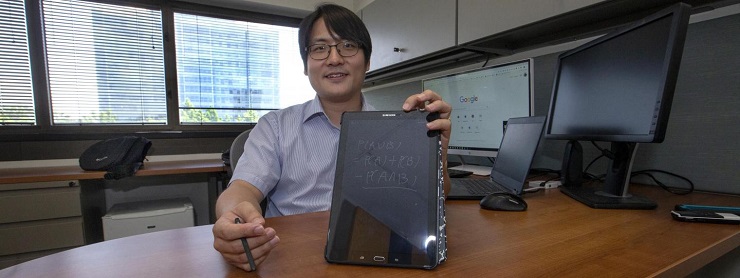
The study predicted that the Arctic Ocean could be completely ice-free in September with as little as 2 degrees Celsius of temperature change. Limiting warming to 2 degrees is the stated goal of the 2009 Paris Agreement, the international effort to curb carbon emissions to address warming. The Trump administration withdrew the United States as a participant in 2017. CAPTION University of Cincinnati math professor Won Chang studies climate science.  CREDIT Joseph Fuqua II/UC Creative Services{module In-article}
"Most likely, September Arctic sea ice will effectively disappear between approximately 2 and 2.5 degrees of global warming," the study said. "Yet limiting the warming to 2 degrees (as proposed under the Paris agreement) may not be sufficient to prevent an ice-free Arctic Ocean."

Historically, September is the month that sees the Arctic Ocean's least ice cover during the year after the short polar summer.

"They use September as a measure because that's the transition period between summer and winter in the Arctic," Chang said. "Ice recedes from June to September and then in September, it begins to grow again in a seasonal cycle. And we're saying we could have no ice in September."

The less summer sea ice the Arctic has, the longer it takes for the Arctic Ocean to ice back over for the polar winter. That could spell bad news for Arctic wildlife such as seals and polar bears that rely on sea ice to raise pups and hunt them, respectively.

The researchers applied the new statistical method to climate model projections of the 21st century. Using the climate models, the authors found at least a 6% probability that summer sea ice in the Arctic Ocean will disappear with a warming of 1.5 degrees above pre-industrial levels. At 2 degrees, the likelihood increases to 28%. 

"Our work provides a new statistical and mathematical framework to calculate climate change and impact probabilities," said Jason Evans, a professor who works at the University of New South Wales and its Climate Change Research Centre.

"While we only tested the new approach on climate models, we are eager to see if the technique can be applied to other fields, such as stock market predictions, plane accident investigations, or in medical research," says Roman Olson, the lead author and researcher at the Institute for Basic Science in South Korea. 

Chang said he has not gotten much feedback on this study yet. But sometimes climate change skeptics will approach him at his public presentations.

"Climate scientists are very honest," he said. "We try to be as transparent as possible about the amount of uncertainty we have and layout all of our assumptions and emphasize that when we say there is a possibility, we quantify it in the form of a probability."

He thinks public perceptions about climate change might depend on where you live.

"Most South Koreans don't question climate change, not because they're more scientific but because they can see the effects firsthand," Chang said.

"My hometown is a southern city called Daegu. It's about the size of Cincinnati. And it was famous for growing a delicious apple. But now they can't grow the apples there. The orchards are gone. It's just too hot. Now they grow them farther north."
WVU programmed to fill cybersecurity jobs with NSF award

When West Virginia University first offered cybersecurity classes in 2003, the gravest fear of a casual Internet user might have been opening an infected email attachment that erased computer files or reset their homepage.

And who could forget landing on some dodgy website that would generate a never-ending array of pesky pop-up windows

Those problems were so 2003.

Hacking has since morphed into a more sinister creature. Espionage, extortion, election meddling, data tampering, credit card and identity theft...the list of immoral activities committed via cyberattacks is ever-evolving.

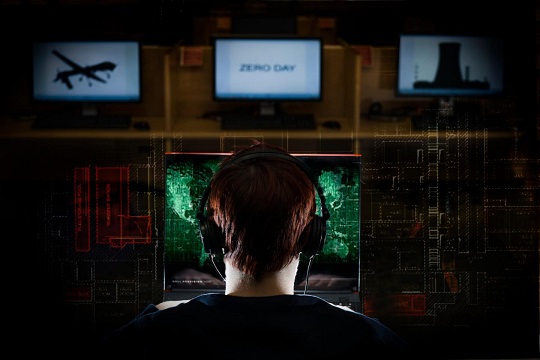
This calls for more cybersecurity experts. A lot of them. CAPTION By 2021, an estimated 3.5 million cybersecurity jobs across the globe will be unfilled. The WVU Lane Department of Computer Science and Electrical Engineering hopes to help plug the demand with a project called 'ACCESS' that cultivates cybersecurity experts through scholarships.  CREDIT Brian Persinger/West Virginia University{module In-article}

With the aid of a $1 million award from the National Science Foundation, the Lane Department of Computer Science and Electrical Engineering hopes to prepare students to help meet the demand for these cybersecurity roles.

According to Cyberseek.org, there are nearly 1,000 available jobs in the cybersecurity field in West Virginia. Nationwide, there are more than 313,000 open positions.

Professor Katerina Goseva-Popstojanova said the NSF award will provide a total of 120 annual scholarships of $5,000 to 40 undergraduate students over a five-year period. The project is called Attracting and Cultivating Cybersecurity Experts and Scholars through Scholarships.T

"The need for cybersecurity keeps increasing as we become more dependent on computers, networks, and devices," she said. "Fifteen years ago, there were barely any smartphones or tablets. Now everything is connected to the Internet or network, from health records to the water supply to critical infrastructure. Just think about how you can now control the temperature in your home from your office. There's potential for an attack there.

"Cyberattacks evolve because technology evolves. It's a cat-and-mouse game."

The methods of cyberattacks are growing at such an alarming rate that it's hard for government and industry to keep up. By 2021, it's estimated there will be 3.5 million unfilled cybersecurity positions globally.

Goseva-Popstojanova highlighted ransomware as one of the newer types of malicious software. Ransomware is designed to extort money by encrypting the files on a computer system, and thus making them unusable until a ransom is paid.

She also cautioned against the use of certain apps, even if they seem harmless on the surface. Case in point: FaceApp, the Russian mobile app that uses artificial intelligence to create a realistic rendering of what you might look like in a few decades. Despite its popularity, the app raised questions over privacy concerns.

"When you download an app, it asks for permissions, such as access to your location," said Goseva-Popstojanova, whose research focuses on software security, information assurance and intrusion tolerance. "Apps don't need to know that. Maybe Google Maps, but why would other apps? Apps collect data about users, track behavior and may sell your data for financial gain."

WVU will begin awarding the funds in spring 2020. Recipients must be in good academic standing (at least a 3.5 high school GPA for incoming students or 3.0 GPA for current university students), have demonstrated financial need and be enrolled in an eligible bachelor's program in the Lane department.

Since 2006, WVU has been designated by the National Security Agency and the Department of Homeland Security as a National Center of Academic Excellence in both cyber defense education and cyber defense research.

Other faculty involved in ACCESS include Robin HenselBrian WoernerRoy NutterDavid KrovichEarl Scime, and Kathleen Cullen, all of the Statler College of Engineering and Mineral Resources.

"The outcomes of the project will reach beyond West Virginia and are likely to be applicable to other states that have similar population characteristics and face similar challenges," Goseva-Popstojanova said.

Students will learn how to program and design systems that not only thwart attacks but also allow them to continue operating if compromised.

"Developing resilient systems is important," she said. "Attacks will happen. So how can systems keep working even if they're attacked? You don't want the electrical grid to get attacked and be completely out of power. The key is to make systems resilient."

Another goal of ACCESS is to encourage diversity, such as women, in the STEM fields.

"In general, there are not very many females or minorities in STEM," Goseva-Popstojanova said. "We're committed to increasing the number of women and members of underrepresented groups who get degrees with specialization in cybersecurity. This serves such a broader impact on society.

"For me, I was raised in a family where I was never told, 'You cannot do that.' I became a computer scientist. It wasn't an issue. But once you get into the system, you notice you're one of a very few. Wherever you go, in any country, there are fewer women than men in STEM roles."

ACCESS will partner with other initiatives such as Girls Go Cyberstart, an interactive series of digital challenges designed to introduce girls to the cybersecurity field, and CyberPatriot, an education program created by the Air Force Association to inspire K-12 students toward cybersecurity careers.

Funding recipients will also have access to seminars, lectures, mentors and internship opportunities.

Russian scientists create machine learning model for damaging mutations prediction

The new-generation sequencing technology has ushered in a new era in medicine, making it easier to identify a sequence of nucleotides in the DNA or a sequence of amino acids in the proteins of a specific individual and use this information for both diagnosis and treatment. Minute alterations in these sequences, mutations can be indicative of a minor disorder and, sometimes, a grave disease.

Scientists from Skoltech, the Technical University of Munich, St. Petersburg Polytechnic University and the Indian Institute of Technology Madras (Chennai, India) developed a machine-learning-based method that allows analyzing the atomic structures of proteins and predicting the pathogenicity of mutations. The method is adapted for transmembrane proteins that account for 25-30% of all the proteins in a cell and often serve as targets for drugs. {module In-article}

"In this study, we used a combination of 1D information on the amino acid sequences of proteins and 3D information on the protein's atomic structures to create an effective machine-learning-based model that helps identify disease-associated amino acid substitutions in membrane proteins," says the first author of the study and Assistant Professor at Skoltech, Petr Popov.